


Urinary biomarkers for early diabetic nephropathy: beyond albuminuria
- PMID: 25060761
- PMCID: PMC4305495
- DOI: 10.1007/s00467-014-2888-2
Urinary biomarkers for early diabetic nephropathy: beyond albuminuria
Abstract
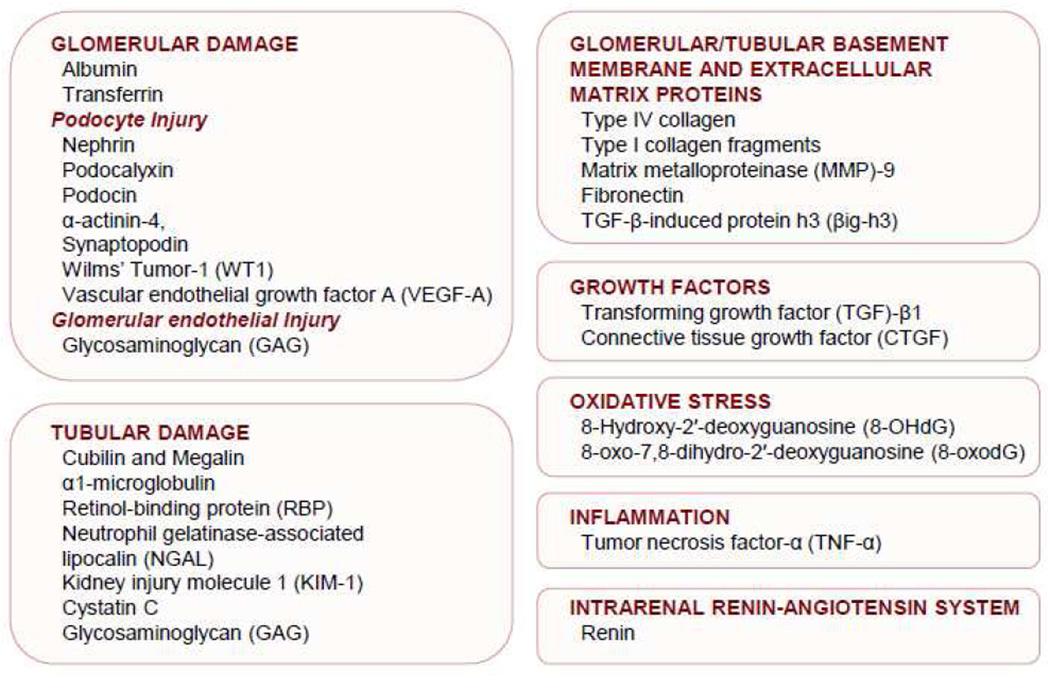
Diabetic nephropathy (DN) is the most common cause of end-stage kidney disease in the USA and accounts for a significant increase in morbidity and mortality in patients with diabetes. Early detection is critical in improving clinical management. Although microalbuminuria is regarded as the gold standard for diagnosing the onset of DN, its predictive powers are limited. Consequently, great efforts have been made in recent years to identify better strategies for the detection of early stages of DN and progressive kidney function decline in diabetic patients. Here, we review the various urinary biomarkers that have emerged from these studies which hold promise as more sensitive diagnostic tools for the earlier detection of diabetic kidney disease and the prediction of progression to end-stage kidney disease. A number of key biomarkers present in the urine have been identified that reflect kidney injury at specific sites along the nephron, including glomerular/podocyte damage and tubular damage, oxidative stress, inflammation and activation of the intrarenal renin-angiotensin system. We also describe newer approaches, including urinary microRNAs, which are short noncoding mRNAs that regulate gene expression, and urine proteomics, that can be used to identify potential novel biomarkers in the development and progression of diabetic kidney disease.
Figures
References
-
- Imperatore G, Boyle JP, Thompson TJ, Case D, Dabelea D, Hamman RF, Lawrence JM, Liese AD, Liu LL, Mayer-Davis EJ, Rodriguez BL, Standiford D SEARCH for Diabetes in Youth Study Group. Projections of type 1 and type 2 diabetes burden in the U.S. population aged <20 years through 2050: dynamic modeling of incidence, mortality, and population growth. Diabetes Care. 2012;35:2515–2520. - PMC - PubMed
-
- Stanton RC. Frontiers in diabetic kidney disease: introduction. Am J Kidney Dis. 2014;63(2) Suppl 2:S1–S2. - PubMed
-
- Adler AI, Stevens RJ, Manley SE, Bilous RW, Cull CA, Holman RR UKPDS GROUP. Development and progression of nephropathy in type 2 diabetes: the United Kingdom Prospective Diabetes Study (UKPDS 64) Kidney Int. 2003;63:225–232. - PubMed
-
- Zachwieja J, Soltysiak J, Fichna P, Lipkowska K, Stankiewicz W, Skowronska B, Kroll P, Lewandowska-Stachowiak M. Normal-range albuminuria does not exclude nephropathy in diabetic children. Pediatr Nephrol. 2010;25:1445–1451. - PubMed
Publication types
MeSH terms
Substances
Grants and funding
LinkOut - more resources
Full Text Sources
Other Literature Sources
Medical
