Severe fever with thrombocytopenia syndrome virus in ticks collected from humans, South Korea, 2013
- PMID: 25061851
- PMCID: PMC4111194
- DOI: 10.3201/eid2008.131857
Severe fever with thrombocytopenia syndrome virus in ticks collected from humans, South Korea, 2013
Abstract
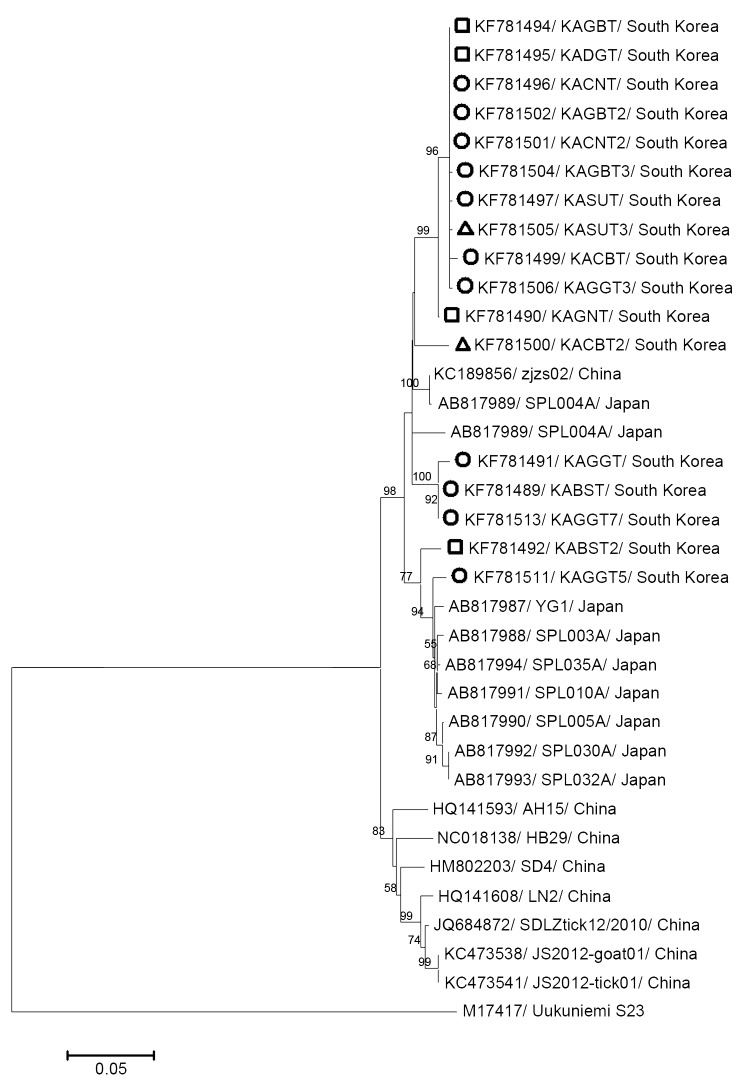
We investigated the infection rate for severe fever with thrombocytopenia syndrome virus (SFTSV) among ticks collected from humans during May-October 2013 in South Korea. Haemaphysalis longicornis ticks have been considered the SFTSV vector. However, we detected the virus in H. longicornis, Amblyomma testudinarium, and Ixodes nipponensis ticks, indicating additional potential SFTSV vectors.
Keywords: Amblyomma testudinarium; Bunyaviridae; Haemaphysalis longicornis; Ixodes nipponensis; Phlebovirus; Rhipicephalus microplus; SFTS; SFTSV; South Korea; humans; severe fever with thrombocytopenia syndrome; severe fever with thrombocytopenia syndrome virus; tick-borne; tickborne; ticks; vector; viruses.
Figures
References
-
- ProMEDmail. Severe fever with thrombocytopenia syndrome—South Korea (05): additional fatalities. ProMed. 2013. Jul 6 [cited 2013 Oct 10]. http://www.promedmail.org, archive no. 20130706.1810682.
Publication types
MeSH terms
Associated data
- Actions
- Actions
- Actions
- Actions
- Actions
- Actions
- Actions
- Actions
- Actions
- Actions
- Actions
- Actions
- Actions
- Actions
- Actions
- Actions
- Actions
- Actions
- Actions
- Actions
- Actions
- Actions
- Actions
- Actions
- Actions
LinkOut - more resources
Full Text Sources
Other Literature Sources
Molecular Biology Databases