


Osteoarthritis joint pain: the cytokine connection
- PMID: 25066335
- PMCID: PMC4254338
- DOI: 10.1016/j.cyto.2014.06.019
Osteoarthritis joint pain: the cytokine connection
Abstract
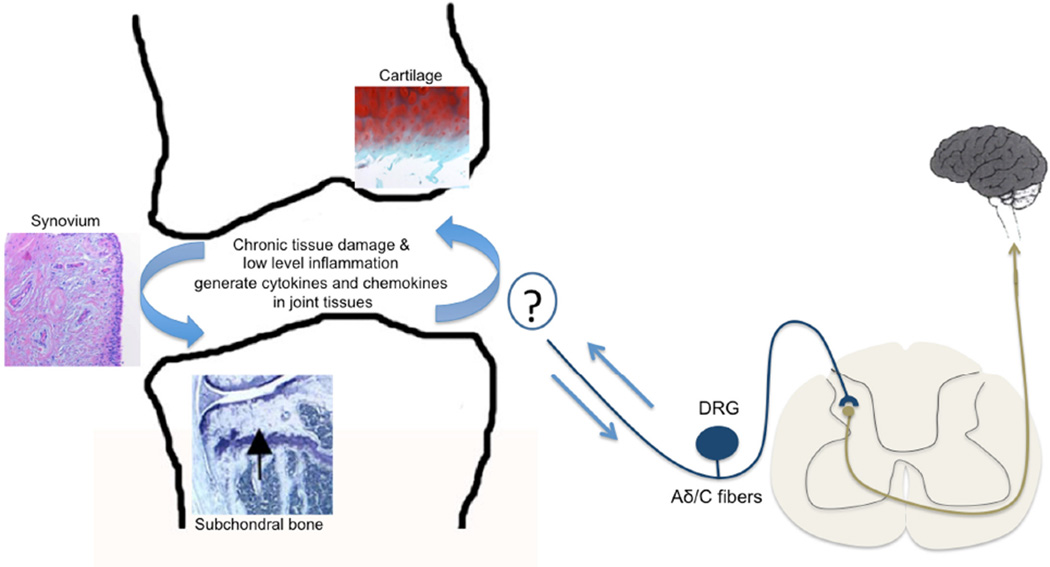
Osteoarthritis is a chronic and painful disease of synovial joints. Chondrocytes, synovial cells and other cells in the joint can express and respond to cytokines and chemokines, and all of these molecules can also be detected in synovial fluid of patients with osteoarthritis. The presence of inflammatory cytokines in the osteoarthritic joint raises the question whether they may directly participate in pain generation by acting on innervating joint nociceptors. Here, we first provide a systematic discussion of the known proalgesic effects of cytokines and chemokines that have been detected in osteoarthritic joints, including TNF-α, IL-1, IL-6, IL-15, IL-10, and the chemokines, MCP-1 and fractalkine. Subsequently, we discuss what is known about their contribution to joint pain based on studies in animal models. Finally, we briefly discuss limited data available from clinical studies in human osteoarthritis.
Keywords: Animal models; Chemokines; Cytokines; Osteoarthritis; Pain.
Copyright © 2014 Elsevier Ltd. All rights reserved.
Figures
References
-
- Cross M, Smith E, Hoy D, Nolte S, Ackerman I, Fransen M, et al. The global burden of hip and knee osteoarthritis: estimates from the Global Burden of Disease 2010 study. Ann Rheum Dis. 2014 - PubMed
Publication types
MeSH terms
Substances
Grants and funding
LinkOut - more resources
Full Text Sources
Other Literature Sources
Medical
Molecular Biology Databases
Research Materials
Miscellaneous
