


Hepatitis C virus infection epidemiology among people who inject drugs in Europe: a systematic review of data for scaling up treatment and prevention
- PMID: 25068274
- PMCID: PMC4113410
- DOI: 10.1371/journal.pone.0103345
Hepatitis C virus infection epidemiology among people who inject drugs in Europe: a systematic review of data for scaling up treatment and prevention
Abstract
Background: People who inject drugs (PWID) are a key population affected by hepatitis C virus (HCV). Treatment options are improving and may enhance prevention; however access for PWID may be poor. The availability in the literature of information on seven main topic areas (incidence, chronicity, genotypes, HIV co-infection, diagnosis and treatment uptake, and burden of disease) to guide HCV treatment and prevention scale-up for PWID in the 27 countries of the European Union is systematically reviewed.
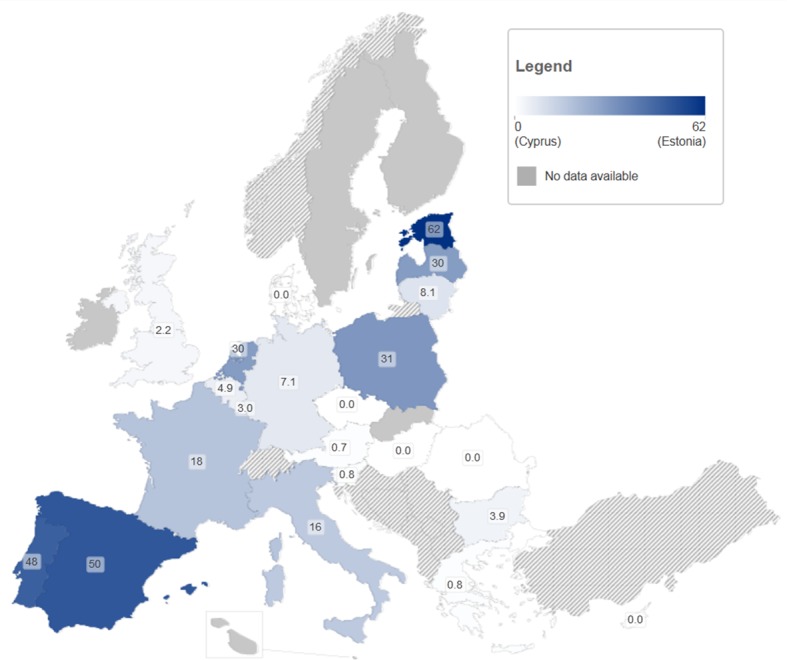
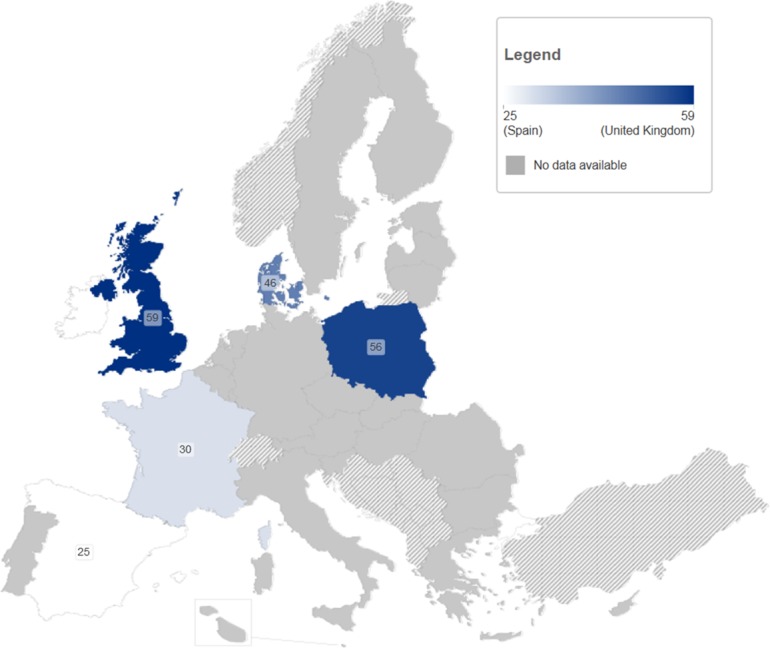
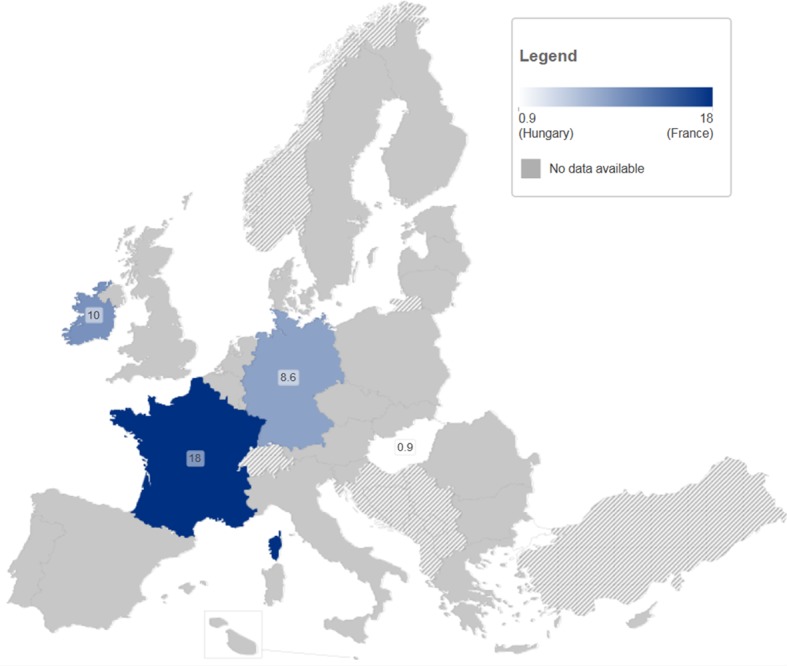
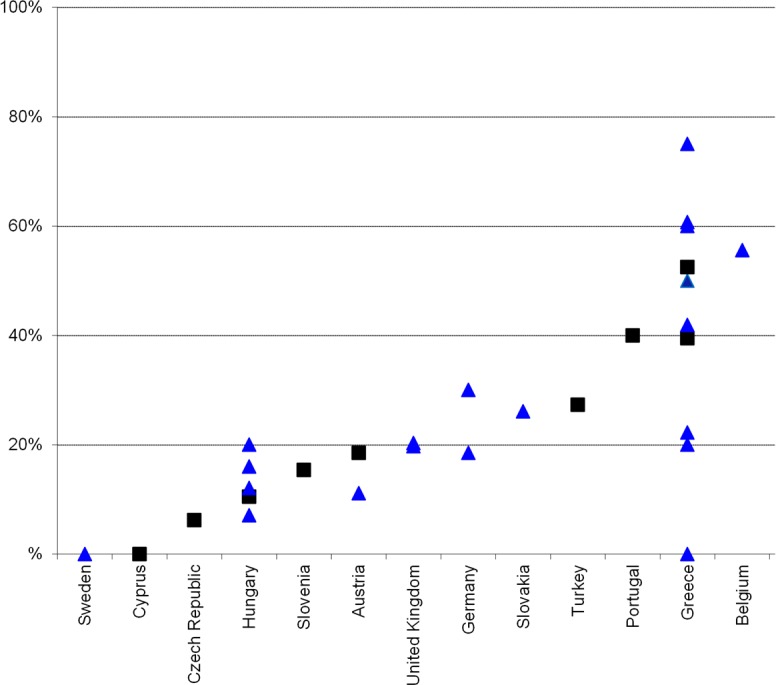
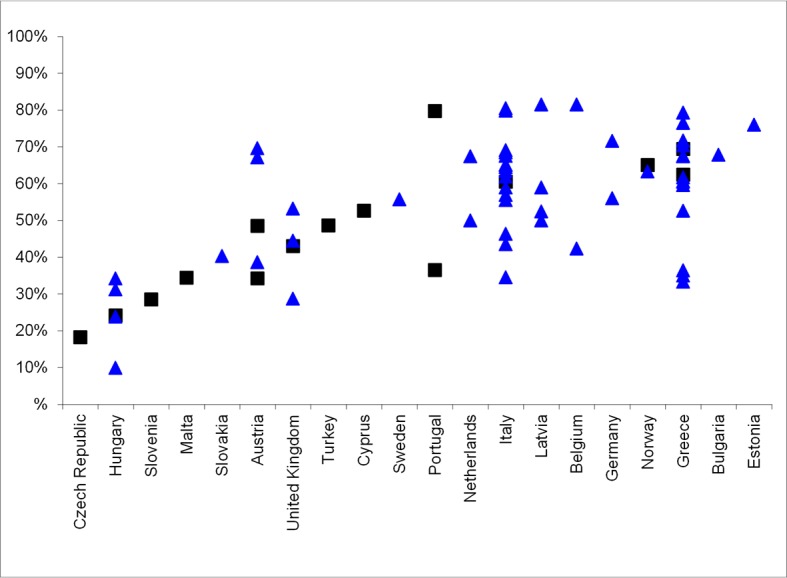
Methods and findings: We searched MEDLINE, EMBASE and Cochrane Library for publications between 1 January 2000 and 31 December 2012, with a search strategy of general keywords regarding viral hepatitis, substance abuse and geographic scope, as well as topic-specific keywords. Additional articles were found through structured email consultations with a large European expert network. Data availability was highly variable and important limitations existed in comparability and representativeness. Nine of 27 countries had data on HCV incidence among PWID, which was often high (2.7-66/100 person-years, median 13, Interquartile range (IQR) 8.7-28). Most common HCV genotypes were G1 and G3; however, G4 may be increasing, while the proportion of traditionally 'difficult to treat' genotypes (G1+G4) showed large variation (median 53, IQR 43-62). Twelve countries reported on HCV chronicity (median 72, IQR 64-81) and 22 on HIV prevalence in HCV-infected PWID (median 3.9%, IQR 0.2-28). Undiagnosed infection, assessed in five countries, was high (median 49%, IQR 38-64), while of those diagnosed, the proportion entering treatment was low (median 9.5%, IQR 3.5-15). Burden of disease, where assessed, was high and will rise in the next decade.
Conclusion: Key data on HCV epidemiology, care and disease burden among PWID in Europe are sparse but suggest many undiagnosed infections and poor treatment uptake. Stronger efforts are needed to improve data availability to guide an increase in HCV treatment among PWID.
Conflict of interest statement
Figures
References
-
- Lavanchy D (2011) Evolving epidemiology of hepatitis C virus. Clin Microbiol Infect 17: 107–115 10.1111/j.1469-0691.2010.03432.x [doi] - DOI - PubMed
-
- Wiessing L, Guarita B, Giraudon I, Brummer-Korvenkontio H, Salminen M, et al. (2008) European monitoring of notifications of hepatitis C virus infection in the general population and among injecting drug users (IDUs) - the need to improve quality and comparability. Euro Surveill 13: pii = 18884. Available: http://www.eurosurveillance.org/ViewArticle.aspx?ArticleId=18884. - PubMed
-
- Stephenson J (2001) Former addicts face barriers to treatment for HCV. JAMA 285: 1003–1005. - PubMed
Publication types
MeSH terms
LinkOut - more resources
Full Text Sources
Other Literature Sources
Medical
