Preventive efficacy and safety of rebamipide in nonsteroidal anti-inflammatory drug-induced mucosal toxicity
- PMID: 25071901
- PMCID: PMC4113040
- DOI: 10.5009/gnl.2014.8.4.371
Preventive efficacy and safety of rebamipide in nonsteroidal anti-inflammatory drug-induced mucosal toxicity
Abstract
Background/aims: The use of proton pump inhibitors or misoprostol is known to prevent the gastrointestinal complications of nonsteroidal anti-inflammatory drugs (NSAIDs). Rebamipide is known to increase the mucosal generation of prostaglandins and to eliminate free oxygen radicals, thus enhancing the protective function of the gastric mucosa. However, it is unknown whether rebamipide plays a role in preventing NSAID-induced gastropathy. The aim of this study was to determine the effectiveness of rebamipide compared to misoprostol in preventing NSAID-induced gastrointestinal complications in patients requiring continuous NSAID treatment.
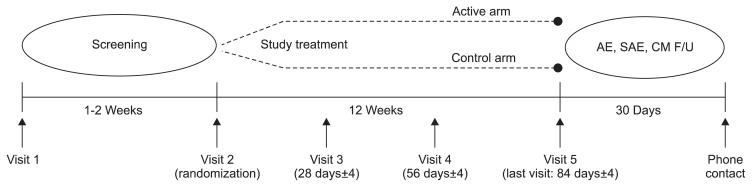
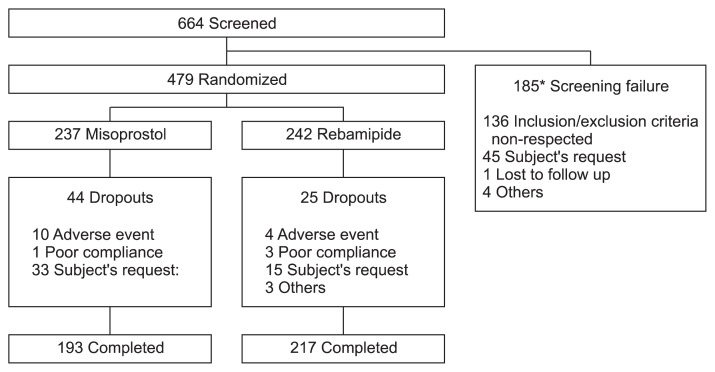
Methods: We studied 479 patients who required continuous NSAID treatment. The patients were randomly assigned to groups that received 100 mg of rebamipide three times per day or 200 μg of misoprostol three times per day for 12 weeks. The primary endpoint of the analysis was the occurrence rate of gastric ulcers, as determined by endoscopy after 12 weeks of therapy.
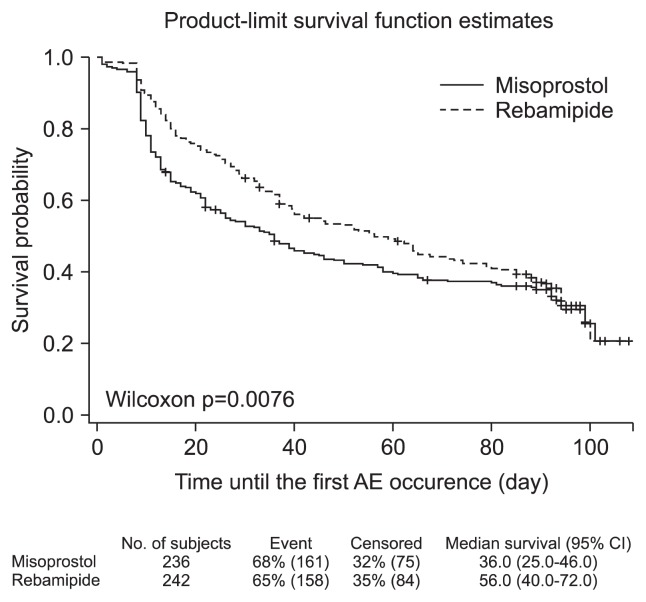
Results: Of the 479 patients in the study, 242 received rebamipide, and 237 received misoprostol. Ultimately, 44 patients (18.6%) withdrew from the misoprostol group and 25 patients (10.3%) withdrew from the rebamipide group. There was a significant difference in withdrawal rate between the two groups (p=0.0103). The per protocol analysis set was not valid because of the dropout rate of the misoprostol group; thus, the intention to treat (ITT) analysis set is the main set for the efficacy analysis in this study. After 12 weeks, the occurrence rate of gastric ulcers was similar in the rebamipide and misoprostol groups (20.3% vs 21.9%, p=0.6497) according to ITT analysis. In addition, the therapeutic failure rate was similar in the rebamipide and misoprostol groups (13.6% vs 13.1%, p=0.8580). The total severity score of the gastrointestinal symptoms was significantly lower in the rebamipide group than in the misoprostol group (p=0.0002). The amount of antacid used was significantly lower in the rebamipide group than in the misoprostol group (p=0.0258).
Conclusions: Rebamipide can prevent gastric ulcers when used with NSAIDs and can decrease the gastrointestinal symptoms associated with NSAID administration. When the possibility of poor compliance and the potential adverse effects of misoprostol are considered, rebamipide appears to be a clinically effective and safe alternative.
Keywords: Anti-inflammatory agents; Complications; Misoprostol; Rebamipide; Rheumatic diseases; non-steroidal.
Figures
References
Publication types
MeSH terms
Substances
LinkOut - more resources
Full Text Sources
Other Literature Sources