


doi: 10.1038/nmeth.3027.
Deep mutational scanning: a new style of protein science
Affiliations
- PMID: 25075907
- PMCID: PMC4410700
- DOI: 10.1038/nmeth.3027
Item in Clipboard
Deep mutational scanning: a new style of protein science
Nat Methods.
2014 Aug.
Abstract
Mutagenesis provides insight into proteins, but only recently have assays that couple genotype to phenotype been used to assess the activities of as many as 1 million mutant versions of a protein in a single experiment. This approach-'deep mutational scanning'-yields large-scale data sets that can reveal intrinsic protein properties, protein behavior within cells and the consequences of human genetic variation. Deep mutational scanning is transforming the study of proteins, but many challenges must be tackled for it to fulfill its promise.
Conflict of interest statement
The authors have no competing financial interests to declare.
Figures
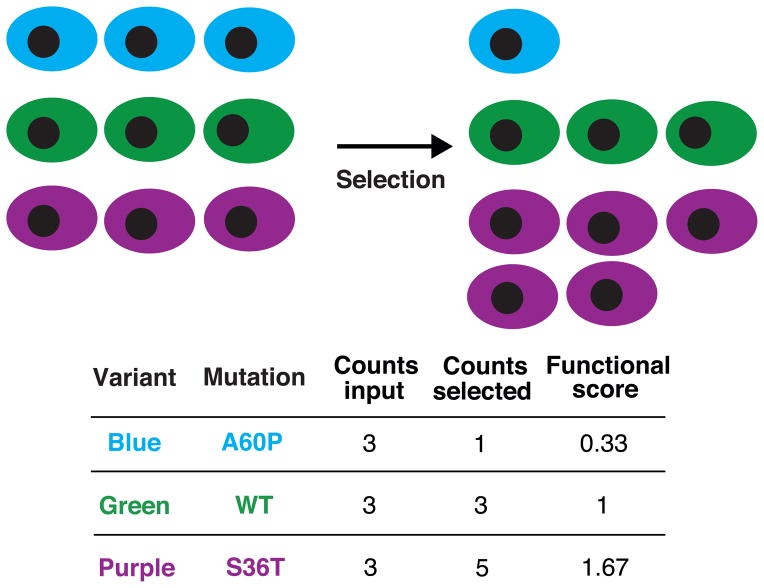
Deep mutational scanning draws on high-throughput DNA sequencing to assess the functional capacity of a large number of variants of a protein simultaneously. First, a library of protein variants is created and introduced into a system where the genotype of each variant is linked to a selectable phenotype. Second, a selection for the function of the protein is imposed. Variants with high activity increase in frequency, whereas variants with low activity decrease in frequency. High-throughput DNA sequencing is used to measure the frequency of each variant before and after selection. These frequency data are analyzed to generate functional score for each of the protein variants.
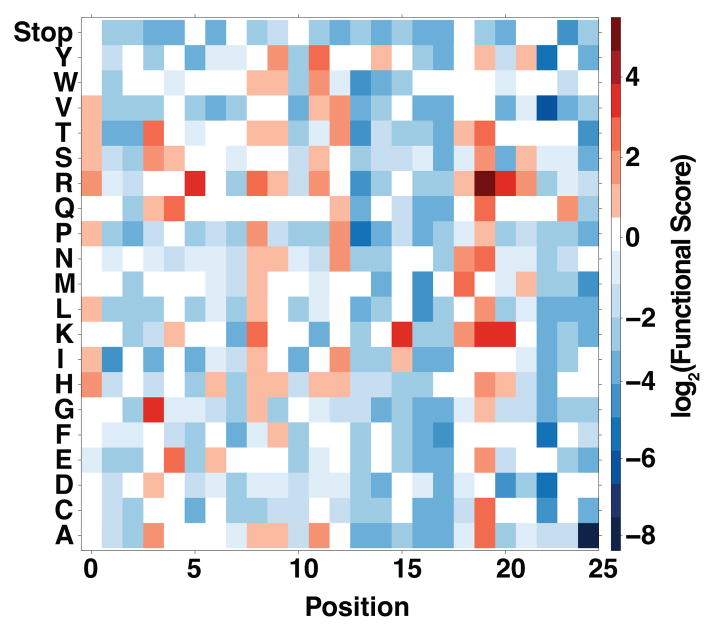
A hypothetical sequence–function heat map is shown for a 25 amino acid long portion of a protein, illustrating the functional consequences of making every single amino acid mutation at every position. Positions are indicated numerically, and each mutation is indicated by its single letter code. The color of each element of the heat map illustrates the functional score of the indicated mutation
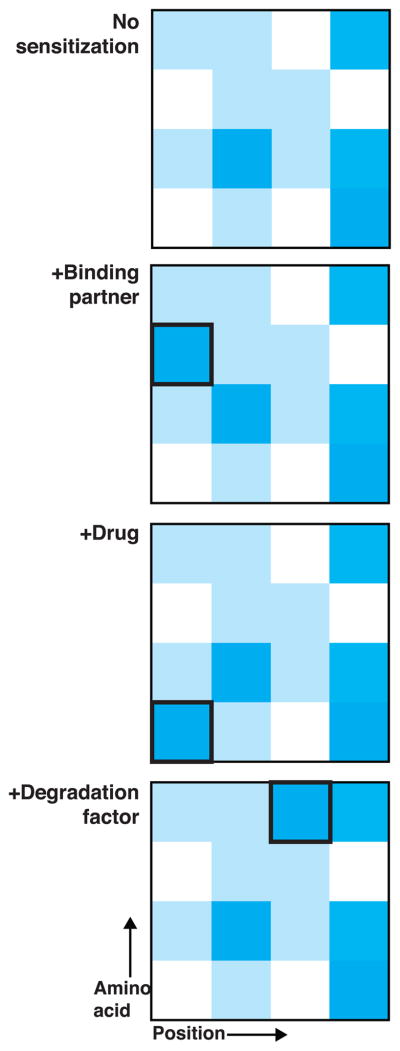
Hypothetical sequence-function heat maps collected under different conditions are shown. Once a deep mutational scan has been performed, it can be repeated in a sensitized background, which can be created by altering the cellular or chemical environment in which the scan is conducted, as indicated. The difference in functional effect for a particular mutation in a sensitized background could reveal the importance of an amino acid at a given position for the process under study.
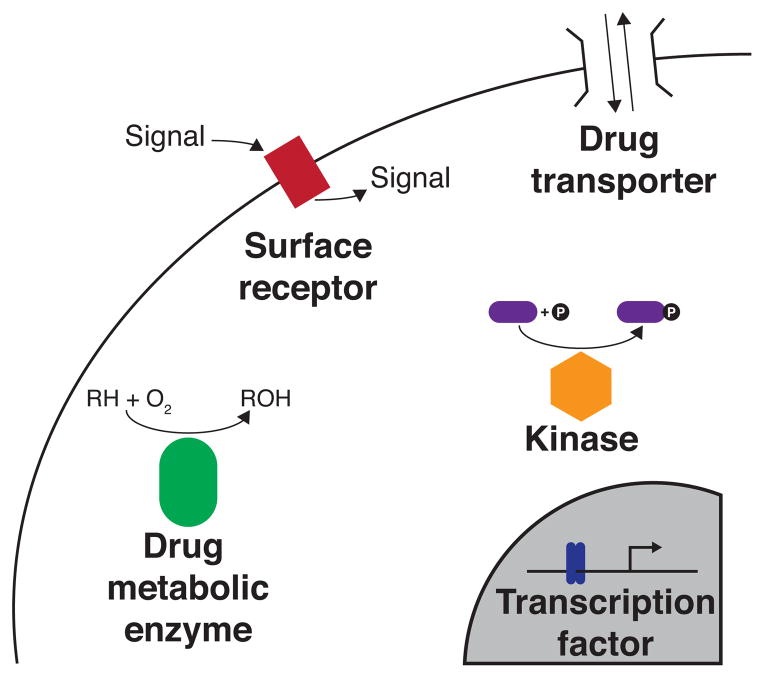
A hypothetical cancer cell is shown; mutations in drug transporters, drug metabolic enzymes, transcription factors, and signaling proteins all have the capacity to influence the effectiveness of treatment. Deep mutational scanning of cancer-related proteins could revolutionize our understanding of the consequences of mutations in these proteins and enable genomic medicine.
References
Publication types
MeSH terms
Substances
Grants and funding
LinkOut - more resources
Full Text Sources
Other Literature Sources
