


From empirical to mechanism-based discovery of clinically useful Selective Estrogen Receptor Modulators (SERMs)
- PMID: 25084324
- PMCID: PMC4192009
- DOI: 10.1016/j.steroids.2014.07.013
From empirical to mechanism-based discovery of clinically useful Selective Estrogen Receptor Modulators (SERMs)
Abstract
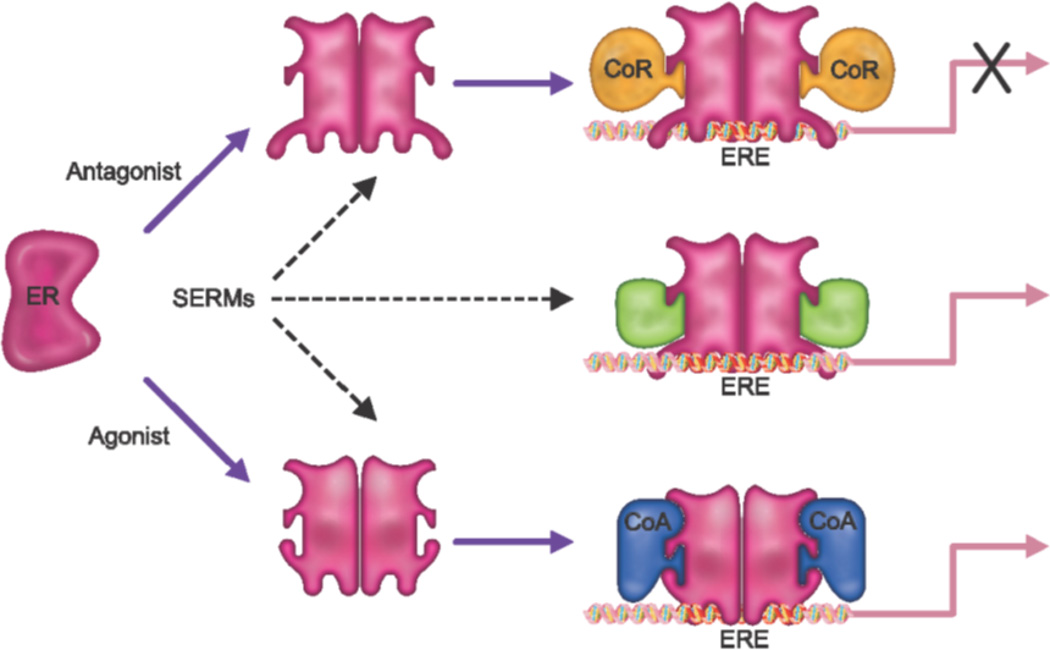
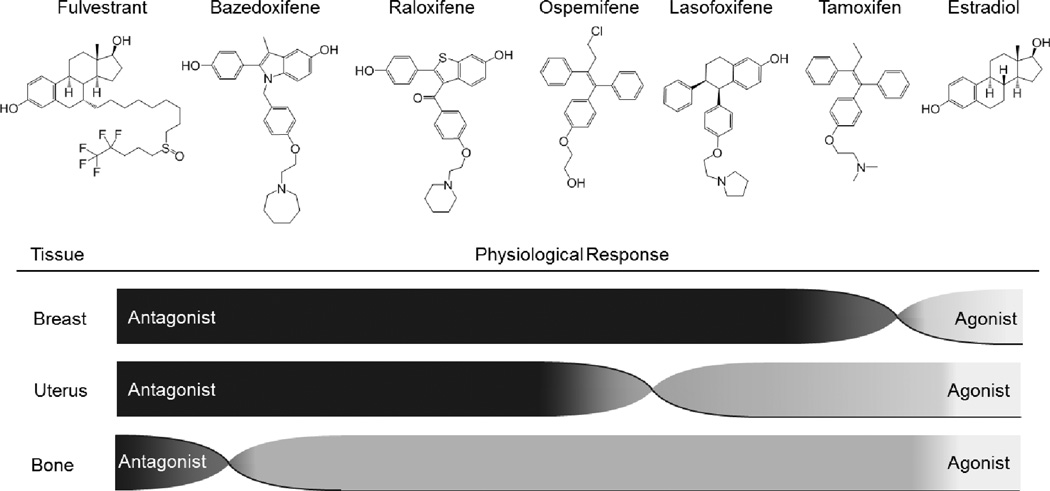
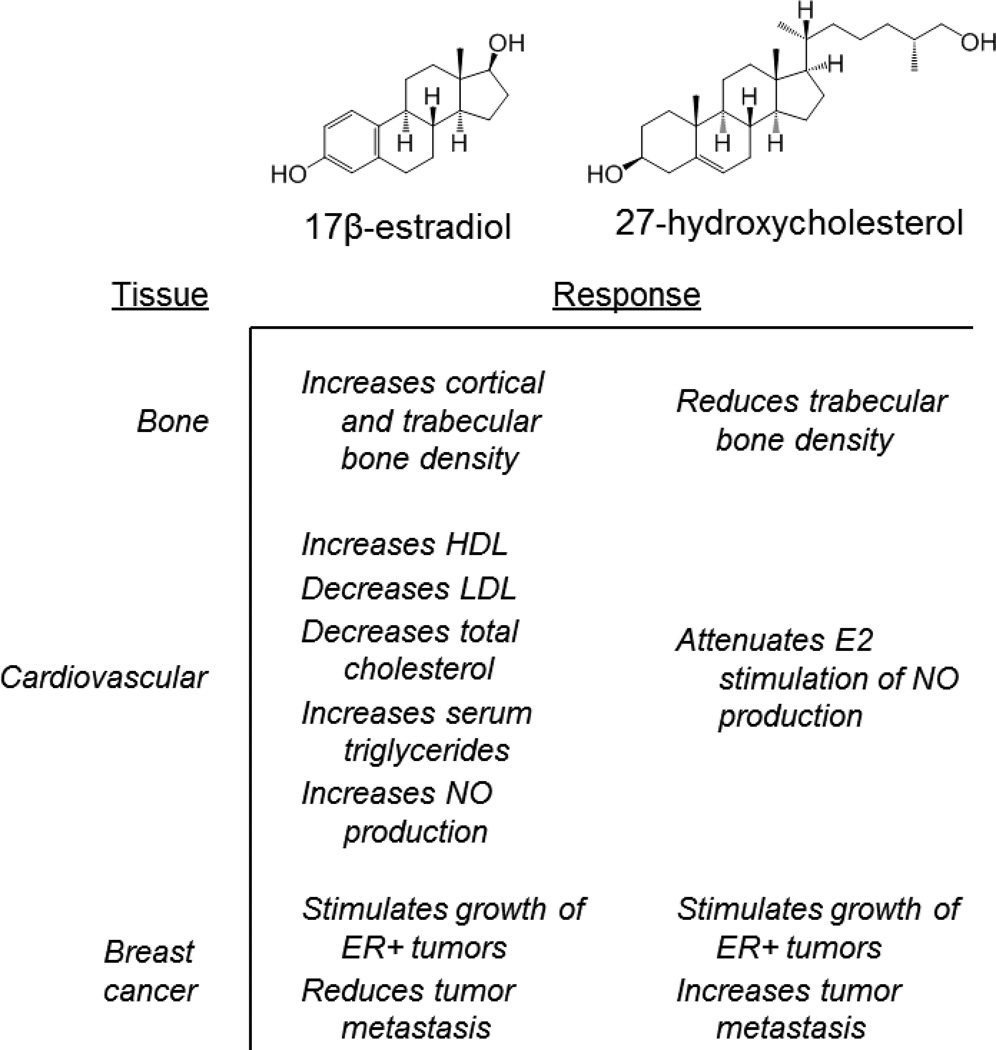
Our understanding of the molecular mechanisms underlying the pharmacological actions of estrogen receptor (ER) ligands has evolved considerably in recent years. Much of this knowledge has come from a detailed dissection of the mechanism(s) of action of the Selective Estrogen Receptor Modulators (SERMs) tamoxifen and raloxifene, drugs whose estrogen receptor (ER) agonist/antagonist properties are influenced by the cell context in which they operate. These studies have revealed that notwithstanding differences in drug pharmacokinetics, the activity of an ER ligand is determined primarily by (a) the impact that a given ligand has on the receptor conformation and (b) the ability of structurally distinct ER-ligand complexes to interact with functionally distinct coregulators. Exploitation of the established relationships between ER structure and activity has led to the development of improved SERMs with more favorable therapeutic properties and of tissue-selective estrogen complexes, drugs in which a SERM and an ER agonist are combined to yield a blended activity that results in distinct clinical profiles. Remarkably, endogenous ligands that exhibit SERM activity have also been identified. One of these ligands, 27-hydroxycholesterol (27HC), has been shown to manifest ER-dependent pathological activities in the cardiovascular system, bone and mammary gland. Whereas the physiological activity of 27HC remains to be determined, its discovery highlights how cells have adopted mechanisms to allow the same receptor ligand complex to manifest different activities in different cells, and also how these processes can be exploited for new drug development.
Keywords: Estrogen receptor; SERM; Selective estrogen receptor modulator; TSEC; Tamoxifen.
Copyright © 2014 Elsevier Ltd. All rights reserved.
Figures
References
-
- Rossouw JE, Anderson GL, Prentice R, LaCroix AZ, Kooperberg C, Stefanick ML, et al. Risks and benefits of estrogen plus progestin in healthy postmenopausal women: principal results from the Women's Health Initiative randomized controlled trial. JAMA. 2002;288:321–333. - PubMed
-
- Jordan VC, Phelps E, Lindgren JU. Effects of anti-estrogens in castrated and intact female rats. Breast Cancer Res Treat. 1987;10:31–35. - PubMed
-
- Gottardis MM, Robinson SP, Satyaswaroop PG, Jordan VC. Contrasting actions of tamoxifen on endometrial and breast tumor growth in the athymic mouse. Cancer Res. 1988;48:812–815. - PubMed
-
- Black LJ, Goode RL. Uterine bioassay of tamoxifen, trioxifene and a new estrogen antagonist (LY117018) in rats and mice. Life Sci. 1980;26:1453–1458. - PubMed
Publication types
MeSH terms
Substances
Grants and funding
LinkOut - more resources
Full Text Sources
Other Literature Sources
