


Lignin valorization through integrated biological funneling and chemical catalysis
- PMID: 25092344
- PMCID: PMC4143016
- DOI: 10.1073/pnas.1410657111
Lignin valorization through integrated biological funneling and chemical catalysis
Abstract
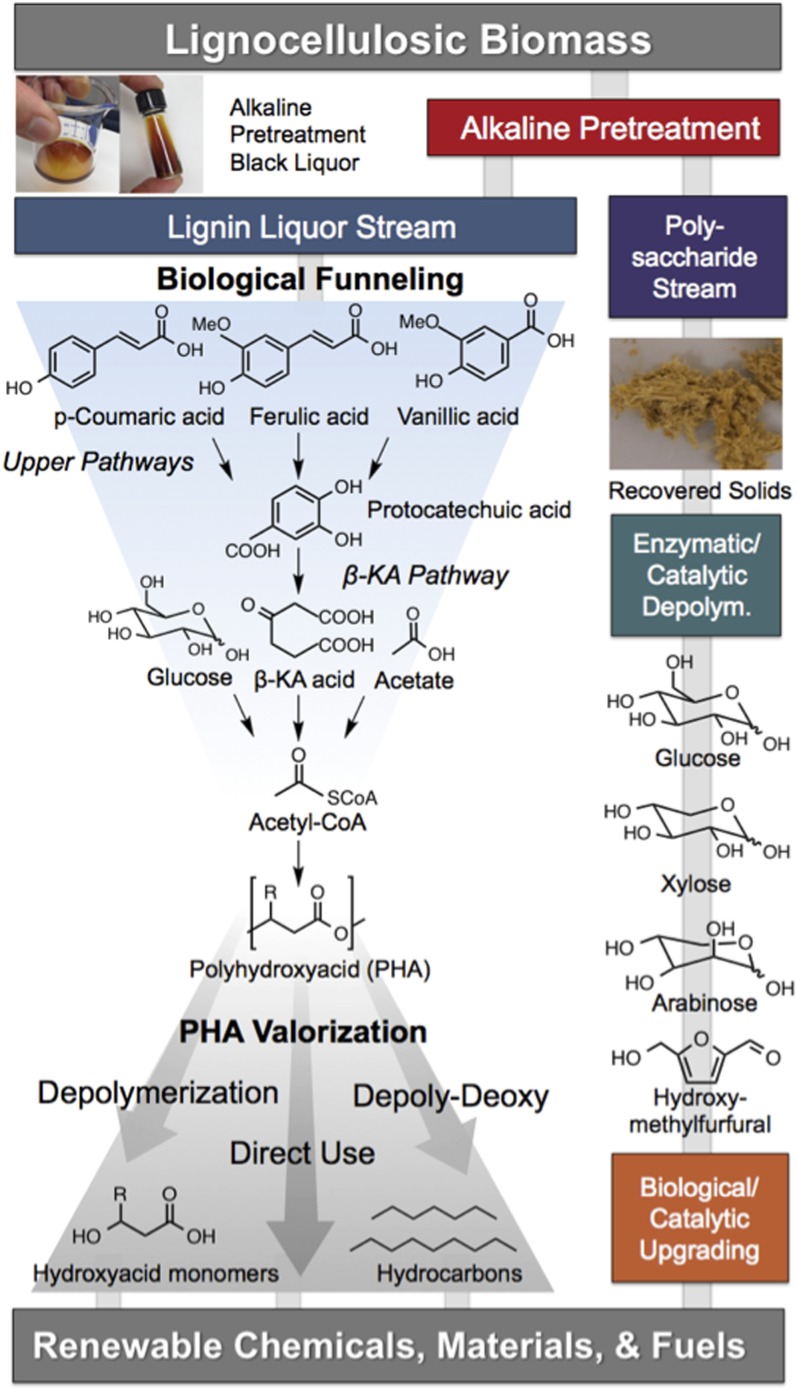
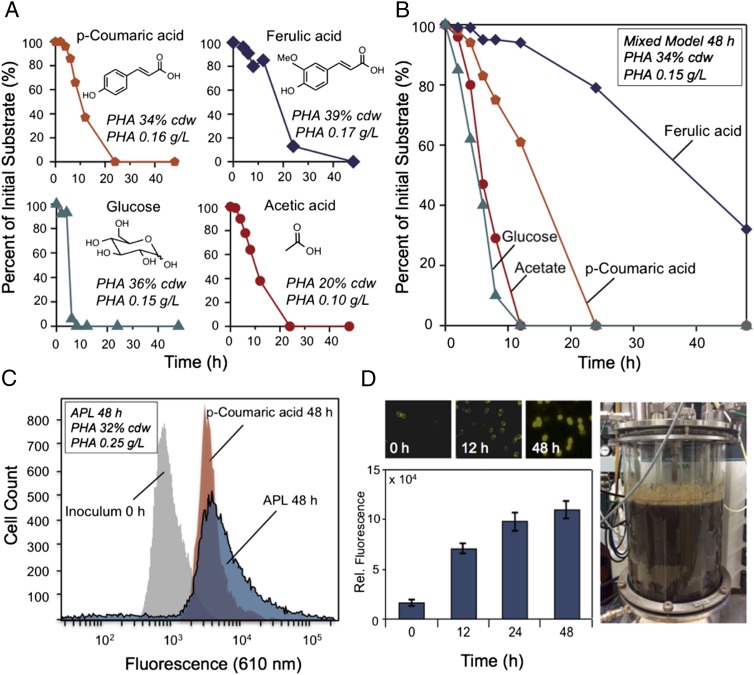
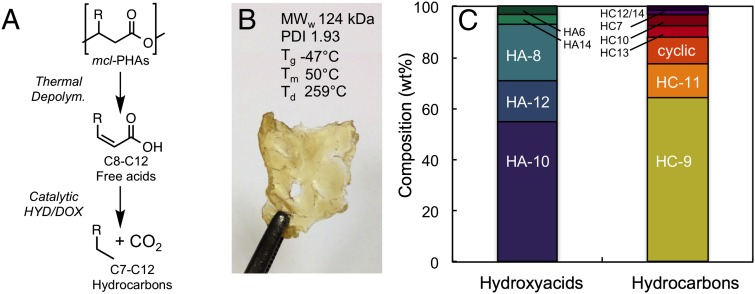
Lignin is an energy-dense, heterogeneous polymer comprised of phenylpropanoid monomers used by plants for structure, water transport, and defense, and it is the second most abundant biopolymer on Earth after cellulose. In production of fuels and chemicals from biomass, lignin is typically underused as a feedstock and burned for process heat because its inherent heterogeneity and recalcitrance make it difficult to selectively valorize. In nature, however, some organisms have evolved metabolic pathways that enable the utilization of lignin-derived aromatic molecules as carbon sources. Aromatic catabolism typically occurs via upper pathways that act as a "biological funnel" to convert heterogeneous substrates to central intermediates, such as protocatechuate or catechol. These intermediates undergo ring cleavage and are further converted via the β-ketoadipate pathway to central carbon metabolism. Here, we use a natural aromatic-catabolizing organism, Pseudomonas putida KT2440, to demonstrate that these aromatic metabolic pathways can be used to convert both aromatic model compounds and heterogeneous, lignin-enriched streams derived from pilot-scale biomass pretreatment into medium chain-length polyhydroxyalkanoates (mcl-PHAs). mcl-PHAs were then isolated from the cells and demonstrated to be similar in physicochemical properties to conventional carbohydrate-derived mcl-PHAs, which have applications as bioplastics. In a further demonstration of their utility, mcl-PHAs were catalytically converted to both chemical precursors and fuel-range hydrocarbons. Overall, this work demonstrates that the use of aromatic catabolic pathways enables an approach to valorize lignin by overcoming its inherent heterogeneity to produce fuels, chemicals, and materials.
Keywords: aromatic degradation; biofuels; biorefinery; lignocellulose.
Conflict of interest statement
The authors declare no conflict of interest.
Figures
References
-
- Ragauskas AJ, et al. The path forward for biofuels and biomaterials. Science. 2006;311(5760):484–489. - PubMed
-
- Himmel ME, et al. Biomass recalcitrance: Engineering plants and enzymes for biofuels production. Science. 2007;315(5813):804–807. - PubMed
-
- Stephanopoulos G. Challenges in engineering microbes for biofuels production. Science. 2007;315(5813):801–804. - PubMed
-
- Alonso DM, Bond JQ, Dumesic JA. Catalytic conversion of biomass to biofuels. Green Chem. 2010;12(9):1493–1513.
-
- Chundawat SPS, Beckham GT, Himmel ME, Dale BE. Deconstruction of lignocellulosic biomass to fuels and chemicals. Annu Rev Chem Biomol Eng. 2011;2:121–145. - PubMed
Publication types
MeSH terms
Substances
LinkOut - more resources
Full Text Sources
Other Literature Sources
