


Potential role of aromatase inhibitors in the treatment of endometriosis
- PMID: 25092998
- PMCID: PMC4113402
- DOI: 10.2147/IJWH.S34684
Potential role of aromatase inhibitors in the treatment of endometriosis
Abstract
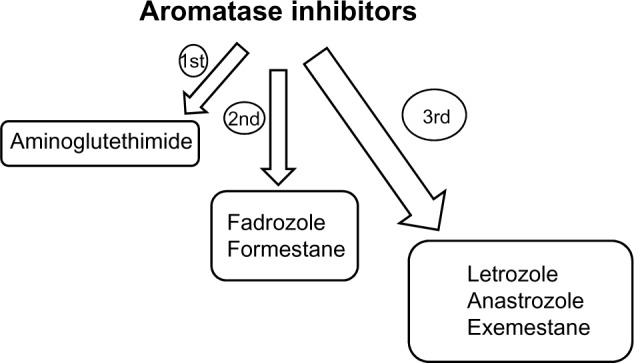
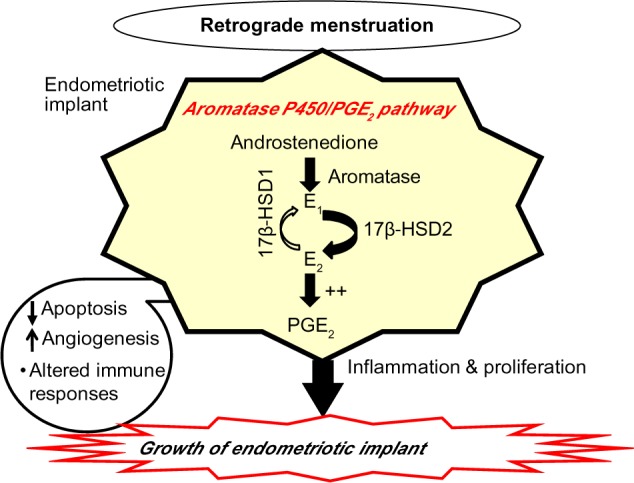
Endometriosis is an estrogen-dependent chronic inflammatory disease affecting 5%-10% of reproductive-age women, with a prevalence of 5%-50% in infertile women and >33% of women with chronic pelvic pain. Third-generation aromatase inhibitors (AIs) are approved adjuvants for the treatment of estrogen receptor-positive breast cancer. Molecular studies have revealed the presence of aromatase P450, the key enzyme in the biosynthesis of ovarian estradiol, inside the endometriotic tissue, indicating local synthesis of estradiol. Thereby, AIs represent an appealing medical option for the management of different aspects of this enigmatic disease, especially pelvic pain and infertility. Accordingly, this review aims to evaluate the potential role of AIs in the treatment of endometriosis-associated symptoms, mainly pain and infertility. Notably, several studies have demonstrated that the combination of AIs with conventional therapy as oral contraceptive pills, progestins, or gonadotropin-releasing hormone analogs can be used to control endometriosis-associated pain and pain recurrence in premenopausal women, particularly those with pain due to rectovaginal endometriosis refractory to other medical or surgical treatment. Some case reports have shown promising results in the treatment of postmenopausal endometriosis as first-line treatment, when surgery is contraindicated, or as second-line treatment in the case of postoperative recurrence. Third-generation AIs, especially letrozole, have challenged clomiphene citrate as an ovulation-induction agent in patients with polycystic ovary syndrome and in cases of unexplained infertility. However, few studies are available regarding the use of AIs to treat endometriosis-associated infertility. Therefore, larger multicenter randomized trials using AIs for the treatment of endometriosis-associated infertility are needed to clarify its effect. The safety of AIs for ovulation induction or superovulation has generated a lively discussion. Data from recent retrospective and prospective studies have supported its safety.
Keywords: anastrozole; aromatase inhibitors; endometriosis; infertility; letrozole; pelvic pain.
Figures
References
-
- Bulun SE. Endometriosis. N Engl J Med. 2009;360(3):268–279. - PubMed
-
- McLeod BS, Retzloff MG. Epidemiology of endometriosis: an assessment of risk factors. Clin Obstet Gynecol. 2010;53(2):389–396. - PubMed
-
- Guo SW, Wang Y. The prevalence of endometriosis in women with chronic pelvic pain. Gynecol Obstet Invest. 2006;62(3):121–130. - PubMed
Publication types
LinkOut - more resources
Full Text Sources
Other Literature Sources
