


The role of the Hippo pathway in human disease and tumorigenesis
- PMID: 25097728
- PMCID: PMC4112623
- DOI: 10.1186/2001-1326-3-25
The role of the Hippo pathway in human disease and tumorigenesis
Abstract
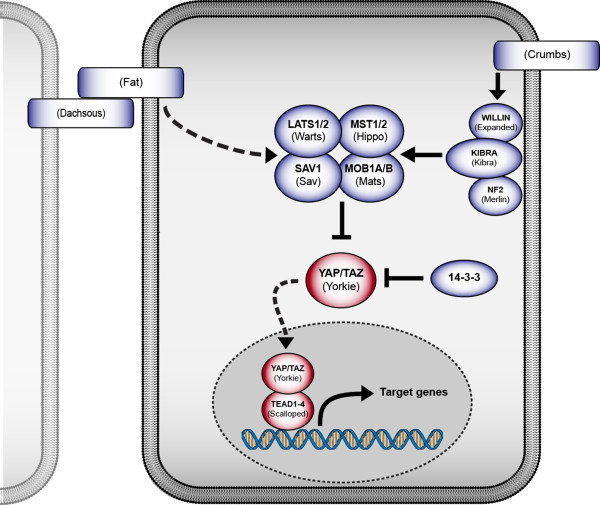
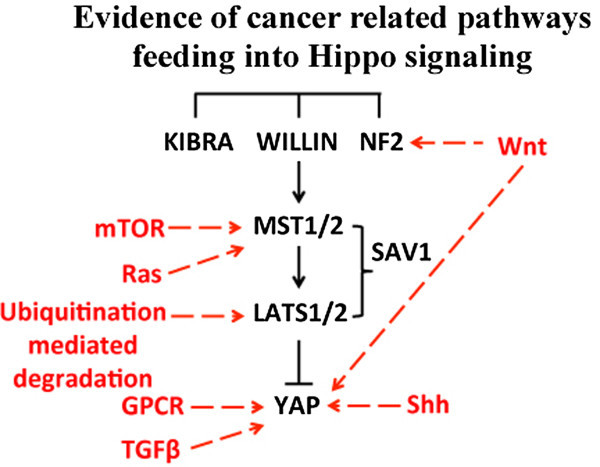
Understanding the molecular nature of human cancer is essential to the development of effective and personalized therapies. Several different molecular signal transduction pathways drive tumorigenesis when deregulated and respond to different types of therapeutic interventions. The Hippo signaling pathway has been demonstrated to play a central role in the regulation of tissue and organ size during development. The deregulation of Hippo signaling leads to a concurrent combination of uncontrolled cellular proliferation and inhibition of apoptosis, two key hallmarks in cancer development. The molecular nature of this pathway was first uncovered in Drosophila melanogaster through genetic screens to identify regulators of cell growth and cell division. The pathway is strongly conserved in humans, rendering Drosophila a suitable and efficient model system to better understand the molecular nature of this pathway. In the present study, we review the current understanding of the molecular mechanism and clinical impact of the Hippo pathway. Current studies have demonstrated that a variety of deregulated molecules can alter Hippo signaling, leading to the constitutive activation of the transcriptional activator YAP or its paralog TAZ. Additionally, the Hippo pathway integrates inputs from a number of growth signaling pathways, positioning the Hippo pathway in a central role in the regulation of tissue size. Importantly, deregulated Hippo signaling is frequently observed in human cancers. YAP is commonly activated in a number of in vitro and in vivo models of tumorigenesis, as well as a number of human cancers. The common activation of YAP in many different tumor types provides an attractive target for potential therapeutic intervention.
Keywords: Apoptosis; Cancer; Hippo signaling; YAP.
Figures
References
-
- SEER Cancer Statistics FactSheets. 2014. [ http://seer.cancer.gov/statfacts/html/all.html]
-
- Huang M, Shen A, Ding J, Geng M. Molecularly targeted cancer therapy: some lessons from the past decade. Trends Pharmacol Sci. 2014;3:41–50. - PubMed
-
- Hariharan IK, Haber DA. Yeast, flies, worms, and fish in the study of human disease. N Engl J Med. 2003;3:2457–2463. - PubMed
-
- Hilman D, Gat U. The evolutionary history of YAP and the hippo/YAP pathway. Mol Biol Evol. 2011;3:2403–2417. - PubMed
Publication types
Grants and funding
LinkOut - more resources
Full Text Sources
Other Literature Sources
Molecular Biology Databases