


Printed educational messages aimed at family practitioners fail to increase retinal screening among their patients with diabetes: a pragmatic cluster randomized controlled trial [ISRCTN72772651]
- PMID: 25098587
- PMCID: PMC4261896
- DOI: 10.1186/1748-5908-9-87
Printed educational messages aimed at family practitioners fail to increase retinal screening among their patients with diabetes: a pragmatic cluster randomized controlled trial [ISRCTN72772651]
Abstract
Background: Evidence of the effectiveness of printed educational messages in narrowing the gap between guideline recommendations and practice is contradictory. Failure to screen for retinopathy exposes primary care patients with diabetes to risk of eye complications. Screening is initiated by referral from family practitioners but adherence to guidelines is suboptimal. We aimed to evaluate the ability of printed educational messages aimed at family doctors to increase retinal screening of primary care patients with diabetes.
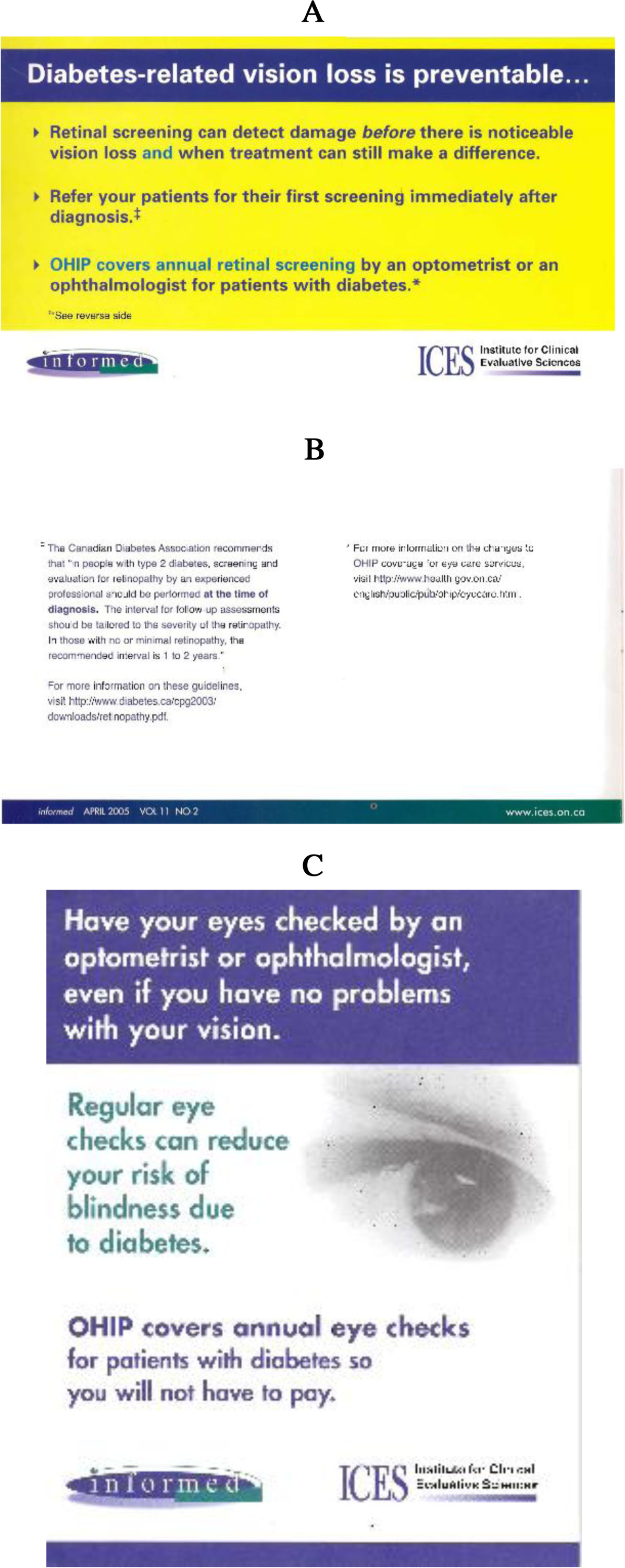
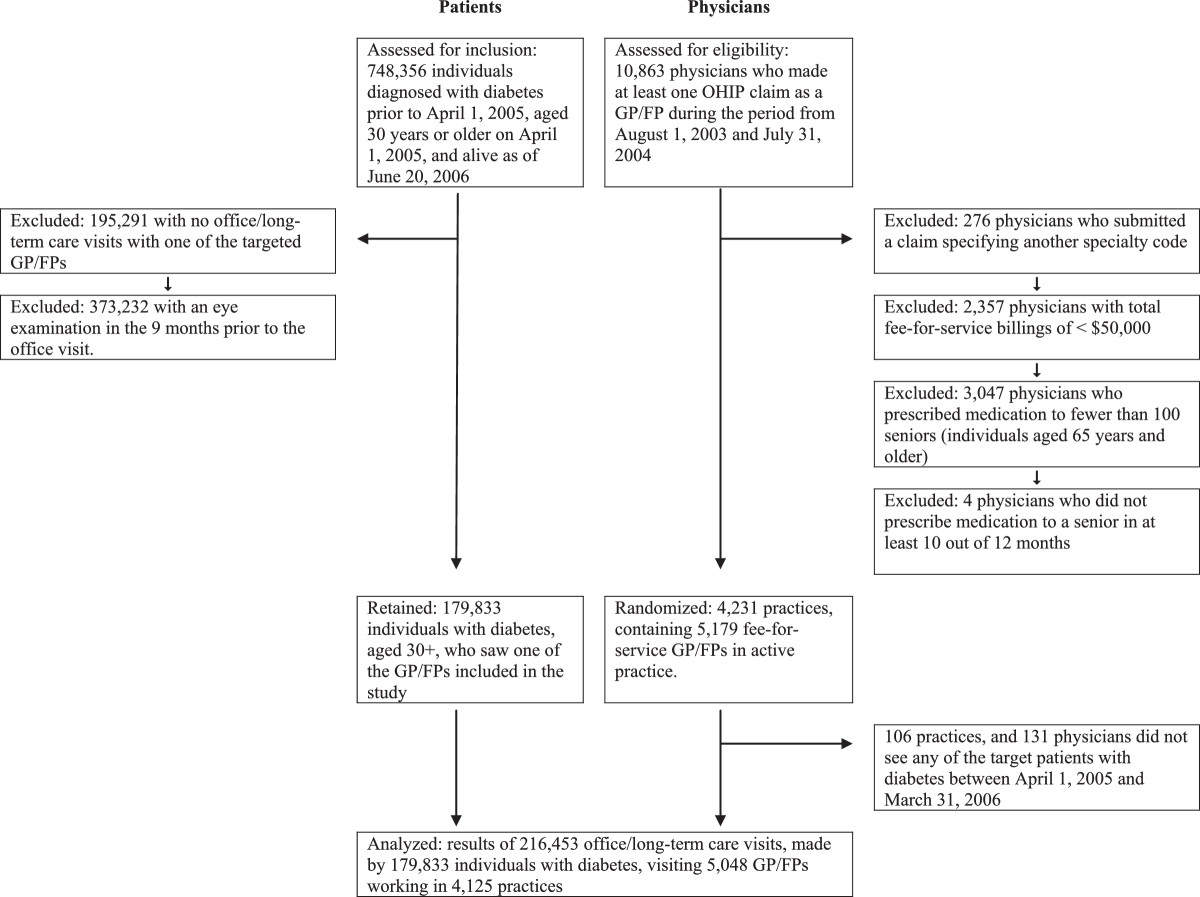
Methods: Design: Pragmatic 2×3 factorial cluster trial randomized by physician practice, involving 5,048 general practitioners (with 179,833 patients with diabetes). Setting: Ontario family practitioners. Interventions: Reminders (that retinal screening helps prevent diabetes-related vision loss and is covered by provincial health insurance for patients with diabetes) with prompts to encourage screening were mailed to each physician in conjunction with a widely-read professional newsletter. Alternative printed materials formats were an 'outsert' (short, directive message stapled to the outside of the newsletter), and/or a two-page, evidence-based article ('insert') and a pre-printed sticky note reminder for patients. Main Outcome Measure: A successful outcome was an eye examination (which includes retinal screening) provided to a patient with diabetes, not screened in the previous 12 months, within 90 days after visiting a family practitioner. Analysis accounted for clustering of doctors within practice groups.
Results: No intervention effect was detected (eye exam rates were 31.6% for patients of control physicians, 31.3% for the insert, 32.8% for the outsert, 32.3% for those who received both, and 31.2% for those who received both plus the patient reminder with the largest 95% confidence interval around any effect extending from -1.3% to 1.1%).
Conclusions: This large trial conclusively failed to demonstrate any impact of printed educational messages on screening uptake. Despite their low cost, printed educational messages should not be routinely used in attempting to close evidence-practice gaps relating to diabetic retinopathy screening.
Trial registration: ISRCTN72772651.
Figures
References
-
- Beck C, Lauzon C, Eisenberg M, Huynh T, Dion D, Roux R, Racine N, Carignan S, Diodati J, Charbonneau F, Lévesque C, Pouliot JJ, Pilote LL. Discharge prescriptions following admission for acute myocardial infarction at tertiary care and community hospitals in Quebec. Can J Cardiol. 2001;17(1):33–40. - PubMed
-
- Freemantle N, Harvey E, Wolf F, Grimshaw J, Grilli R, Bero L. Printed educational materials: effects on professional practice and health care outcomes. Cochrane Database Syst Rev. 2000;2:CD000172. - PubMed
Publication types
MeSH terms
Associated data
Grants and funding
LinkOut - more resources
Full Text Sources
Other Literature Sources
Medical
Molecular Biology Databases
Miscellaneous
