


Antimicrobial resistance, virulence profiles and molecular subtypes of Salmonella enterica serovars Typhi and Paratyphi A blood isolates from Kolkata, India during 2009-2013
- PMID: 25098613
- PMCID: PMC4123848
- DOI: 10.1371/journal.pone.0101347
Antimicrobial resistance, virulence profiles and molecular subtypes of Salmonella enterica serovars Typhi and Paratyphi A blood isolates from Kolkata, India during 2009-2013
Abstract
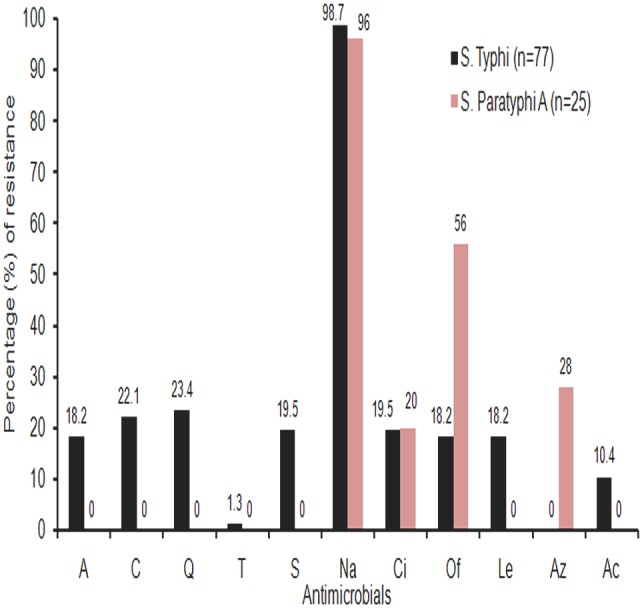
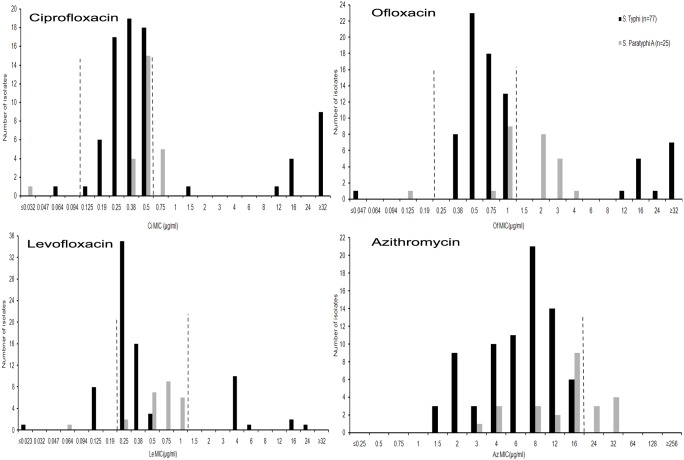
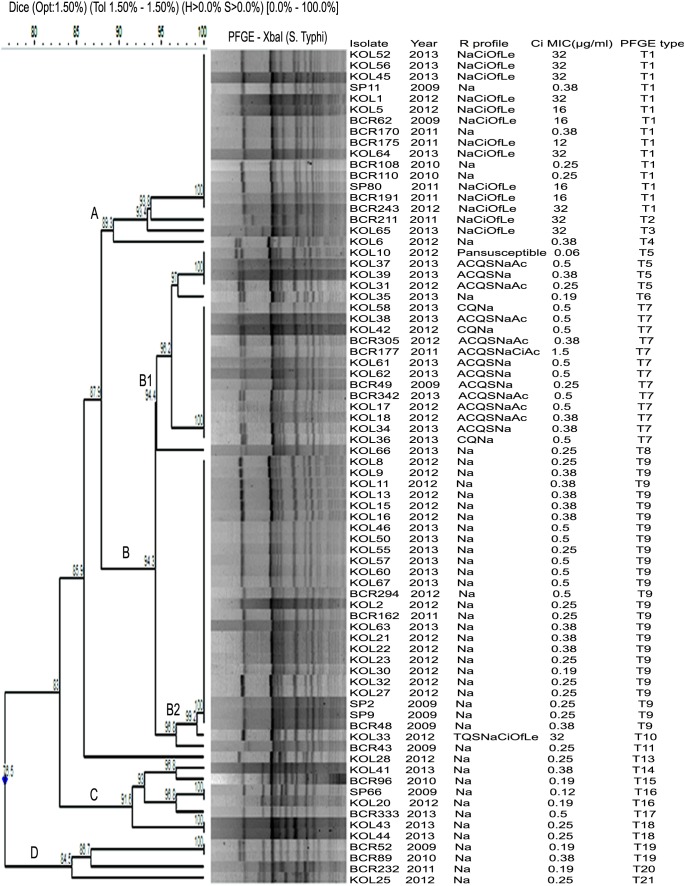
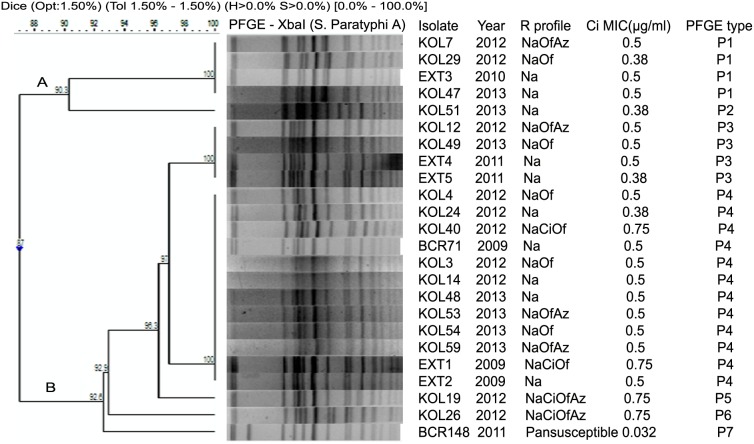
Enteric fever, caused by Salmonella enterica, remains an unresolved public health problem in India and antimicrobial therapy is the main mode of treatment. The objective of this study was to characterize the Salmonella enterica isolates from Kolkata with respect to their antimicrobial resistance (AMR), virulence profiles and molecular subtypes. Salmonella enterica blood isolates were collected from clinically suspected enteric fever patients attending various hospitals in Kolkata, India from January 2009 to June 2013 and were tested for AMR profiles by standard protocols; for resistance gene transfer by conjugation; for resistance and virulence genes profiles by PCR; and for molecular subtypes by Pulsed Field Gel Electrophoresis (PFGE). A total of 77 Salmonella enterica serovar Typhi (S. Typhi) and 25 Salmonella enterica serovar Paratyphi A (S. Paratyphi A) from Kolkata were included in this study. Although multidrug resistance (resistance to chloramphenicol, ampicillin, co-trimoxazole) was decreasing in S. Typhi (18.2%) and absent in S. Paratyphi A, increased resistance to fluoroquinolone, the current drug of choice, caused growing concern for typhoid treatment. A single, non-conjugative non-IncHI1 plasmid of 180 kb was found in 71.4% multidrug resistant (MDR) S. Typhi; the remaining 28.6% isolates were without plasmid. Various AMR markers (blaTEM-1, catA, sul1, sul2, dfrA15, strA-strB) and class 1 integron with dfrA7 gene were detected in MDR S. Typhi by PCR and sequencing. Most of the study isolates were likely to be virulent due to the presence of virulence markers. Major diversity was not noticed among S. Typhi and S. Paratyphi A from Kolkata by PFGE. The observed association between AMR profiles and S. Typhi pulsotypes might be useful in controlling the spread of the organism by appropriate intervention. The study reiterated the importance of continuous monitoring of AMR and molecular subtypes of Salmonella isolates from endemic regions for better understanding of the disease epidemiology.
Conflict of interest statement
Figures
References
-
- Verma S, Thakur S, Kanga A, Singh G, Gupta P (2010) Emerging Salmonella Paratyphi A enteric fever and changing trends in antimicrobial resistance pattern of Salmonella in Shimla. Indian J Med Microbiol 28: 51–53. - PubMed
Publication types
MeSH terms
Substances
LinkOut - more resources
Full Text Sources
Other Literature Sources
Medical
