


Decline in severe diarrhea hospitalizations after the introduction of rotavirus vaccination in Ghana: a prevalence study
- PMID: 25100574
- PMCID: PMC4132910
- DOI: 10.1186/1471-2334-14-431
Decline in severe diarrhea hospitalizations after the introduction of rotavirus vaccination in Ghana: a prevalence study
Abstract
Background: Almost all diarrhea deaths in young children occur in developing countries. Immunization against rotavirus, the leading cause of childhood severe dehydrating acute diarrhea may reduce the burden of severe diarrhea in developing countries. Ghana introduced rotavirus and pneumococcal vaccination in the national expanded program on immunization in May 2012.
Methods: Review of all-cause diarrheal hospitalization data for children aged 59 months and younger at 2 pediatric referral hospitals in southern Ghana from 2008 to 2014. The proportion of acute diarrhea (defined as 3 or more watery, non-bloody stools within 24 hours that has lasted for less than 7 days) cases caused by rotavirus was determined. Temporal trend and age group distribution of all-cause diarrhea and rotavirus gastroenteritis before and after introduction of the new vaccines were compared.
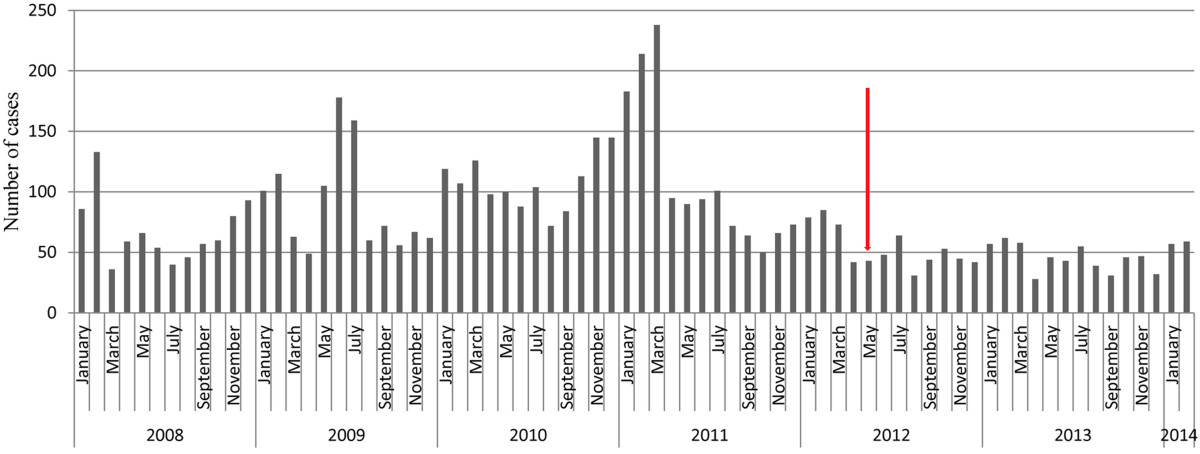
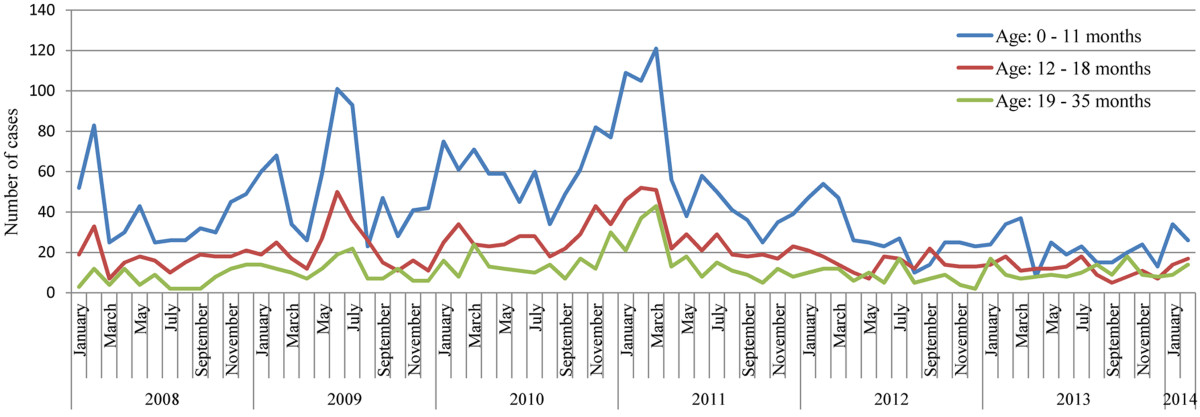
Results: Of the 5847 children hospitalized with all-cause diarrhea during the 74 months (January 2008 - February 2014), 3963 (67.8%) children were recruited for rotavirus surveillance and stool specimens were tested for rotavirus in 3160/3963 (79.7%). Median monthly hospitalization for all-cause diarrhea reduced from 84 [interquartile range (IQR) 62 - 105] during the 52 months pre-vaccination introduction to 46 (IQR 42 - 57) in the 22 months after implementation of vaccination. Significant decline in all-cause diarrhea hospitalization occurred in children aged 0 - 11 months: 56.3% (2711/4817) vs. 47.2% 486/1030 [p = 0.0001, 95% confidence interval (CI) 0.77 - 0.88] and there was significant reduction of rotavirus gastroenteritis hospitalization: 49.7% (1246/2505) vs. 27.8% (182/655) [p = 0.0001, 95% CI 0.32 - 0.47] before and after vaccine introduction respectively.
Conclusions: Implementation of rotavirus vaccination program may have resulted in significant reduction of severe diarrhea hospitalization even though this observational study could not exclude the effect of other confounding factors. Continued surveillance is recommended to monitor the progress of this program.
Figures

References
-
- RE B, Cousens S, Johnson HL, Lawn JE, Rudan I, Bassani DG, Jha P, Campbell H, Walker CF, Cibulskis R, Eisele T, Liu L, Mathers C, for the Child Health Epidemiology Reference Group of WHO and UNICEF Global, regional, and national causes of child mortality in 2008: a systematic analysis. Lancet. 2010;375:1969–1987. doi: 10.1016/S0140-6736(10)60549-1. - DOI - PubMed
-
- Prashar UD, Alexander JP, Glass RI. Prevention of rotavirus gastroenteritis among infants and children. Recommendations of the Advisory Committee on Immunization Practices (ACIP) MMWR Recomm Rep. 2005;55:1–13. - PubMed
-
- Mwenda JM, Ntoto KM, Abebe A, Enweronu-Laryea C, Amina I, Mchomvu J, Kiskye A, Mpabalwani EM, Pazvakavambwa I, Armah GE, Seheri LM, Kiulia NM, Page N, Widdowson M, Steele AD. Burden and epidemiology of rotavirus diarrhea in selected African countries: preliminary results from the African Rotavirus Surveillance Network. J Infect Dis. 2010;202(Suppl 1):5–11. doi: 10.1086/653557. - DOI - PubMed
Pre-publication history
-
- The pre-publication history for this paper can be accessed here:http://www.biomedcentral.com/1471-2334/14/431/prepub
MeSH terms
Substances
Grants and funding
LinkOut - more resources
Full Text Sources
Other Literature Sources
Medical
