


An antifungal role of hydrogen sulfide on the postharvest pathogens Aspergillus niger and Penicillium italicum
- PMID: 25101960
- PMCID: PMC4125178
- DOI: 10.1371/journal.pone.0104206
An antifungal role of hydrogen sulfide on the postharvest pathogens Aspergillus niger and Penicillium italicum
Abstract
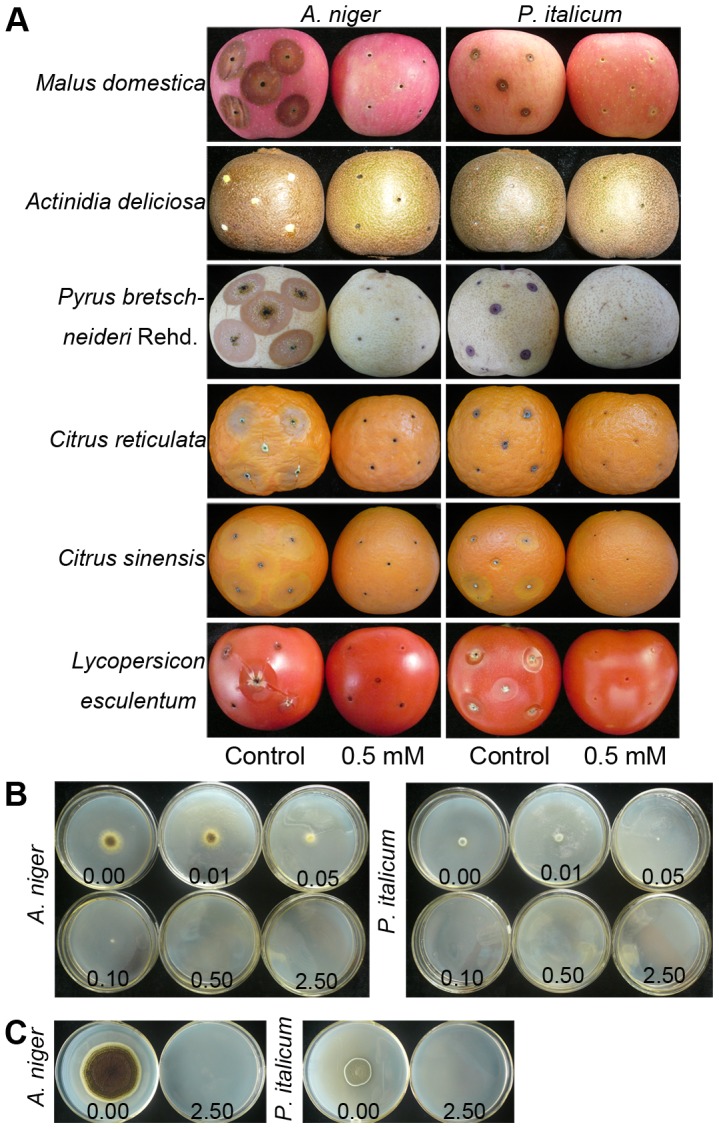
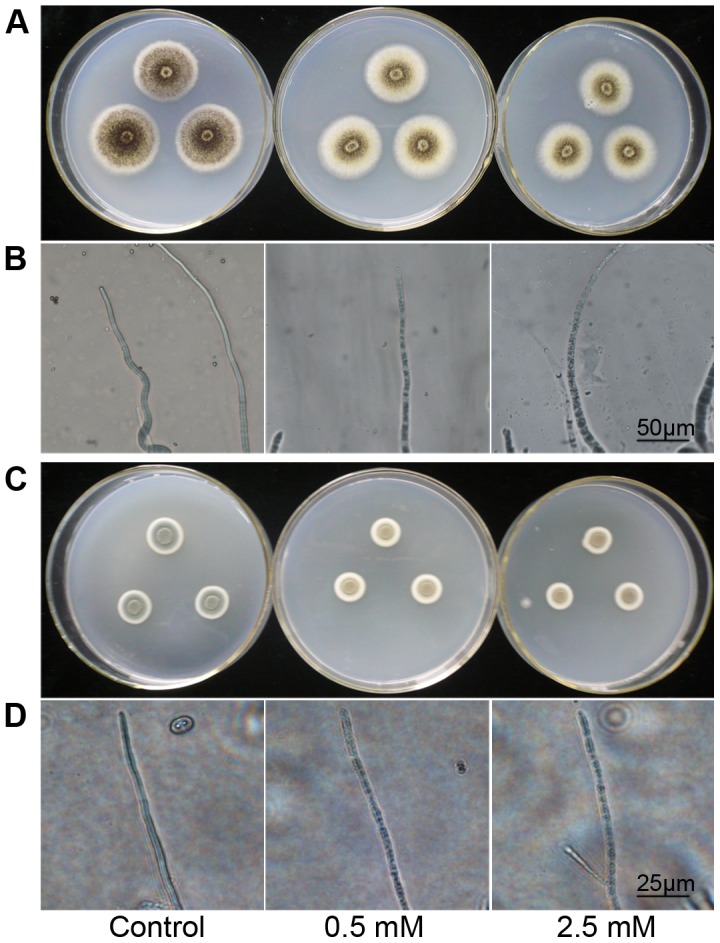
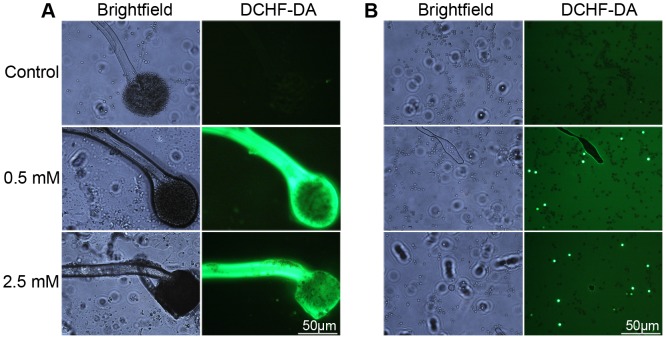
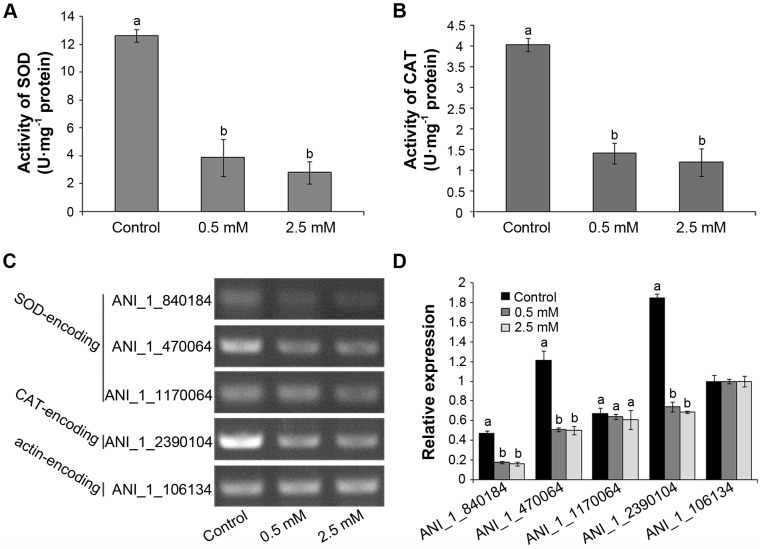
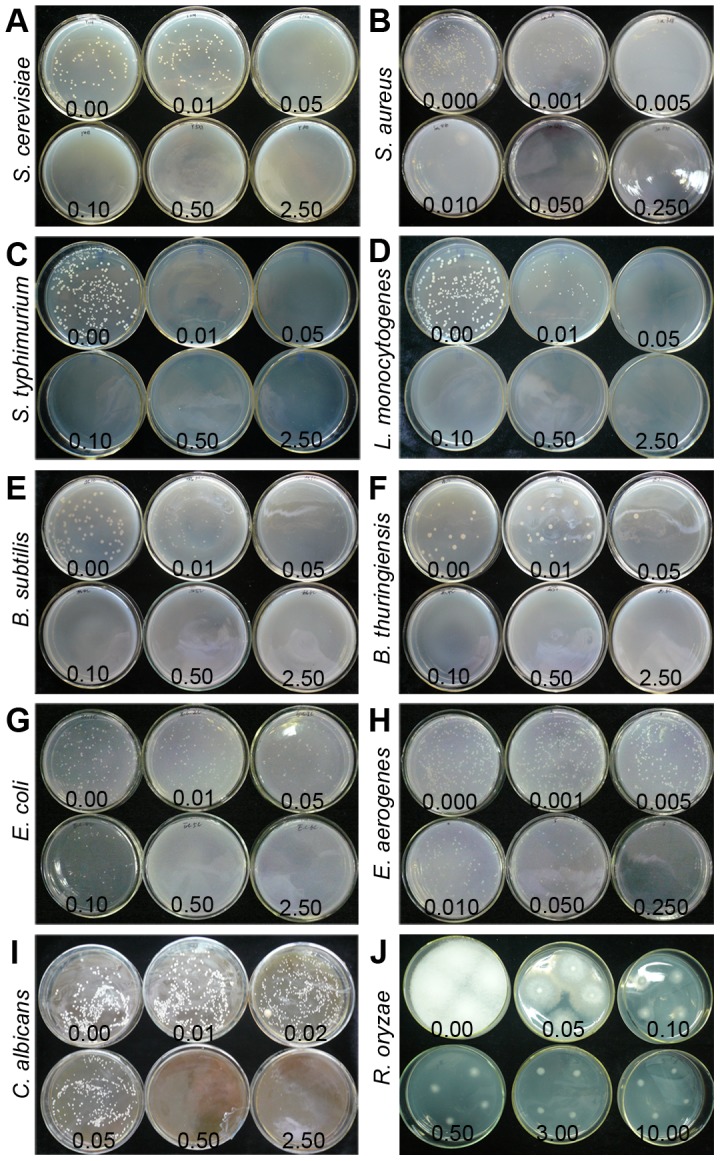
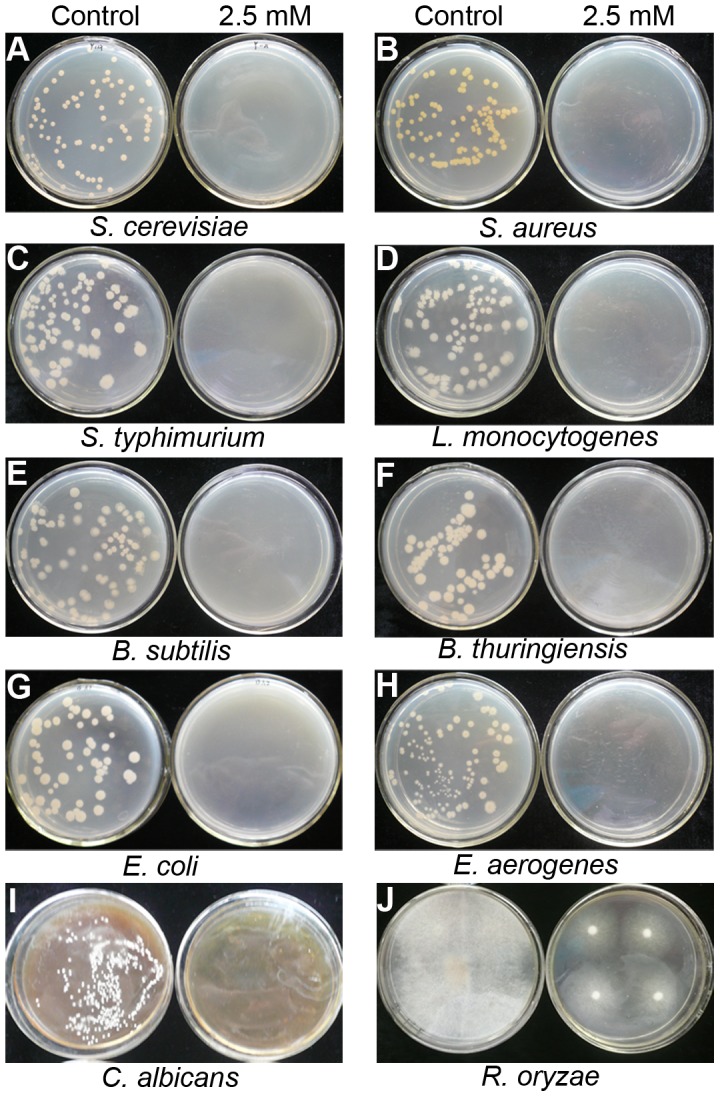
In this research, the antifungal role of hydrogen sulfide (H2S) on the postharvest pathogens Aspergillus niger and Penicillium italicum growing on fruits and under culture conditions on defined media was investigated. Our results show that H2S, released by sodium hydrosulfide (NaHS) effectively reduced the postharvest decay of fruits induced by A. niger and P. italicum. Furthermore, H2S inhibited spore germination, germ tube elongation, mycelial growth, and produced abnormal mycelial contractions when the fungi were grown on defined media in Petri plates. Further studies showed that H2S could cause an increase in intracellular reactive oxygen species (ROS) in A. niger. In accordance with this observation we show that enzyme activities and the expression of superoxide dismutase (SOD) and catalase (CAT) genes in A. niger treated with H2S were lower than those in control. Moreover, H2S also significantly inhibited the growth of Saccharomyces cerevisiae, Rhizopus oryzae, the human pathogen Candida albicans, and several food-borne bacteria. We also found that short time exposure of H2S showed a microbicidal role rather than just inhibiting the growth of microbes. Taken together, this study suggests the potential value of H2S in reducing postharvest loss and food spoilage caused by microbe propagation.
Conflict of interest statement
Figures
References
-
- Hodges RJ, Buzby JC, Bennett B (2011) Postharvest losses and waste in developed and less developed countries: opportunities to improve resource use. J Agric Sci 149: 37–45.
-
- Heydari A, Pessarakli M (2010) A review on biological control of fungal plant pathogens using microbial antagonists. J Biol Sci 10: 273–290.
-
- Tian J, Ban X, Zeng H, Huang B, He J, et al. (2011) In vitro and in vivo activity of essential oil from dill (Anethum graveolens L.) against fungal spoilage of cherry tomatoes. Food Control 22: 1992–1999.
-
- García-Cela E, Crespo-Sempere A, Ramos AJ, Sanchis V, Marin S (2014) Ecophysiological characterization of Aspergillus carbonarius, Aspergillus tubingensis and Aspergillus niger isolated from grapes in Spanish vineyards. Int J Food Microbiol 173: 89–98. - PubMed
-
- Hernández-Montiel LG, Ochoa JL, Troyo-Diéguez E, Larralde-Corona CP (2010) Biocontrol of postharvest blue mold (Penicillium italicum Wehmer) on Mexican lime by marine and citrus Debaryomyces hansenii isolates. Postharvest Biol Technol 56: 181–187.
Publication types
MeSH terms
Substances
LinkOut - more resources
Full Text Sources
Other Literature Sources
Miscellaneous
