. 2014 Nov;28(11):4617-28.
doi: 10.1096/fj.13-248930. Epub 2014 Aug 7.

Epac1 and Epac2 are differentially involved in inflammatory and remodeling processes induced by cigarette smoke

Affiliations

Epac1 and Epac2 are differentially involved in inflammatory and remodeling processes induced by cigarette smoke

Anouk Oldenburger et al. FASEB J. 2014 Nov.

Abstract

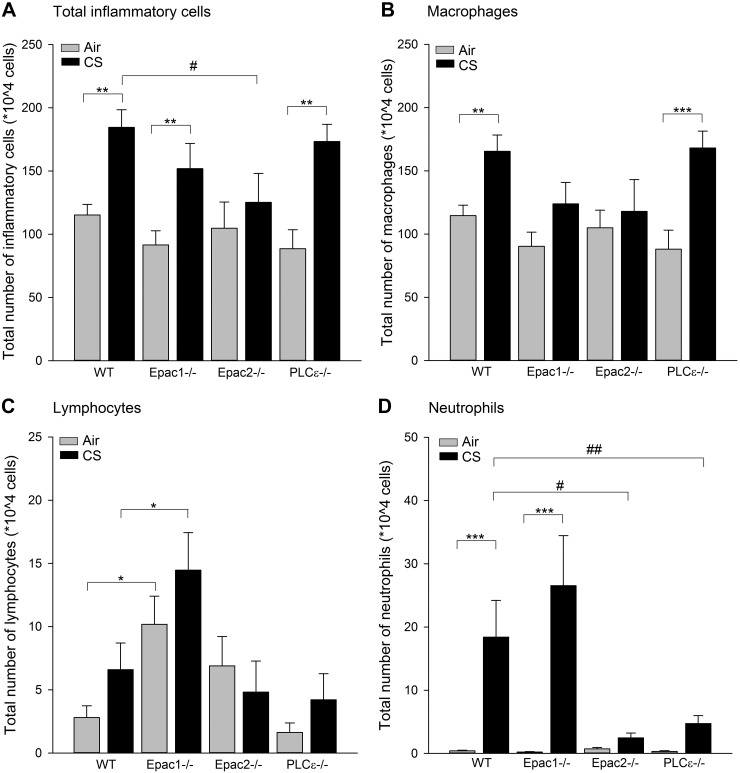
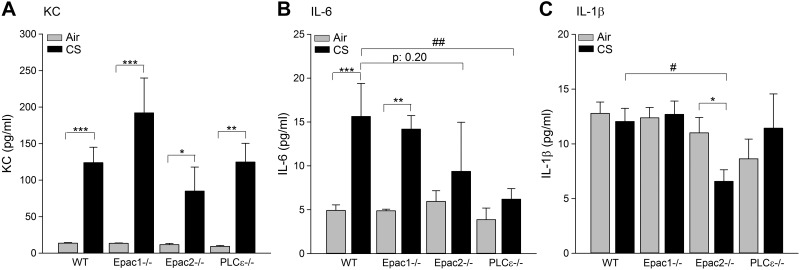
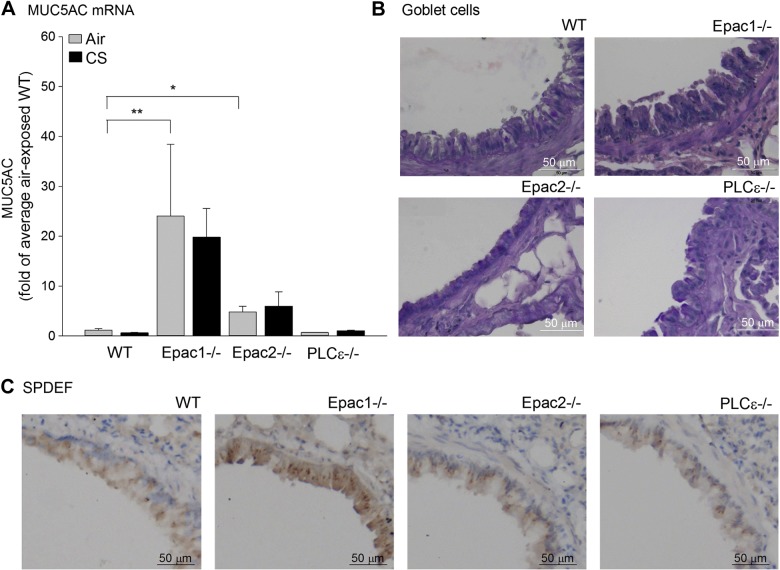
Cigarette smoke (CS) induces inflammatory responses characterized by increase of immune cells and cytokine release. Remodeling processes, such as mucus hypersecretion and extracellular matrix protein production, are also directly or indirectly induced by CS. Recently, we showed that activation of the exchange protein directly activated by cAMP (Epac) attenuates CS extract-induced interleukin (IL)-8 release from cultured airway smooth muscle cells. Using an acute, short-term model of CS exposure, we now studied the role of Epac1, Epac2, and the Epac effector phospholipase-Cε (PLCε) in airway inflammation and remodeling in vivo. Compared to wild-type mice exposed to CS, the number of total inflammatory cells, macrophages, and neutrophils and total IL-6 release was lower in Epac2(-/-) mice, which was also the case for neutrophils and IL-6 in PLCε(-/-) mice. Taken together, Epac2, acting partly via PLCε, but not Epac1, enhances CS-induced airway inflammation in vivo. In total lung homogenates of Epac1(-/-) mice, MUC5AC and matrix remodeling parameters (transforming growth factor-β1, collagen I, and fibronectin) were increased at baseline. Our findings suggest that Epac1 primarily is capable of inhibiting remodeling processes, whereas Epac2 primarily increases inflammatory processes in vivo.

Keywords: cAMP; exchange protein; phospholipase Cε.


Figures

Figure 1.
Figure 1.
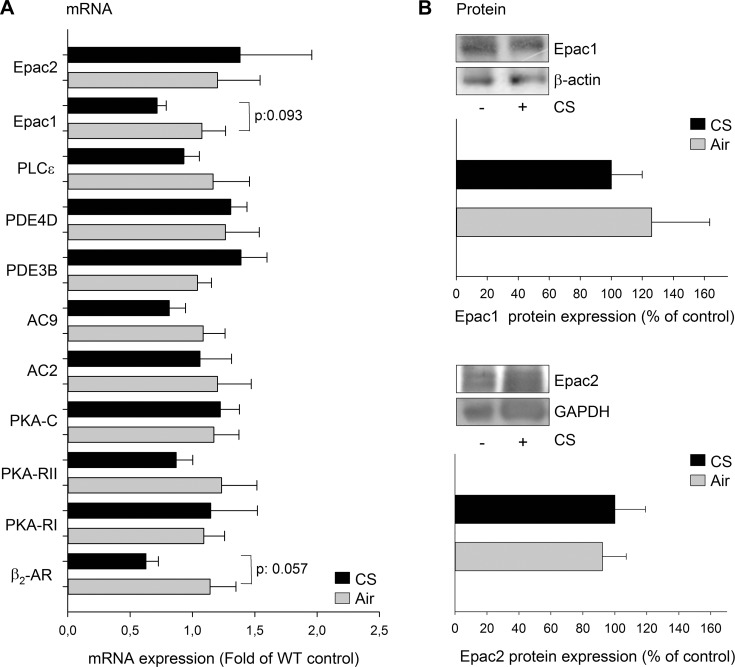
Effect of CS on different components of the cAMP pathway. A) mRNA expression of the indicated proteins was measured in lung homogenates of WT mice exposed to air or CS for 4 d. B) Protein expression of Epac1 and Epac2 was measured in lung homogenates of WT mice exposed to air and CS for 4 d. Epac1 and Epac2 protein expression was normalized against GAPDH or β-actin. Data are presented as means ± sem of 6–10 animals.
Figure 2.
Figure 2.
Inflammatory cell numbers were determined in BALF. WT, Epac1−/−, Epac2−/−, and PLCε−/− mice were exposed to air or CS for 4 d, after which BALF was collected. The level of total inflammatory cells (A), macrophages (B), lymphocytes (C), and neutrophils (D) in BALF were analyzed. Data are presented as means ± sem of 6–10 animals. *P < 0.05, **P < 0.01, ***P < 0.001 vs. basal control; #P < 0.05 vs. WT exposed to CS.
Figure 3.
Figure 3.
Cytokine secretion was analyzed in BALF. WT, Epac1−/−, Epac2−/−, and PLCε−/− mice were exposed to air or CS for 4 d, after which BALF was collected. KC (A), IL-6 (B), and IL-1β (C) levels were determined. Data are presented as means ± sem of 6–10 animals. *P < 0.05, **P < 0.01, ***P < 0.001 vs.basal control; #P < 0.05, ##P < 0.01 vs. WT exposed to CS.
Figure 4.
Figure 4.
Analysis of MUC5AC mRNA expression, goblet cells, and SPDEF-positive cells. Regulation of MUC5AC mRNA, goblet cell number, and SPDEF staining was analyzed in WT, Epac1−/−, Epac2−/−, and PLCε−/− mice. A) Expression of MUC5AC mRNA was determined in lung homogenates of WT, Epac1−/−, Epac2−/−, and PLCε−/− mice exposed to air or CS for 4 d. Data are presented as means ± sem of 6–10 animals. *P < 0.05, **P < 0.01 vs.basal control. B, C) Representative images of PAS staining (B) and SPDEF immunohistochemistry staining (C).
Figure 5.
Figure 5.
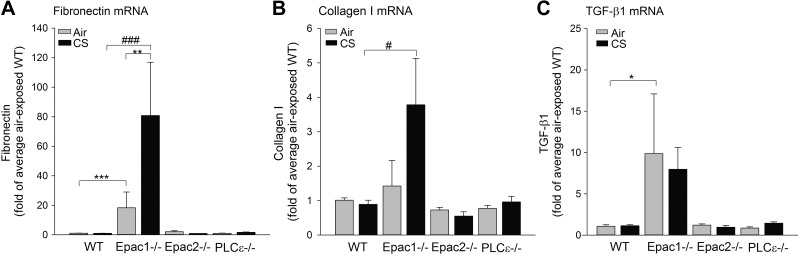
Determination of mRNA expression of remodeling parameters in total lung homogenates. Lung tissue of WT, Epac1−/−, Epac2−/− and PLCε−/− mice exposed to air or CS was homogenized, and mRNA expression of fibronectin (A), collagen I (B) and TGF-β1 (C) was measured. Data are presented as means ± sem of 6–10 animals. *P < 0.05, **P < 0.01, ***P < 0.001 vs. basal control, #P < 0.05, ###P < 0.001 vs.WT exposed to CS.
Figure 6.
Figure 6.
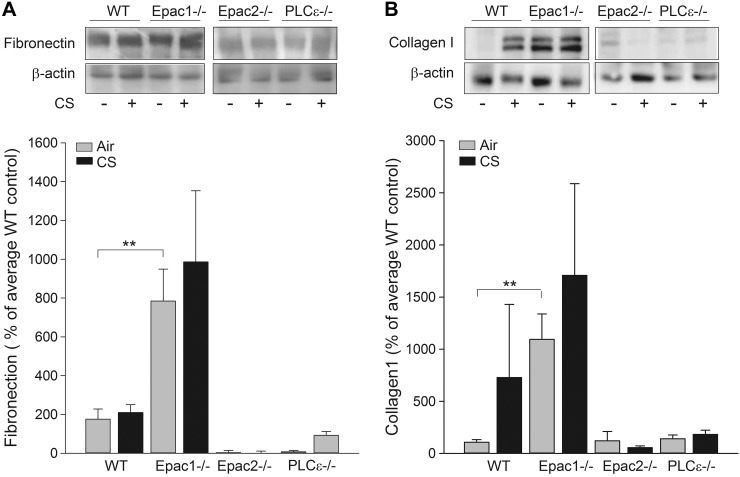
Protein expression of remodeling parameters was determined in total lung homogenates. Lung tissue of WT, Epac1−/−, Epac2−/−, and PLCε−/− mice exposed to CS was homogenized, and protein expression of fibronectin (A) and collagen I (B) was measured. Data are presented as means ± sem of 4–6 animals. **P < 0.01 vs. basal control.
Figure 7.
Figure 7.
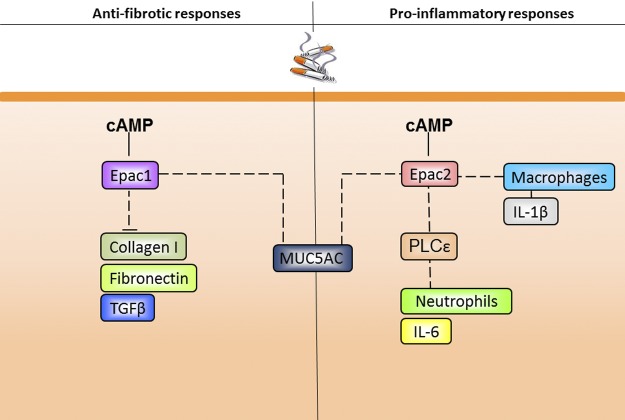
Proposed model for the regulation of inflammation and remodeling by Epac1, Epac2, and PLCε. Epac1 acts as an antifibrotic factor and inhibits the expression of fibronectin, collagen I, and TGF-β1. Epac1 and Epac2 inhibit the expression of MUC5AC. Epac2 regulates the number of CS-induced macrophages and IL-1β release. Presumably via PLCε, Epac2 regulates the number of CS-induced neutrophil numbers and IL-6 release. For details, see text.

References

    1. Chung K. F., Adcock I. M. (2008) Multifaceted mechanisms in COPD: Inflammation, immunity, and tissue repair and destruction. Eur. Respir. J. 31, 1334–1356 - PubMed
    1. Raherison C. (2011) [Epidemiology of chronic obstructive pulmonary disease]. Rev. Prat. 61, 769–773 - PubMed
    1. Barnes P. J. (2008) Frontrunners in novel pharmacotherapy of COPD. Curr. Opin. Pharmacol. 8, 300–307 - PubMed
    1. Schmidt M., Dekker F. J., Maarsingh H. (2013) Exchange protein directly activated by cAMP (Epac): A multidomain cAMP mediator in the regulation of diverse biological functions. Pharmacol. Rev. 65, 670–709 - PubMed
    1. Oldenburger A., Roscioni S. S., Jansen E., Menzen M. H., Halayko A. J., Timens W., Meurs H., Maarsingh H., Schmidt M. (2012) Anti-inflammatory role of the cAMP effectors Epac and PKA: Implications in chronic obstructive pulmonary disease. PLoS One 7, e31574. - PMC - PubMed

Publication types

LinkOut - more resources