


Elevated risk for autoimmune disorders in iraq and afghanistan veterans with posttraumatic stress disorder
- PMID: 25104173
- PMCID: PMC4277929
- DOI: 10.1016/j.biopsych.2014.06.015
Elevated risk for autoimmune disorders in iraq and afghanistan veterans with posttraumatic stress disorder
Abstract
Background: Posttraumatic stress disorder (PTSD) is associated with endocrine and immune abnormalities that could increase risk for autoimmune disorders. However, little is known about the risk for autoimmune disorders among individuals with PTSD.
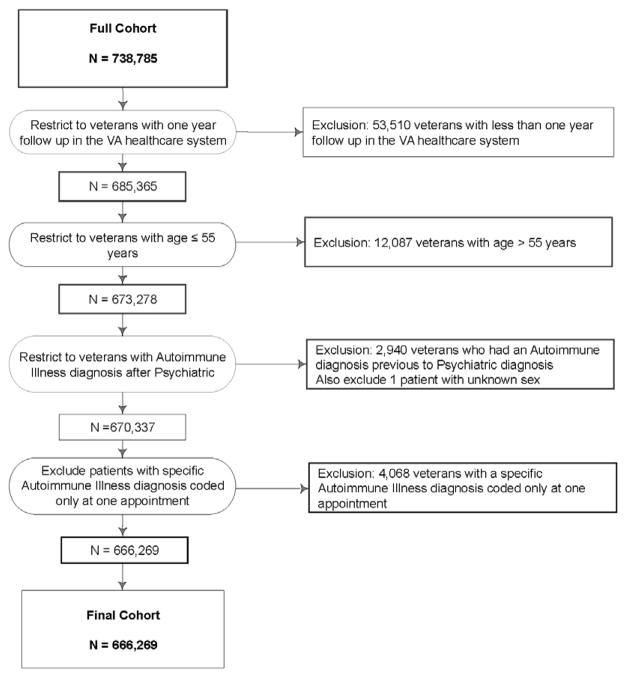
Methods: We conducted a retrospective cohort study of 666,269 Iraq and Afghanistan veterans under age 55 who were enrolled in the Department of Veterans Affairs health care system between October 7, 2001, and March 31, 2011. Generalized linear models were used to examine if PTSD, other psychiatric disorders, and military sexual trauma exposure increased risk for autoimmune disorders, including thyroiditis, inflammatory bowel disease, rheumatoid arthritis, multiple sclerosis, and lupus erythematosus, adjusting for age, gender, race, and primary care visits.
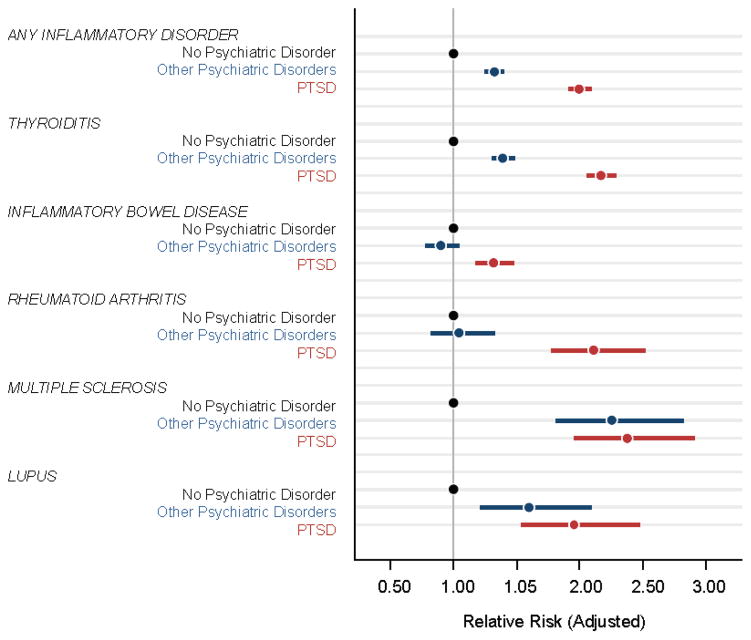
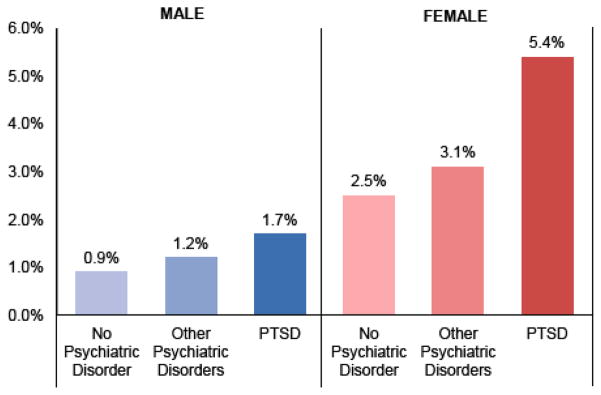
Results: PTSD was diagnosed in 203,766 veterans (30.6%), and psychiatric disorders other than PTSD were diagnosed in an additional 129,704 veterans (19.5%). Veterans diagnosed with PTSD had significantly higher adjusted relative risk (ARR) for diagnosis with any of the autoimmune disorders alone or in combination compared with veterans with no psychiatric diagnoses (ARR = 2.00; 95% confidence interval, 1.91-2.09) and compared with veterans diagnosed with psychiatric disorders other than PTSD (ARR = 1.51; 95% confidence interval, 1.43-1.59; p < .001). The magnitude of the PTSD-related increase in risk for autoimmune disorders was similar in women and men, and military sexual trauma exposure was independently associated with increased risk in both women and men.
Conclusions: Trauma exposure and PTSD may increase risk for autoimmune disorders. Altered immune function, lifestyle factors, or shared etiology may underlie this association.
Keywords: Autoimmune disorders; Glucocorticoids; Immune system; Inflammation; Military sexual trauma; Posttraumatic stress disorder; Traumatic stress; Veterans.
Copyright © 2015 Society of Biological Psychiatry. All rights reserved.
Figures
Comment in
-
Posttraumatic stress disorder and autoimmune diseases.Biol Psychiatry. 2015 Feb 15;77(4):312-3. doi: 10.1016/j.biopsych.2014.12.006. Biol Psychiatry. 2015. PMID: 25592269 No abstract available.
References
-
- Yehuda R, Teicher MH, Levengood RA, Trestman RL, Siever LJ. Circadian regulation of basal cortisol levels in posttraumatic stress disorder. Ann N Y Acad Sci. 1994;746:378–380. - PubMed
-
- Neylan TC, Brunet A, Pole N, Best SR, Metzler TJ, Yehuda R, et al. PTSD symptoms predict waking salivary cortisol levels in police officers. Psychoneuroendocrinology. 2005;30:373–381. - PubMed
-
- Yehuda R, Golier JA, Kaufman S. Circadian rhythm of salivary cortisol in Holocaust survivors with and without PTSD. Am J Psychiatry. 2005;162:998–1000. - PubMed
-
- Pace TW, Wingenfeld K, Schmidt I, Meinlschmidt G, Hellhammer DH, Heim CM. Increased peripheral NF-kappaB pathway activity in women with childhood abuse-related posttraumatic stress disorder. Brain Behav Immun. 2012;26:13–17. - PubMed
Publication types
MeSH terms
Grants and funding
LinkOut - more resources
Full Text Sources
Other Literature Sources
Medical
