


Molecular mechanisms of action of herbal antifungal alkaloid berberine, in Candida albicans
- PMID: 25105295
- PMCID: PMC4126717
- DOI: 10.1371/journal.pone.0104554
Molecular mechanisms of action of herbal antifungal alkaloid berberine, in Candida albicans
Abstract
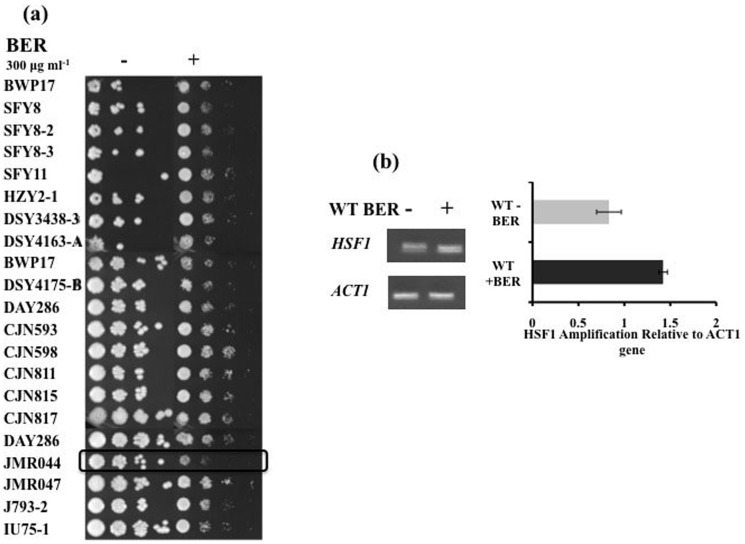
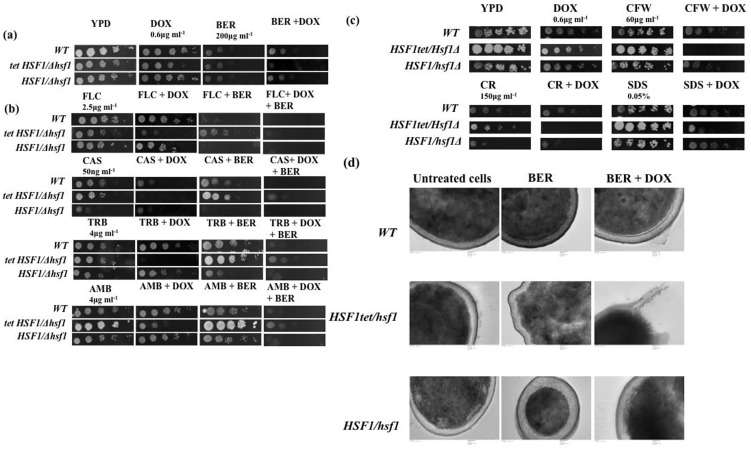
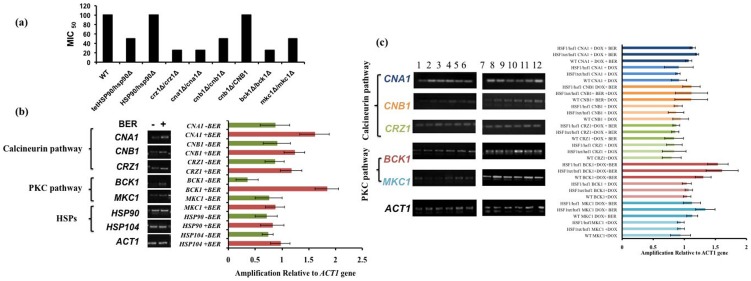
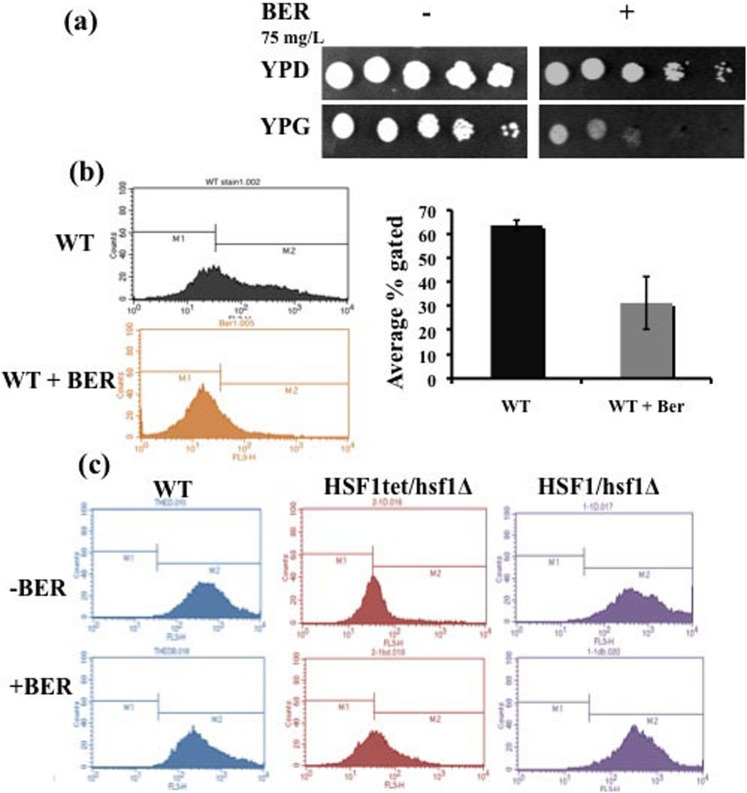
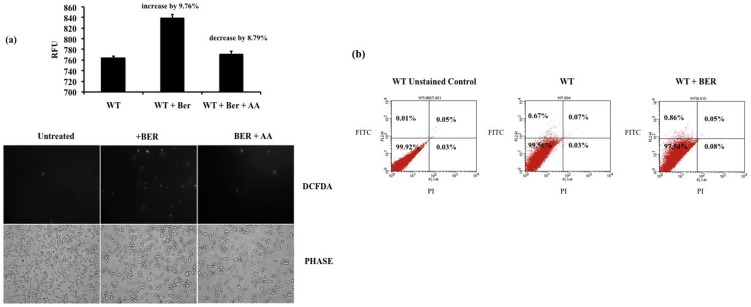
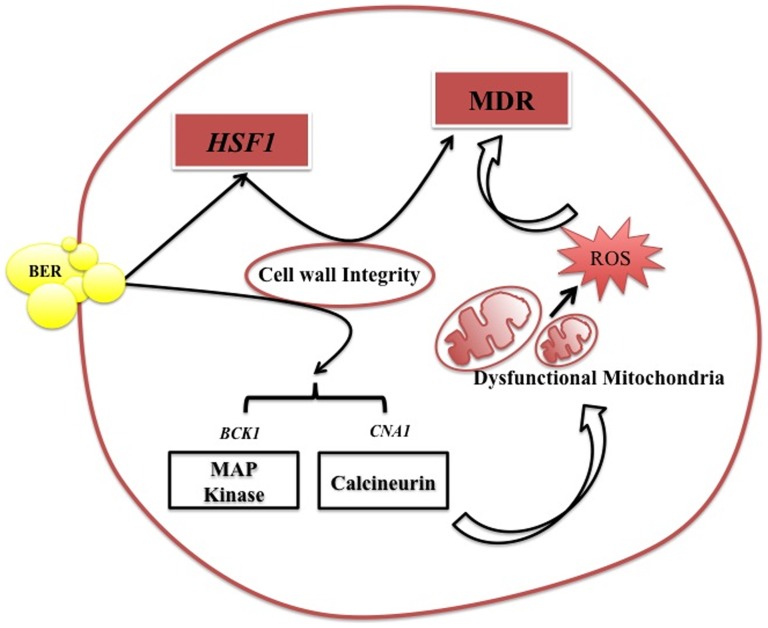
Candida albicans causes superficial to systemic infections in immuno-compromised individuals. The concomitant use of fungistatic drugs and the lack of cidal drugs frequently result in strains that could withstand commonly used antifungals, and display multidrug resistance (MDR). In search of novel fungicidals, in this study, we have explored a plant alkaloid berberine (BER) for its antifungal potential. For this, we screened an in-house transcription factor (TF) mutant library of C. albicans strains towards their susceptibility to BER. Our screen of TF mutant strains identified a heat shock factor (HSF1), which has a central role in thermal adaptation, to be most responsive to BER treatment. Interestingly, HSF1 mutant was not only highly susceptible to BER but also displayed collateral susceptibility towards drugs targeting cell wall (CW) and ergosterol biosynthesis. Notably, BER treatment alone could affect the CW integrity as was evident from the growth retardation of MAP kinase and calcineurin pathway null mutant strains and transmission electron microscopy. However, unlike BER, HSF1 effect on CW appeared to be independent of MAP kinase and Calcineurin pathway genes. Additionally, unlike hsf1 null strain, BER treatment of Candida cells resulted in dysfunctional mitochondria, which was evident from its slow growth in non-fermentative carbon source and poor labeling with mitochondrial membrane potential sensitive probe. This phenotype was reinforced with an enhanced ROS levels coinciding with the up-regulated oxidative stress genes in BER-treated cells. Together, our study not only describes the molecular mechanism of BER fungicidal activity but also unravels a new role of evolutionary conserved HSF1, in MDR of Candida.
Conflict of interest statement
Figures

Similar articles
-
Non-heat shock responsive roles of HSF1 in Candida albicans are essential under iron deprivation and drug defense.Biochim Biophys Acta Mol Cell Res. 2017 Feb;1864(2):345-354. doi: 10.1016/j.bbamcr.2016.11.021. Epub 2016 Nov 24. Biochim Biophys Acta Mol Cell Res. 2017. PMID: 27889440
-
In vitro effect of malachite green on Candida albicans involves multiple pathways and transcriptional regulators UPC2 and STP2.Antimicrob Agents Chemother. 2012 Jan;56(1):495-506. doi: 10.1128/AAC.00574-11. Epub 2011 Oct 17. Antimicrob Agents Chemother. 2012. PMID: 22006003 Free PMC article.
-
Hsp90 governs echinocandin resistance in the pathogenic yeast Candida albicans via calcineurin.PLoS Pathog. 2009 Jul;5(7):e1000532. doi: 10.1371/journal.ppat.1000532. Epub 2009 Jul 31. PLoS Pathog. 2009. PMID: 19649312 Free PMC article.
-
Candida albicans Heat Shock Proteins and Hsps-Associated Signaling Pathways as Potential Antifungal Targets.Front Cell Infect Microbiol. 2017 Dec 19;7:520. doi: 10.3389/fcimb.2017.00520. eCollection 2017. Front Cell Infect Microbiol. 2017. PMID: 29312897 Free PMC article. Review.
-
An update on antifungal targets and mechanisms of resistance in Candida albicans.Med Mycol. 2005 Jun;43(4):285-318. doi: 10.1080/13693780500138971. Med Mycol. 2005. PMID: 16110776 Review.
Cited by
-
Synergistic Effect of Berberine Hydrochloride and Fluconazole Against Candida albicans Resistant Isolates.Front Microbiol. 2020 Jul 2;11:1498. doi: 10.3389/fmicb.2020.01498. eCollection 2020. Front Microbiol. 2020. PMID: 32714312 Free PMC article.
-
Inhibitory effects of berberine on fungal growth, biofilm formation, virulence, and drug resistance as an antifungal drug and adjuvant with prospects for future applications.World J Microbiol Biotechnol. 2024 Dec 18;41(1):5. doi: 10.1007/s11274-024-04223-4. World J Microbiol Biotechnol. 2024. PMID: 39690297 Review.
-
Requirement for Ergosterol in Berberine Tolerance Underlies Synergism of Fluconazole and Berberine against Fluconazole-Resistant Candida albicans Isolates.Front Cell Infect Microbiol. 2017 Nov 29;7:491. doi: 10.3389/fcimb.2017.00491. eCollection 2017. Front Cell Infect Microbiol. 2017. PMID: 29238700 Free PMC article.
-
Discovery of Natural Products With Antifungal Potential Through Combinatorial Synergy.Front Microbiol. 2022 Apr 26;13:866840. doi: 10.3389/fmicb.2022.866840. eCollection 2022. Front Microbiol. 2022. PMID: 35558105 Free PMC article.
-
Antifungal Compounds against Candida Infections from Traditional Chinese Medicine.Biomed Res Int. 2017;2017:4614183. doi: 10.1155/2017/4614183. Epub 2017 Dec 28. Biomed Res Int. 2017. PMID: 29445739 Free PMC article. Review.
References
-
- Hajjeh RA, Sofair AN, Harrison LH, Lyon GM, Arthington-Skaggs BA, et al. (2004) Incidence of bloodstream infections due to Candida species and in vitro susceptibilities of isolates collected from 1998 to 2000 in a population-based active surveillance program. J Clin Microbiol 42: 1519–1527. - PMC - PubMed
-
- Odds FC, Brown AJ, Gow NA (2003) Antifungal agents: mechanisms of action. Trends in Microbiology 11: 272–279. - PubMed
-
- Sucher AJ, Chahine EB, Balcer HE (2009) Echinocandins: the newest class of antifungals. Ann Pharmacother 43: 1647–57. - PubMed
Publication types
MeSH terms
Substances
LinkOut - more resources
Full Text Sources
Other Literature Sources
Medical
Miscellaneous
