


Circulating tumor cells in patients with recurrent or metastatic head and neck carcinoma: prognostic and predictive significance
- PMID: 25105871
- PMCID: PMC4126745
- DOI: 10.1371/journal.pone.0103918
Circulating tumor cells in patients with recurrent or metastatic head and neck carcinoma: prognostic and predictive significance
Abstract
Introduction: We investigated the frequency of detection and the prognostic and predictive significance of circulating tumor cells (CTCs) in patients with recurrent/metastatic (R/M) head and neck carcinoma (HNC) before starting systemic therapy.
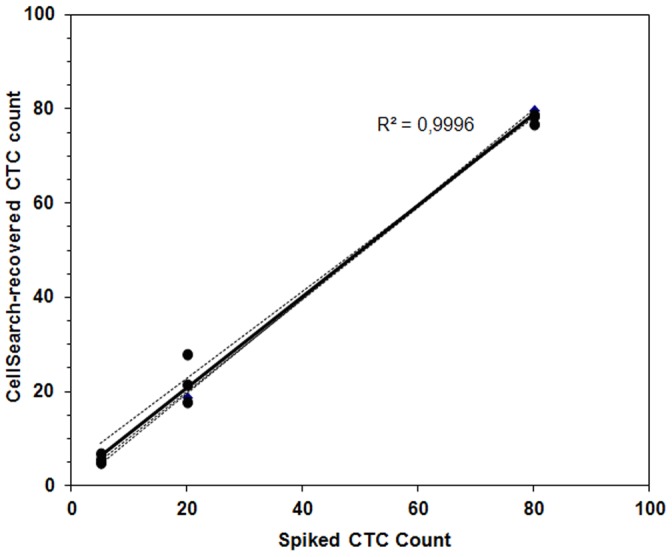
Patients and methods: Using the CellSearch technology, CTCs were assessed prospectively in peripheral blood of 53 R/M-HNC patients. We performed spiking experiments to test the diagnostic performance of the CellSearch platform in identifying squamous carcinoma cells.
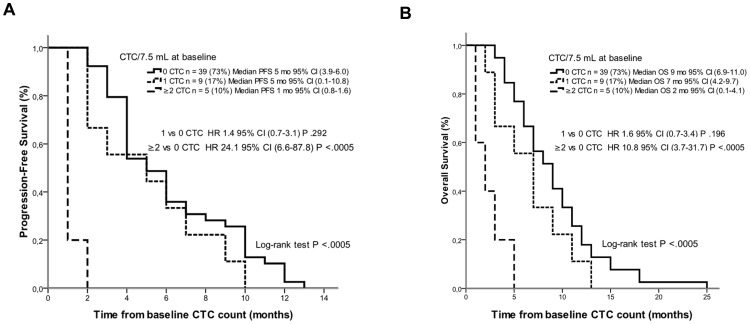
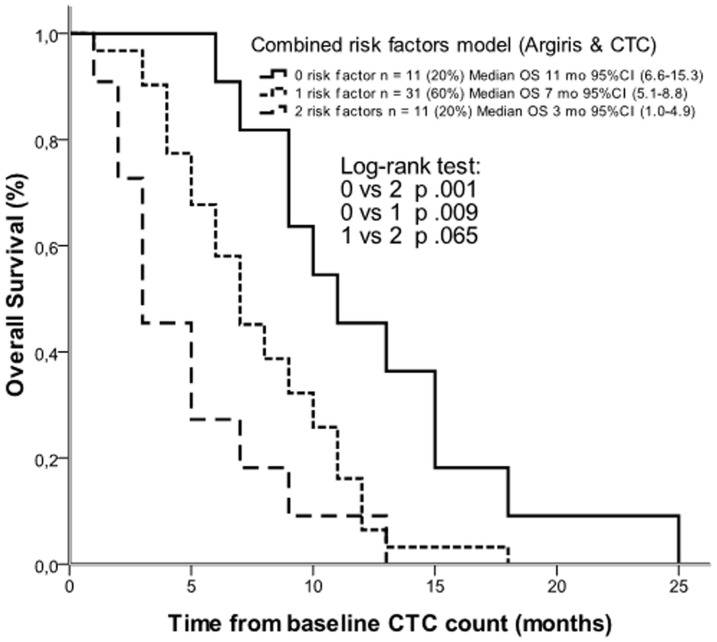
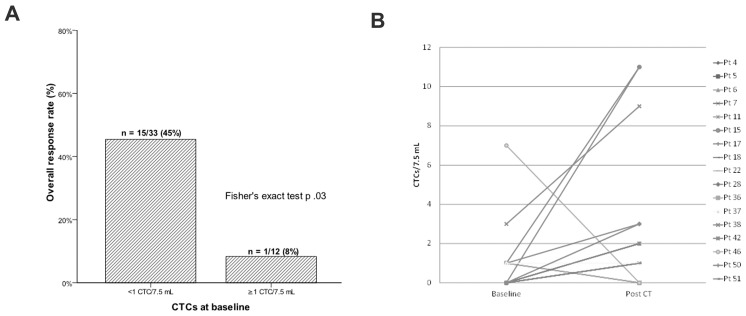
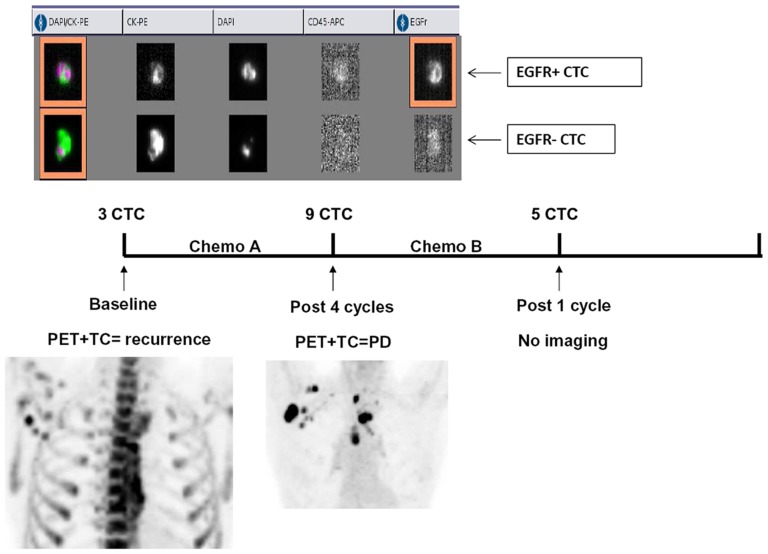
Results: CTCs were identified in 14 (26%) and 22 (41%) patients at baseline and at any time point, respectively. In univariate analysis ≥2 CTCs had a poorer prognostic role than 0-1 CTC. In multivariate analysis, the presence of one CTC or more was associated with a poor prognosis both in terms of progression-free survival (PFS) [Hazard Ratio (HR): 3.068, 95% confidence interval (CI): 1.53-6.13, p 0.002] and overall survival (OS) [HR: 3.0, 95% CI: 1.48-6.0, p 0.002]. A disease control after systemic therapy was obtained in 8% of CTC-positive patients as opposed to 45% in CTC-negative ones (p 0.03). The epidermal growth factor receptor (EGFR) expression was identified in 45% of CTC-positive patients.
Discussion: In conclusion, CTCs are detected in one out of three patients with RM-HNC. CTC detection is a strong prognostic parameter and may be predictive of treatment efficacy. The frequency of EGFR expression in CTCs seems to be lower than that expected in the primary tumor.
Conflict of interest statement
Figures
References
-
- Pignon JP, Le Maitre A, Bourhis J (2007) Meta-analyses of chemotherapy in head and neck (MACH-NC): an update. Int J Rad Oncol Biol Phys 69: s112–s114. - PubMed
-
- Vermorken JB, Specenier P (2010) Optimal treatment for recurrent/metastatic head and neck cancer. Ann Oncol 21: vii252–vii261. - PubMed
-
- Arnold DJ, Goodwin WJ, Weed DT, Civantos FJ (2004) Treatment of recurrent and advanced stage squamous cell carcinoma of the head and neck. Sem Radiat Oncol 14: 190–195. - PubMed
-
- Vermorken JB, Mesia R, Rivera F, Remenar E, Kawecki A, et al. (2008) Platinum-based chemotherapy plus cetuximab in head and neck cancer. N Engl J Med 359: 1116–1127. - PubMed
-
- Argiris A, Li Y, Forastiere A (2004) Prognostic factors and long-term survivorship in patients with recurrent or metastatic carcinoma of the head and neck. Cancer 101: 2222–2229. - PubMed
Publication types
MeSH terms
Substances
LinkOut - more resources
Full Text Sources
Other Literature Sources
Medical
Research Materials
Miscellaneous
