


Human trophoblasts confer resistance to viruses implicated in perinatal infection
- PMID: 25108145
- PMCID: PMC4275367
- DOI: 10.1016/j.ajog.2014.07.060
Human trophoblasts confer resistance to viruses implicated in perinatal infection
Abstract
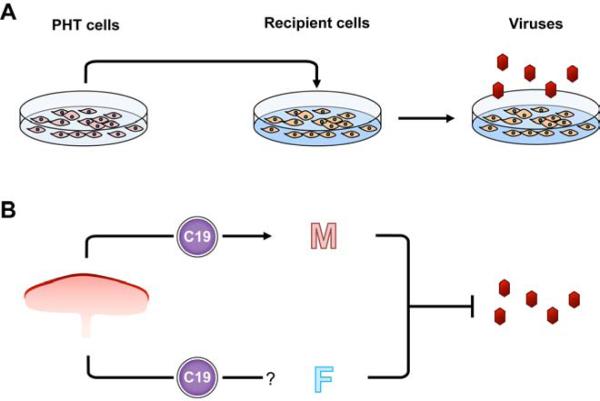
Objective: Primary human trophoblasts were previously shown to be resistant to viral infection, and able to confer this resistance to nontrophoblast cells. Can trophoblasts protect nontrophoblastic cells from infection by viruses or other intracellular pathogens that are implicated in perinatal infection?
Study design: Isolated primary term human trophoblasts were cultured for 48-72 hours. Diverse nonplacental human cell lines (U2OS, human foreskin fibroblast, TZM-bl, MeWo, and Caco-2) were preexposed to either trophoblast conditioned medium, nonconditioned medium, or miR-517-3p for 24 hours. Cells were infected with several viral and nonviral pathogens known to be associated with perinatal infections. Cellular infection was defined and quantified by plaque assays, luciferase assays, microscopy, and/or colonization assays. Differences in infection were assessed by Student t test or analysis of variance with Bonferroni correction.
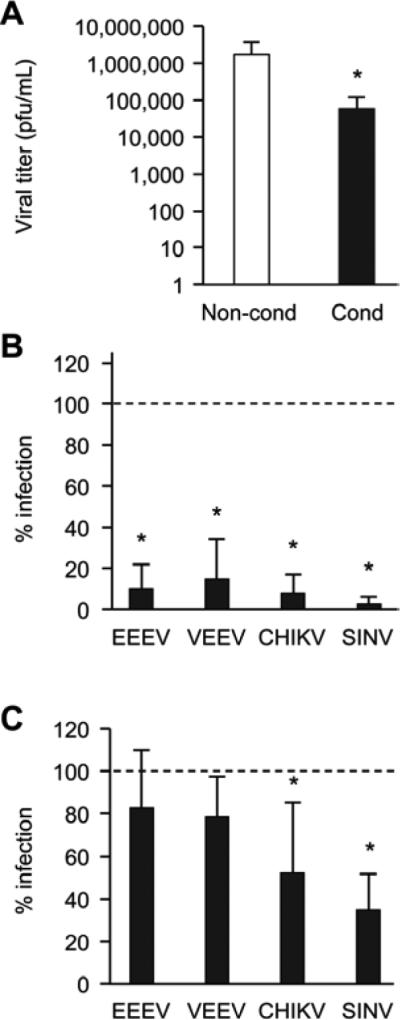
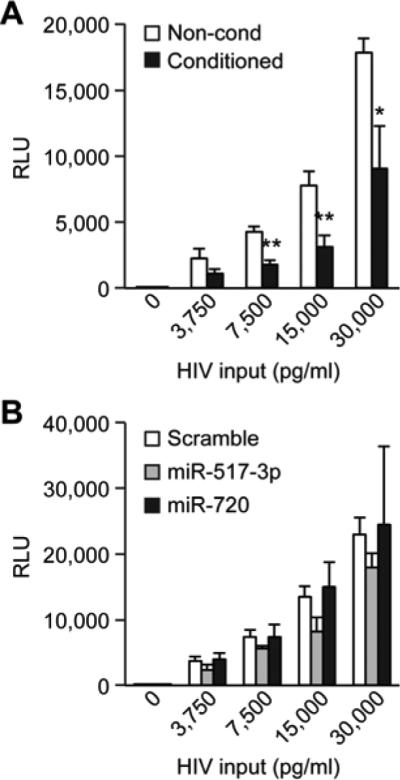
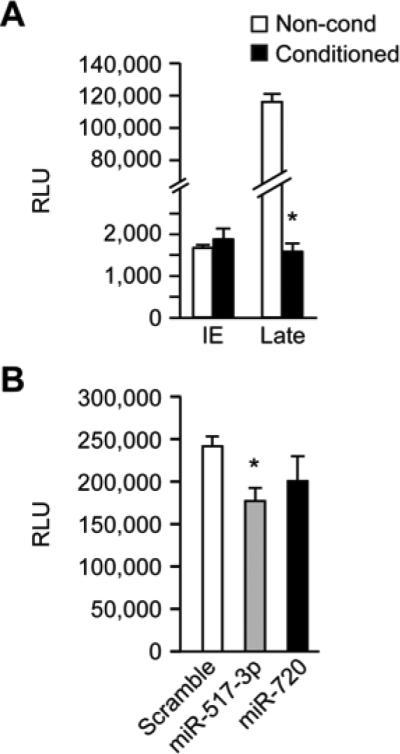
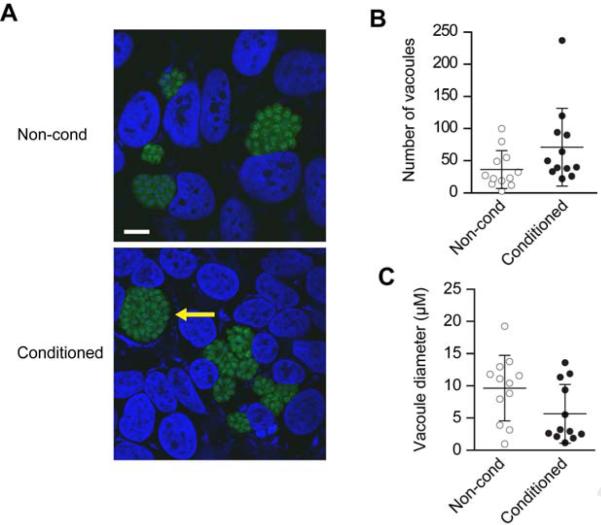
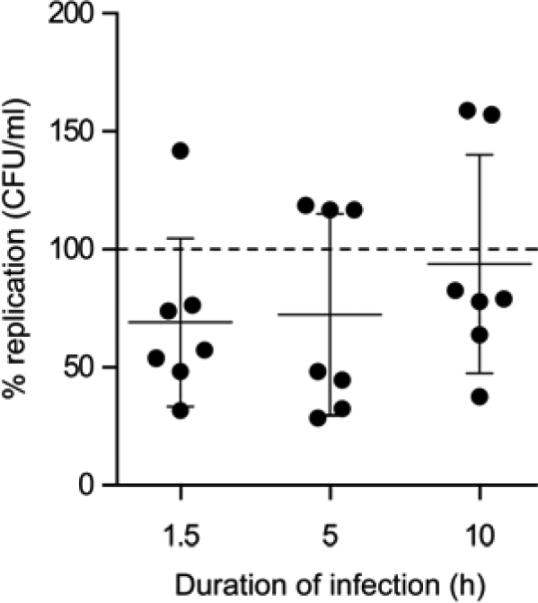
Results: Infection by rubella and other togaviruses, human immunodeficiency virus-1, and varicella zoster was attenuated in cells preexposed to trophoblast-conditioned medium (P < .05), and a partial effect by the chromosome 19 microRNA miR-517-3p on specific pathogens. The conditioned medium had no effect on infection by Toxoplasma gondii or Listeria monocytogenes.
Conclusion: Our findings indicate that medium conditioned by primary human trophoblasts attenuates viral infection in nontrophoblastic cells. Our data point to a trophoblast-specific antiviral effect that may be exploited therapeutically.
Keywords: chromosome 19 microRNA cluster; conditioned medium; microRNA; trophoblasts; viruses.
Copyright © 2015 Elsevier Inc. All rights reserved.
Figures
References
-
- Srinivas SK, Ma Y, Sammel MD, et al. Placental inflammation and viral infection are implicated in second trimester pregnancy loss. Am J Obstet Gynecol. 2006;195:797–802. - PubMed
-
- Duff P. Maternal and fetal infections. In: Creasy RK, Resnik R, Iams JD, Lockwood CJ, Moore TR, Green MF, editors. Creasy & Resnik's Maternal Fetal Medicine: Principles and Practice. Elsevier Saunders; Philadelphia: 2014.
-
- Enders G, Miller E, Cradock-Watson J, Bolley I, Ridehalgh M. Consequences of varicella and herpes zoster in pregnancy: prospective study of 1739 cases. Lancet. 1994;343:1548–51. - PubMed
-
- Smith CK, Arvin AM. Varicella in the fetus and newborn. Semin Fetal Neonatal Med. 2009;14:209–17. - PubMed
Publication types
MeSH terms
Substances
Grants and funding
- P30EY08098/EY/NEI NIH HHS/United States
- R01 HD075665/HD/NICHD NIH HHS/United States
- R01 AI095436/AI/NIAID NIH HHS/United States
- R01 AI057083/AI/NIAID NIH HHS/United States
- R01 AI107250/AI/NIAID NIH HHS/United States
- R21 AI105588/AI/NIAID NIH HHS/United States
- R21 HD071707/HD/NICHD NIH HHS/United States
- T32 AI049820/AI/NIAID NIH HHS/United States
- R01NS064022/NS/NINDS NIH HHS/United States
- R01AI083383/AI/NIAID NIH HHS/United States
- T32 AI060525/AI/NIAID NIH HHS/United States
- UL1 TR000005/TR/NCATS NIH HHS/United States
- R01 AI083383/AI/NIAID NIH HHS/United States
- R01 AI081759/AI/NIAID NIH HHS/United States
- R01AI057083/AI/NIAID NIH HHS/United States
- R01HD065893/HD/NICHD NIH HHS/United States
- R01 HD065893/HD/NICHD NIH HHS/United States
- R01 AI102724/AI/NIAID NIH HHS/United States
- T32AI049820/AI/NIAID NIH HHS/United States
- R21 AI093906/AI/NIAID NIH HHS/United States
- R01HD075665/HD/NICHD NIH HHS/United States
- R01AI081759/AI/NIAID NIH HHS/United States
- R21HD071707/HD/NICHD NIH HHS/United States
- T32AI060525/AI/NIAID NIH HHS/United States
- R21AI093906/AI/NIAID NIH HHS/United States
- P30 EY008098/EY/NEI NIH HHS/United States
- R01 NS064022/NS/NINDS NIH HHS/United States
LinkOut - more resources
Full Text Sources
Other Literature Sources
Medical
