


Review
doi: 10.1016/j.carres.2014.06.020.
Epub 2014 Jul 1.
A propos of glycosyl cations and the mechanism of chemical glycosylation; the current state of the art
Affiliations
- PMID: 25108484
- PMCID: PMC4281519
- DOI: 10.1016/j.carres.2014.06.020
Item in Clipboard
Review
A propos of glycosyl cations and the mechanism of chemical glycosylation; the current state of the art
Carbohydr Res.
.
Abstract
An overview of recent advances in glycosylation with particular emphasis on mechanism is presented. The mounting evidence for both the existence of glycosyl oxocarbenium ions as fleeting intermediates in some reactions, and the crucial role of the associated counterion in others is discussed. The extremes of the SN1 and SN2 manifolds for the glycosylation reaction are bridged by a continuum of mechanisms in which it appears likely that most examples are located.
Keywords: Counter ions; Hydrogen bonding; Kinetics; Oxocarbenium ions.
Copyright © 2014 Elsevier Ltd. All rights reserved.
Figures
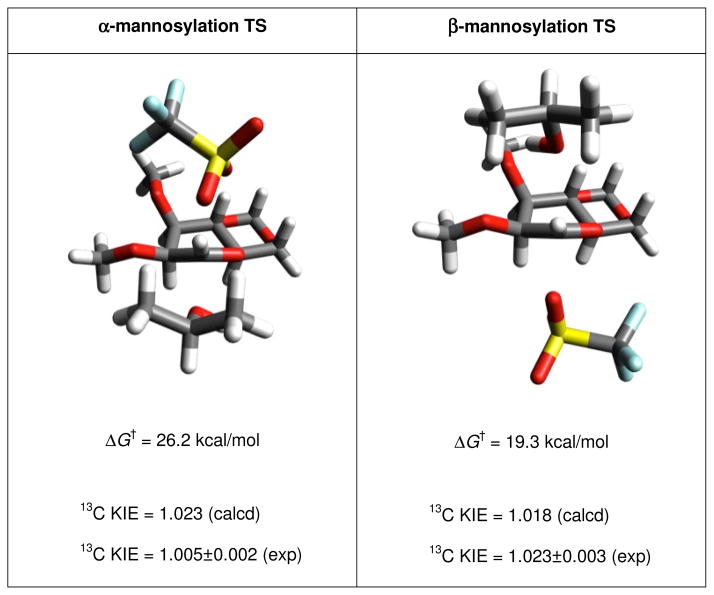
Computed Transition States for the Displacement of Triflate Anion by Isopropanol from 4,6-O-Benzylidene Protected α- and β-Mannopyranosyl Triflates

Low Energy B2,5 Conformers of the Silylene and Benzylidene Protected Mannosyl Oxocarbenium Ions
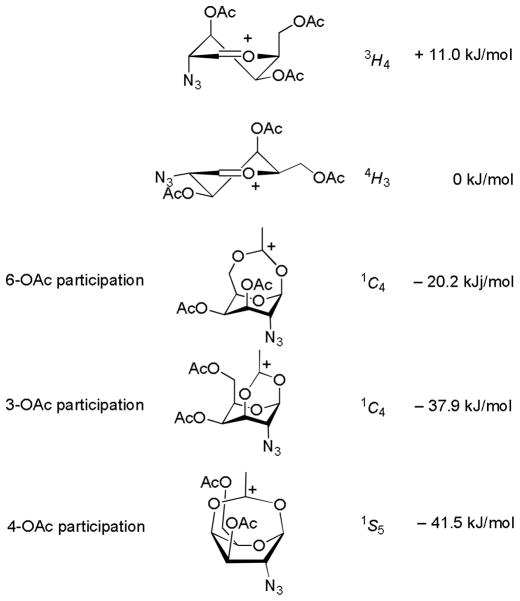
Relative Stabilization of Galactosyl Oxocarbenium Ions by Participating Esters at the 3-, 4-, and 6-Positions.
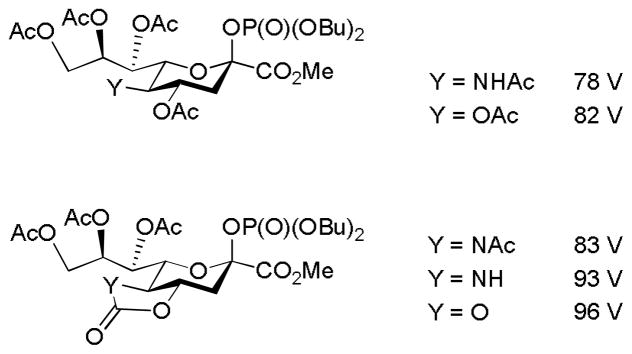
Minimum Mass Spectral Fragmentation Energies for a Series of Sialyl Phosphates Vary as a Function of Protecting Group.
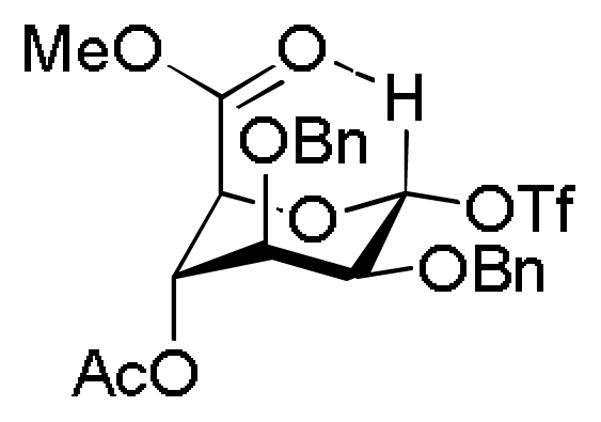
Proposed Non-Classical H-Bond Stabilizing the 1C4 Conformation of α-Glycosyl Triflates in the Mannuronic Acid Series.
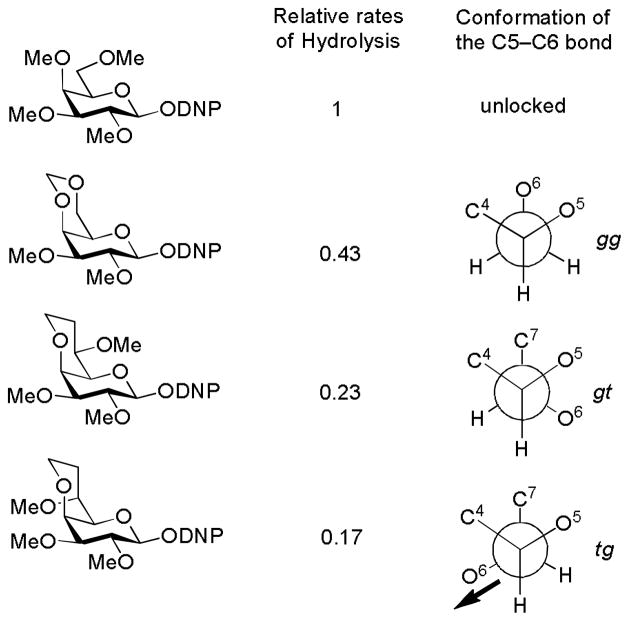
The Stereochemical Component of the Disarming Influence of the C6-O6 Bond. [For the purposes of this scheme the conformational descriptors gt, gg, and tg employ O6 as the reference point and not C7]
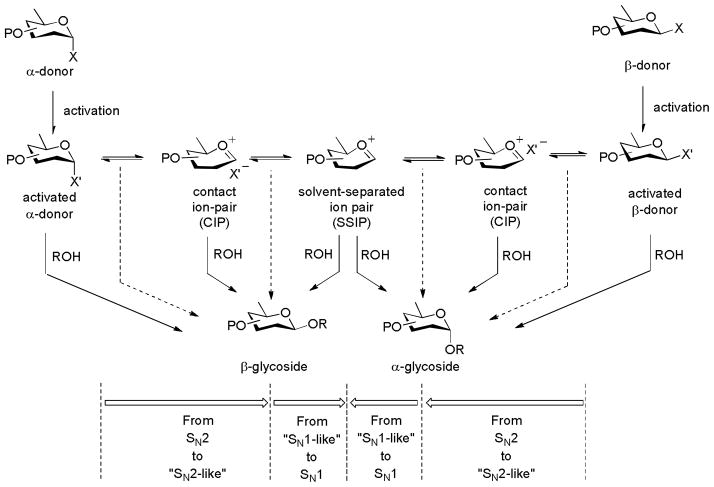
A General Glycosylation Mechanism.
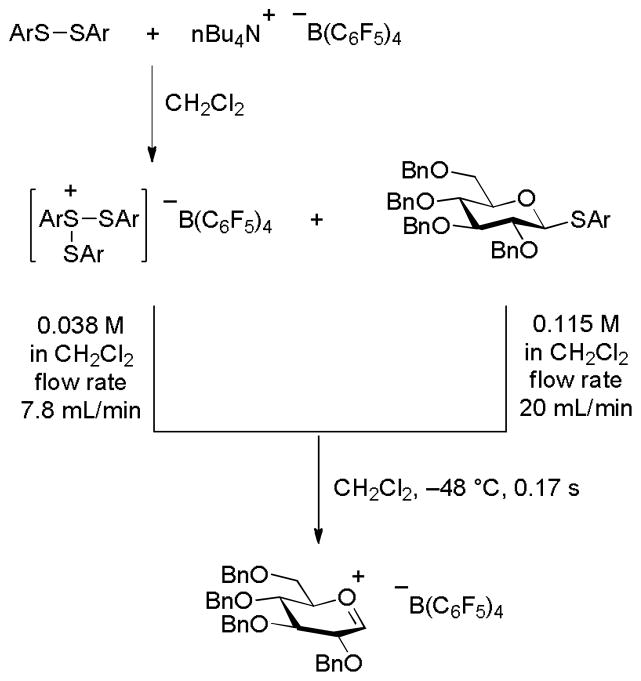
Generation of a Glycosyl Cation Equivalent by Flow Chemistry.
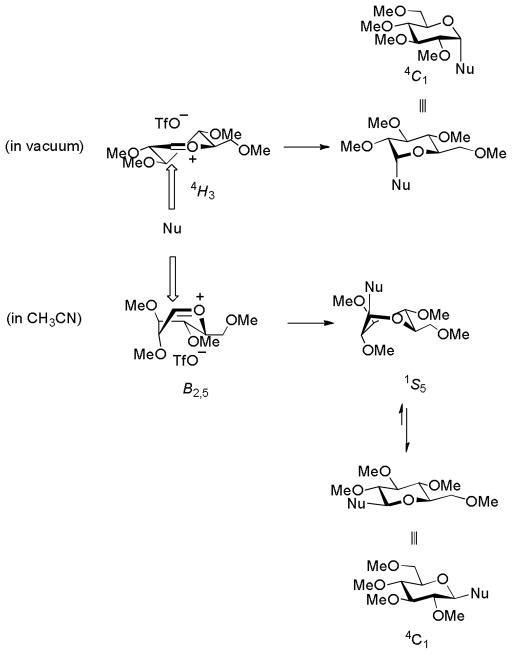
The Conformer and Counterion Distribution Hypothesis for Selectivity in the Tetra-O-glucopyranosyl Triflate Ion Pair.
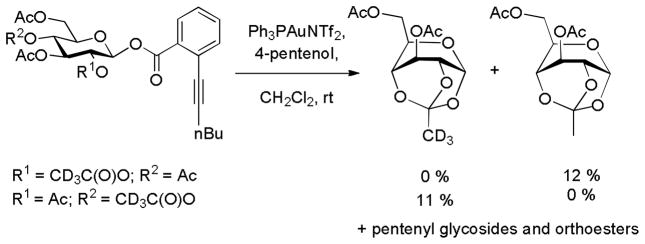
Formation of a Trideuterio Ortho Ester Supporting the Possibility of Remote Participation by Esters at the 4-Position in Peracylated Donors.
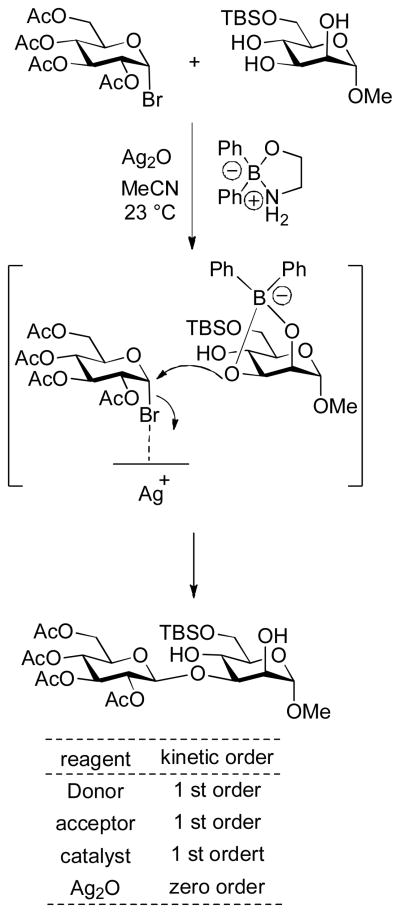
Kinetics and Mechanism of a Silver Oxide-Promoted Borinate-Catalyzed Glycosylation Reaction.
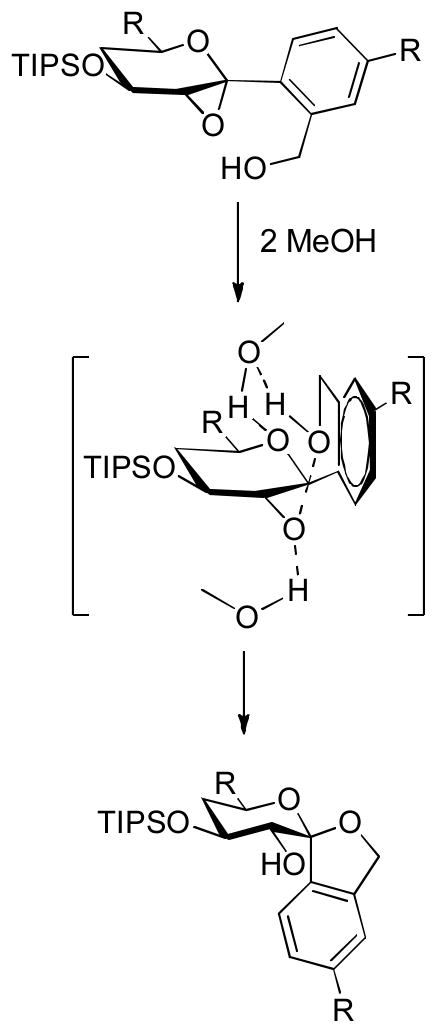
Hydrogen Bonding Catalysis in the Intramolecular Ring Opening of a Glycal Epoxide.
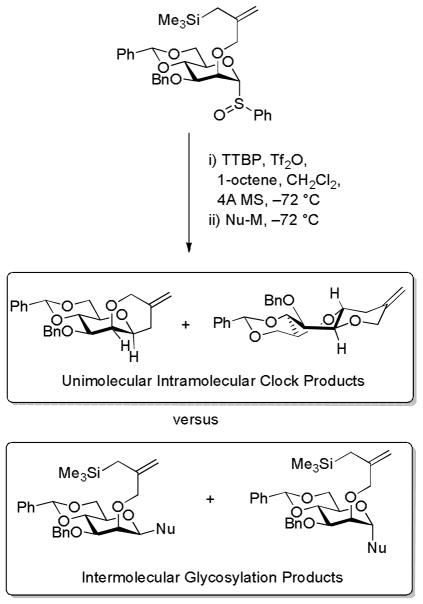
Use of a Cation-Clock Reaction to Investigate the Relative Kinetics of Glycosylation.
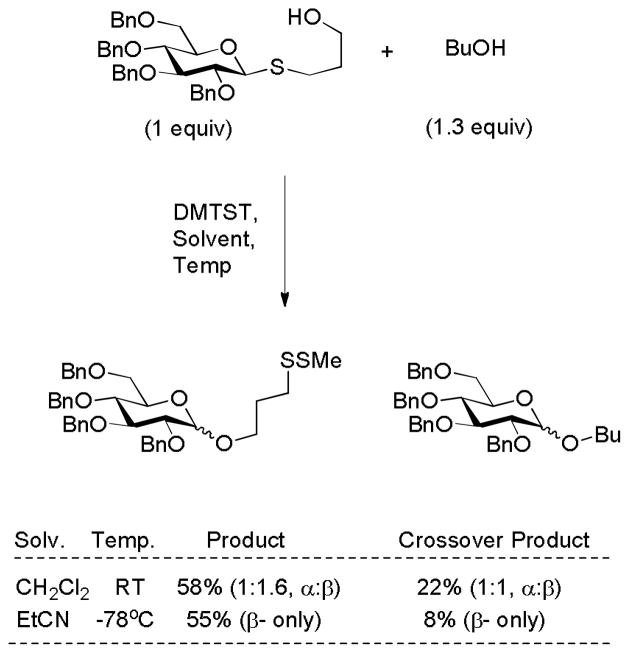
Crossover Experiment Demonstrating the Intramolecular Rearrangement of S-(γ-hydroxypropyl) thioglycosides.
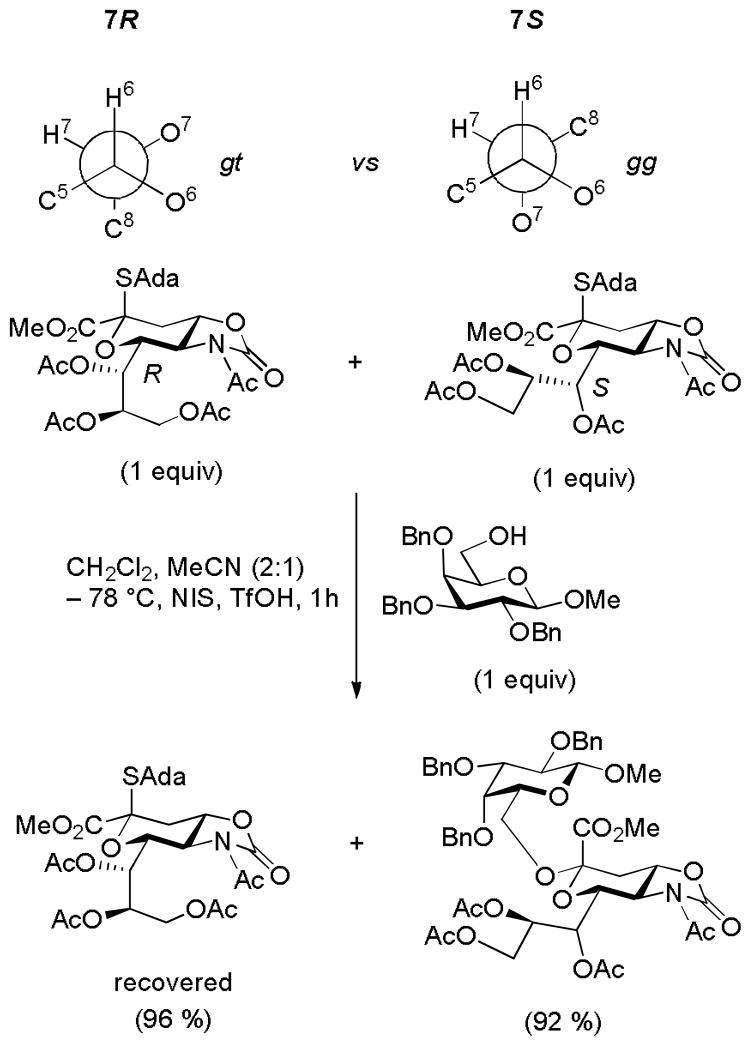
Dependence of Sialyl Donor Reactivity on the Configuration at C7. [For the purposes of this scheme the conformational descriptors gt, gg, and tg employ O6 as the reference point and not C7]
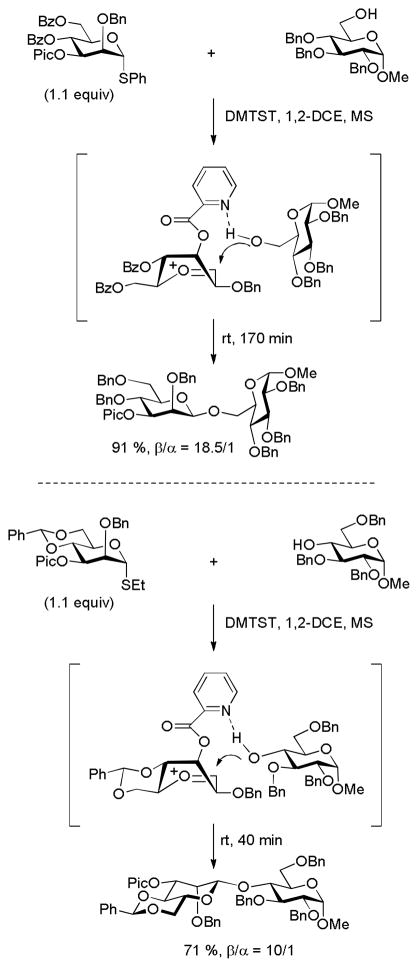
Remote Picolate Ester-Directed β-Mannosylation.
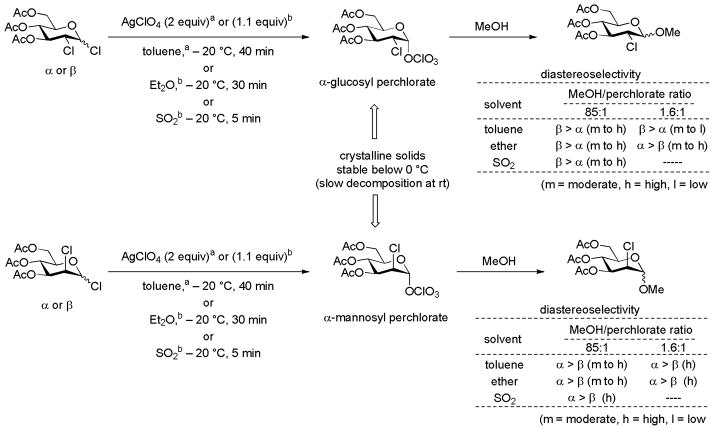
Covalent Glycosyl Perchlorates and their Stabilities and Reactivities
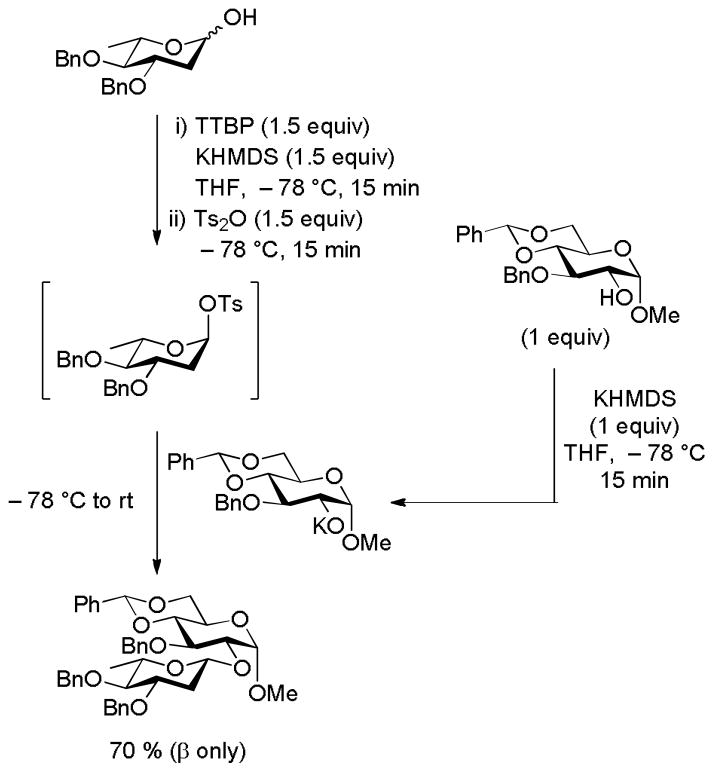
Stereoselective Synthesis of a2-Deoxy-β-glycopyranoside via a α-Glycosyl Toluenesulfonate.
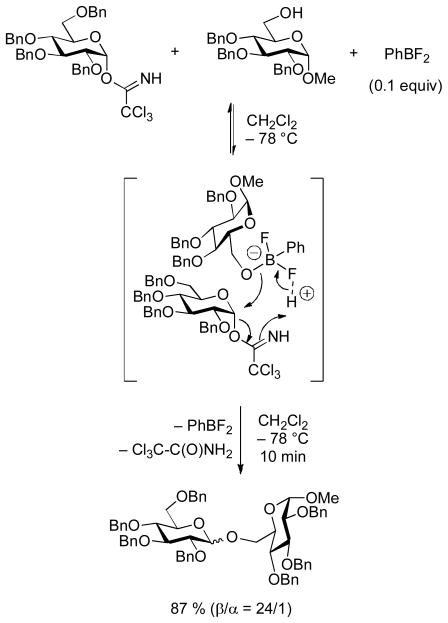
β-Glycopyranoside Synthesis from Trichloroacetimidates with the Aid of a Lewis-Acidic Boron Complex.-
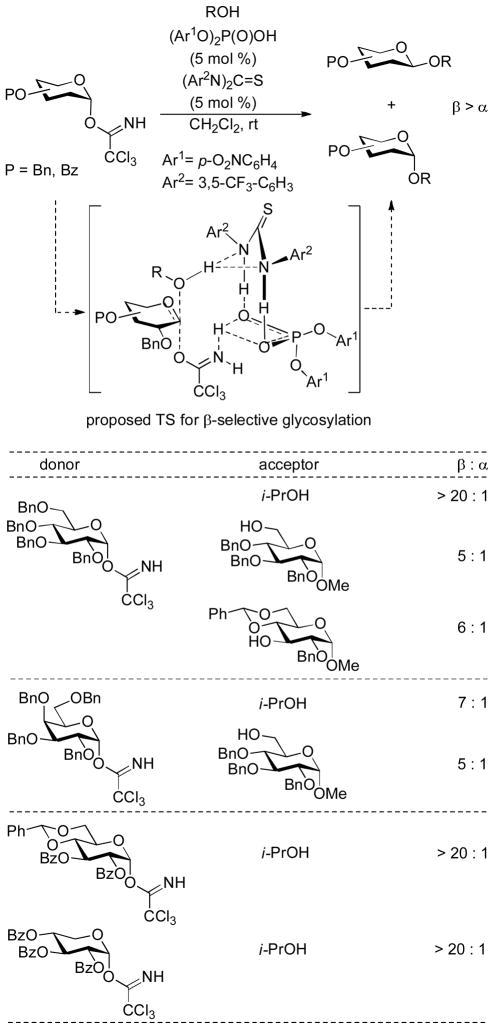
Co-operative Catalysis in the Synthesis of β-Glycopyranosides.
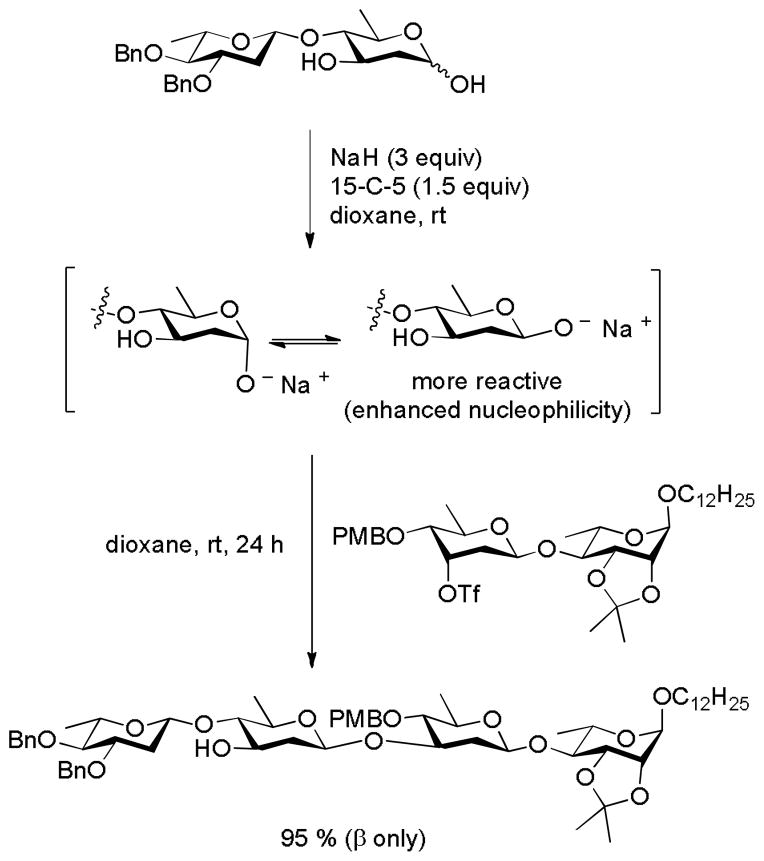
2-Deoxy-β-glycoside Synthesis by Anomeric Alkylation.
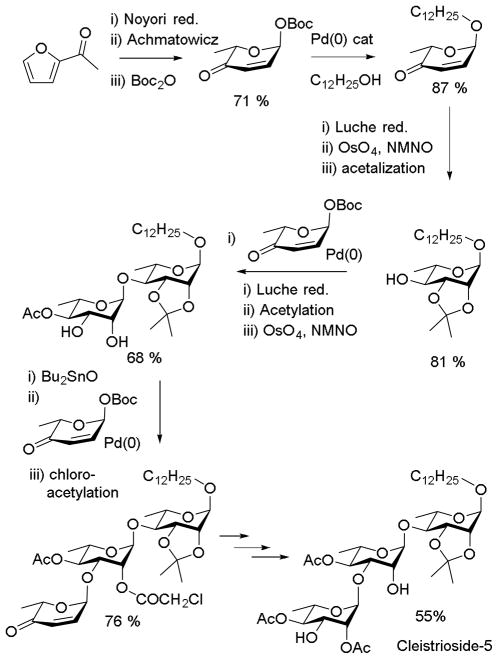
De Novo Synthesis of a Complex Trisaccharide.
References
-
- Bohé L, Crich D. CR Chimie. 2011;14:3–16.
-
- Rhind-Tutt AJ, Vernon CA. J Chem Soc. 1960:4637–4644.
-
- Lucas TJ, Schuerch C. Carbohydr Res. 1975;39:39–45. - PubMed
-
- Lemieux RU, Hendriks KB, Stick RV, James K. J Am Chem Soc. 1975;97:4056–4062.
-
- Saito K, Ueoka K, Matsumoto K, Suga S, Nokami T, Yoshida J-i. Angew Chem Int Ed. 2011;50:5153–5156. - PubMed
Publication types
MeSH terms
Substances
Grants and funding
LinkOut - more resources
Full Text Sources
Other Literature Sources
