


Distress and type 2 diabetes-treatment adherence: A mediating role for perceived control
- PMID: 25110840
- PMCID: PMC4324372
- DOI: 10.1037/hea0000131
Distress and type 2 diabetes-treatment adherence: A mediating role for perceived control
Abstract
Objective: To better understand independent pathways linking emotional distress, medication adherence, and glycemic control in adults with Type 2 diabetes, as well as the potential mediating effects of perceived control over illness and self-efficacy.
Method: Adults with Type 2 diabetes (N = 142) were recruited for an intervention study evaluating cognitive-behavioral therapy for adherence and depression. Depressive symptom severity was assessed via semistructured interview. Validated self-reports assessed diabetes-related distress, perceived control over diabetes (perceived control), self-efficacy for diabetes self-management, and medication adherence. Glycemic control was evaluated by hemoglobin A1C. Only baseline data were included in correlational and linear regression analyses.
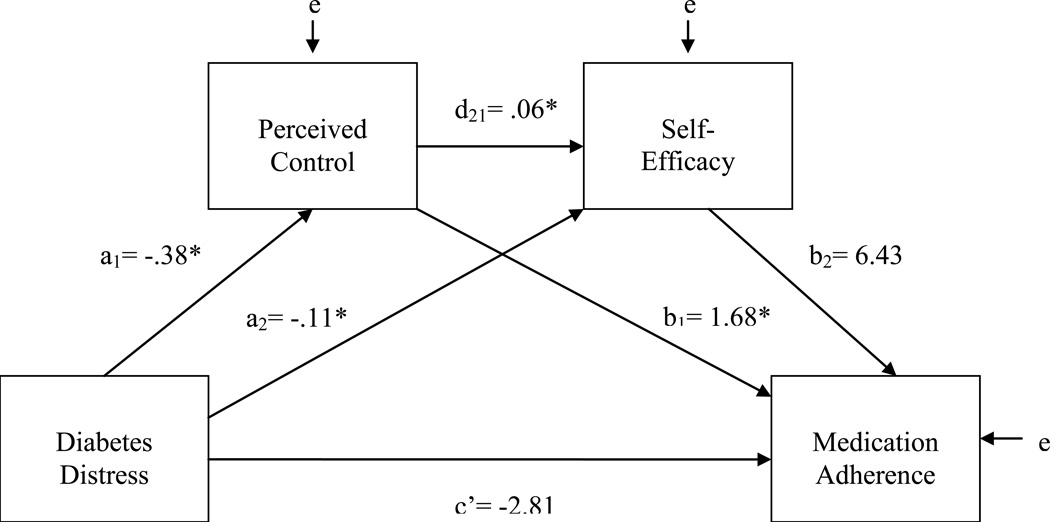
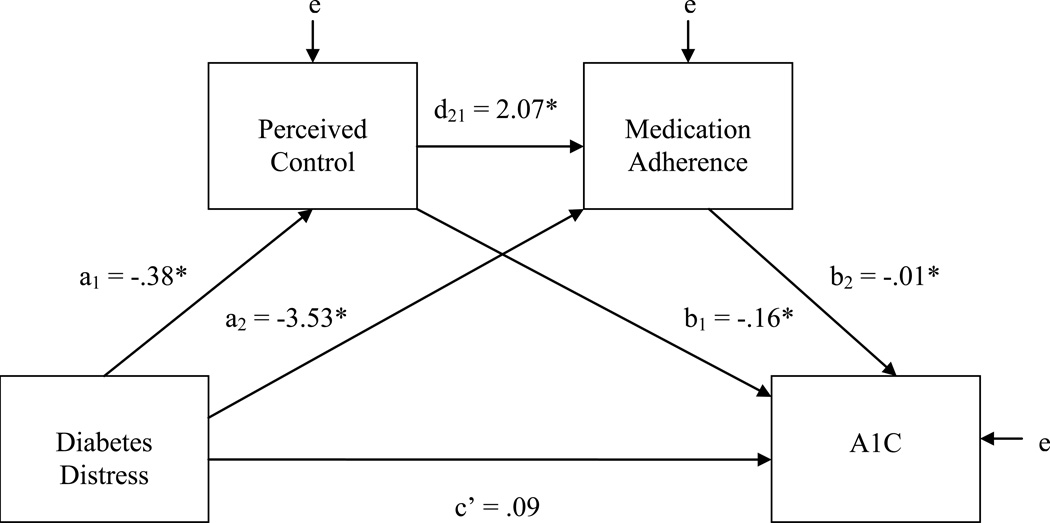
Results: Perceived control was an important mediator of emotional distress for both medication adherence and A1C outcomes. Specifically, regression analyses demonstrated that diabetes distress, but not depression severity, was significantly related to medication adherence and A1C. Self-efficacy and perceived control were also independently associated with medication adherence and A1C. Mediation analyses demonstrated a significant indirect effect for diabetes distress and medication adherence through perceived control and self-efficacy. The relationship between distress and A1C was accounted for by an indirect effect through perceived control.
Conclusion: Results demonstrated that diabetes-related emotional distress is associated with poorer treatment adherence and glycemic control among adults with Type 2 diabetes; these relationships were partially mediated through perceived control over diabetes. Perceptions of one's personal ability to influence the course of diabetes may be important in understanding the pathway between emotional distress and poor diabetes-treatment outcomes.
(c) 2015 APA, all rights reserved).
Figures
References
-
- Bandura A. Self-efficacy mechanism in human agency. American Psychologist. 1982;37:122–147.
-
- Bandura A, Wood R. Effect of perceived controllability and performance standards on self-regulation of complex decision making. Journal of Personality and Social Psychology. 1989;56(5):805–814. - PubMed
-
- Beck AT. Depression: Clinical, experimental and theoretical aspects. New York, NY: Harper and Row; 1967.
Publication types
MeSH terms
Substances
Grants and funding
LinkOut - more resources
Full Text Sources
Other Literature Sources
Medical
