


Nowcasting the spread of chikungunya virus in the Americas
- PMID: 25111394
- PMCID: PMC4128737
- DOI: 10.1371/journal.pone.0104915
Nowcasting the spread of chikungunya virus in the Americas
Abstract
Background: In December 2013, the first locally-acquired chikungunya virus (CHIKV) infections in the Americas were reported in the Caribbean. As of May 16, 55,992 cases had been reported and the outbreak was still spreading. Identification of newly affected locations is paramount to intervention activities, but challenging due to limitations of current data on the outbreak and on CHIKV transmission. We developed models to make probabilistic predictions of spread based on current data considering these limitations.
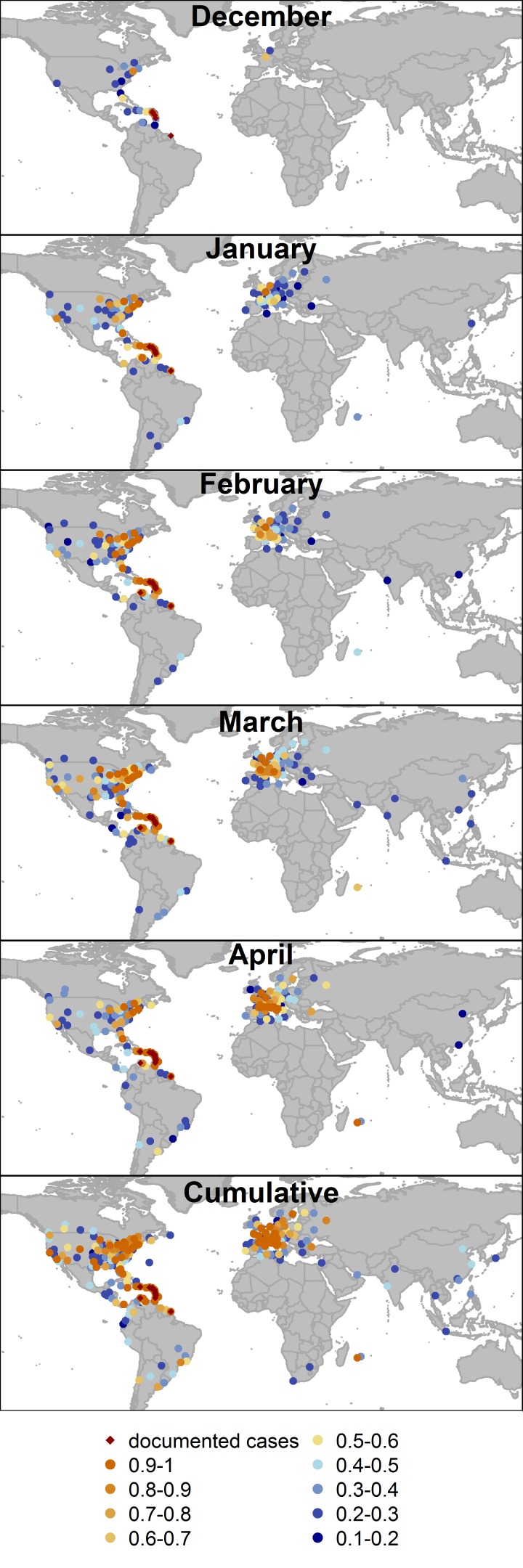
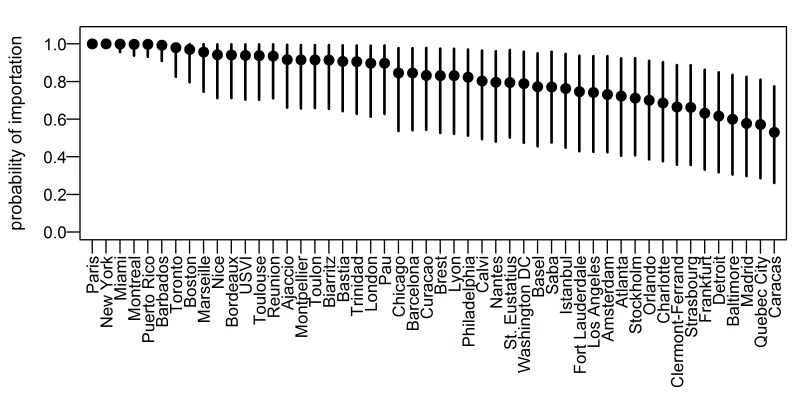
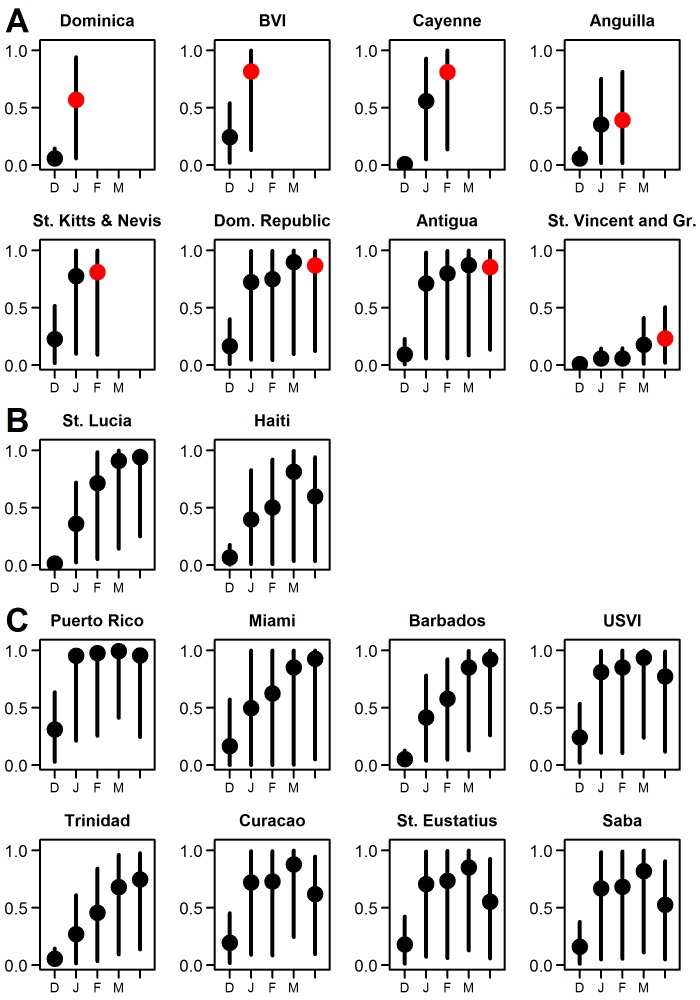
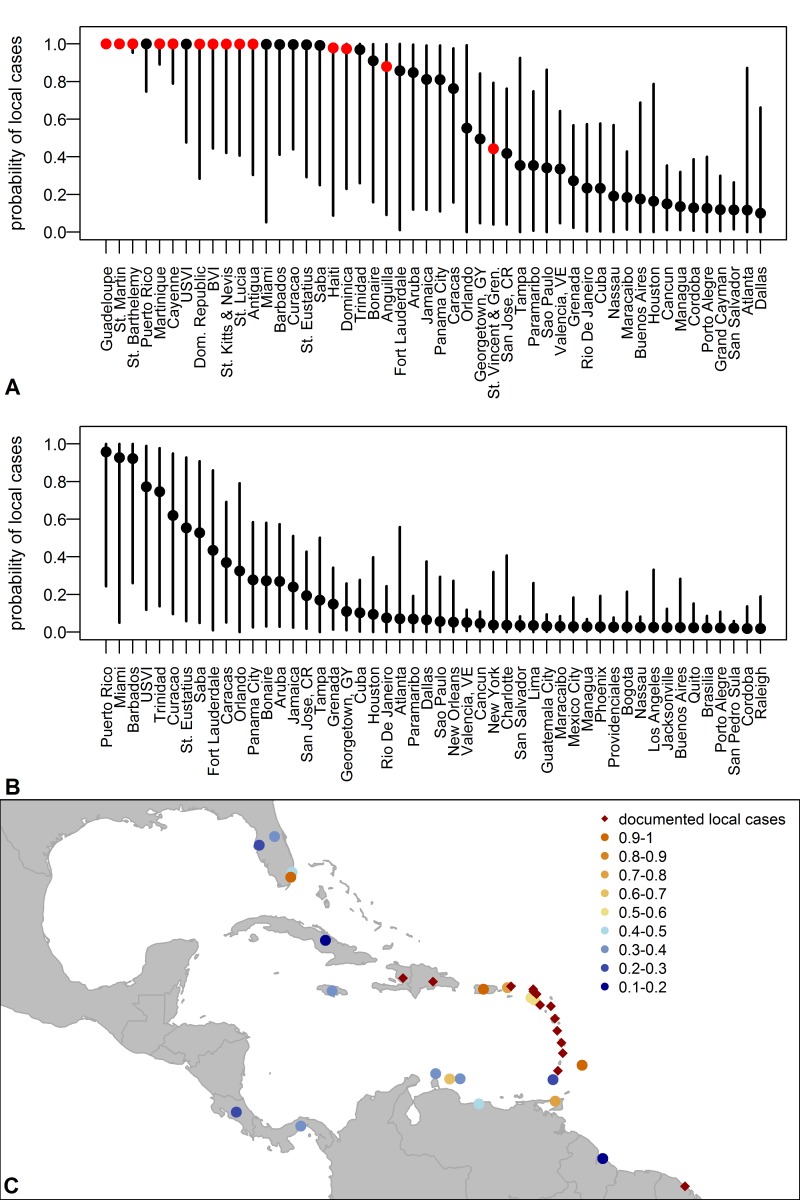
Methods and findings: Branching process models capturing travel patterns, local infection prevalence, climate dependent transmission factors, and associated uncertainty estimates were developed to predict probable locations for the arrival of CHIKV-infected travelers and for the initiation of local transmission. Many international cities and areas close to where transmission has already occurred were likely to have received infected travelers. Of the ten locations predicted to be the most likely locations for introduced CHIKV transmission in the first four months of the outbreak, eight had reported local cases by the end of April. Eight additional locations were likely to have had introduction leading to local transmission in April, but with substantial uncertainty.
Conclusions: Branching process models can characterize the risk of CHIKV introduction and spread during the ongoing outbreak. Local transmission of CHIKV is currently likely in several Caribbean locations and possible, though uncertain, for other locations in the continental United States, Central America, and South America. This modeling framework may also be useful for other outbreaks where the risk of pathogen spread over heterogeneous transportation networks must be rapidly assessed on the basis of limited information.
Conflict of interest statement
Figures
References
-
- Leparc-Goffart I, Nougairede A, Cassadou S, Prat C, de Lamballerie X (2014) Chikungunya in the Americas. Lancet 383: 514. - PubMed
-
- Sergon K, Yahaya AA, Brown J, Bedja SA, Mlindasse M, et al. (2007) Seroprevalence of Chikungunya virus infection on Grande Comore Island, union of the Comoros, 2005. The American journal of tropical medicine and hygiene 76: 1189–1193. - PubMed
-
- Sergon K, Njuguna C, Kalani R, Ofula V, Onyango C, et al. (2008) Seroprevalence of Chikungunya virus (CHIKV) infection on Lamu Island, Kenya, October 2004. The American journal of tropical medicine and hygiene 78: 333–337. - PubMed
-
- Pan American Health Organization (2011) Preparedness and Response for Chikungunya Virus Introduction in the Americas. Washington D.C.: Pan American Health Organization. 149 p.
MeSH terms
LinkOut - more resources
Full Text Sources
Other Literature Sources
Medical
Research Materials
Miscellaneous
