


Calcium supplements and cardiovascular risk: 5 years on
- PMID: 25114781
- PMCID: PMC4125316
- DOI: 10.1177/2042098613499790
Calcium supplements and cardiovascular risk: 5 years on
Abstract
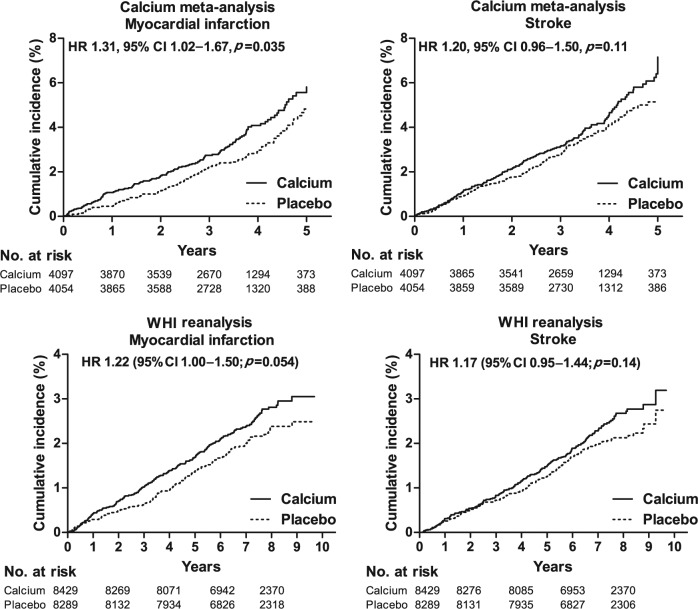
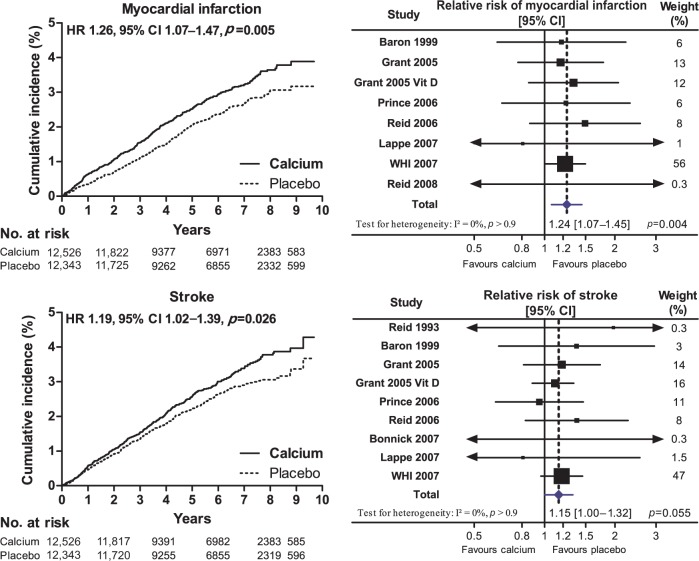
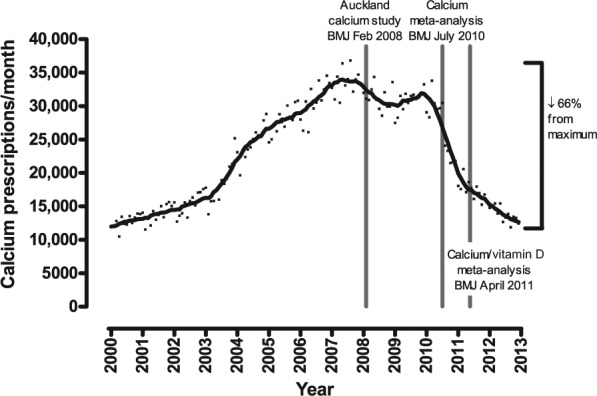
Calcium supplements have been widely used by older men and women. However, in little more than a decade, authoritative recommendations have changed from encouraging the widespread use of calcium supplements to stating that they should not be used for primary prevention of fractures. This substantial shift in recommendations has occurred as a result of accumulated evidence of marginal antifracture efficacy, and important adverse effects from large randomized controlled trials of calcium or coadministered calcium and vitamin D supplements. In this review, we discuss this evidence, with a particular focus on increased cardiovascular risk with calcium supplements, which we first described 5 years ago. Calcium supplements with or without vitamin D marginally reduce total fractures but do not prevent hip fractures in community-dwelling individuals. They also cause kidney stones, acute gastrointestinal events, and increase the risk of myocardial infarction and stroke. Any benefit of calcium supplements on preventing fracture is outweighed by increased cardiovascular events. While there is little evidence to suggest that dietary calcium intake is associated with cardiovascular risk, there is also little evidence that it is associated with fracture risk. Therefore, for the majority of people, dietary calcium intake does not require close scrutiny. Because of the unfavorable risk/benefit profile, widespread prescribing of calcium supplements to prevent fractures should be abandoned. Patients at high risk of fracture should be encouraged to take agents with proven efficacy in preventing vertebral and nonvertebral fractures.
Keywords: Calcium supplements; cerebrovascular disease; ischemic heart disease; myocardial infarction; osteoporosis.
Conflict of interest statement
Figures
References
-
- Abrahamsen B., Sahota O. (2011) Do calcium plus vitamin D supplements increase cardiovascular risk? BMJ 342: d2080. - PubMed
-
- Al-Delaimy W., Rimm E., Willett W., Stampfer M., Hu F. (2003) A prospective study of calcium intake from diet and supplements and risk of ischemic heart disease among men. Am J Clin Nutr 77: 814–818 - PubMed
-
- Anderson G., Limacher M., Assaf A., Bassford T., Beresford S., Black H., et al. . (2004) Effects of conjugated equine estrogen in postmenopausal women with hysterectomy: the Women’s Health Initiative randomized controlled trial. JAMA 291: 1701–1712 - PubMed
-
- Ascherio A., Rimm E., Hernan M., Giovannucci E., Kawachi I., Stampfer M., et al. . (1998) Intake of potassium, magnesium, calcium, and fiber and risk of stroke among US men. Circulation 98: 1198–1204 - PubMed
-
- Assmann S., Pocock S., Enos L., Kasten L. (2000) Subgroup analysis and other (mis)uses of baseline data in clinical trials. Lancet 355: 1064–1069 - PubMed
Publication types
LinkOut - more resources
Full Text Sources
Other Literature Sources
