


Suicide in Sri Lanka 1975-2012: age, period and cohort analysis of police and hospital data
- PMID: 25118074
- PMCID: PMC4148962
- DOI: 10.1186/1471-2458-14-839
Suicide in Sri Lanka 1975-2012: age, period and cohort analysis of police and hospital data
Abstract
Background: Sri Lanka has experienced major changes in its suicide rates since the 1970s, and in 1995 it had one of the highest rates in the world. Subsequent reductions in Sri Lanka's suicide rates have been attributed to the introduction of restrictions on the availability of highly toxic pesticides. We investigate these changes in suicide rates in relation to age, gender, method specific trends and birth-cohort and period effects, with the aim of informing preventative strategies.
Methods: Secular trends of suicide in relation to age, sex, method, birth-cohort and period effects were investigated graphically using police data (1975-2012). Poisoning case-fatality was investigated using national hospital admission data (2004-2010).
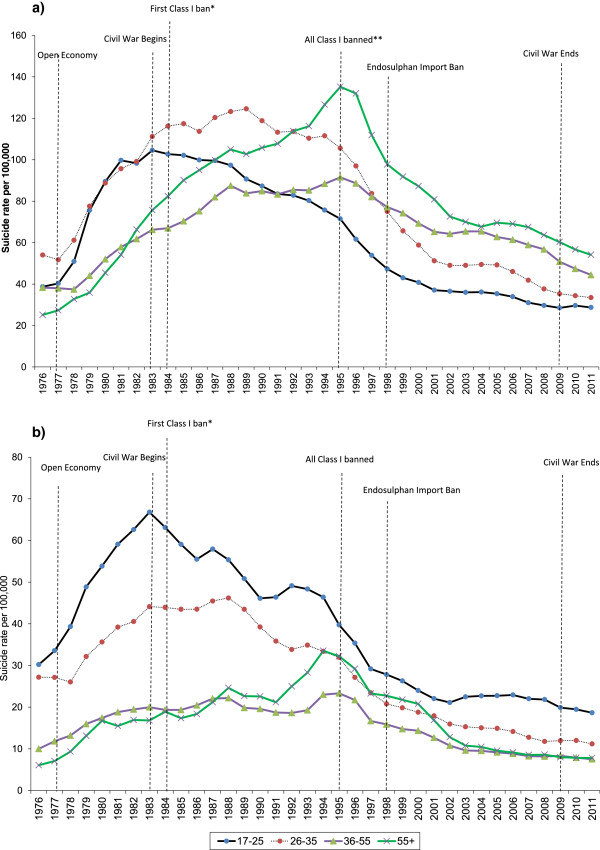
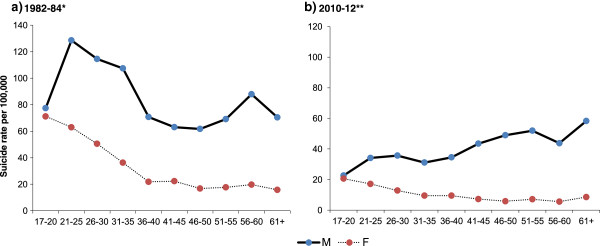
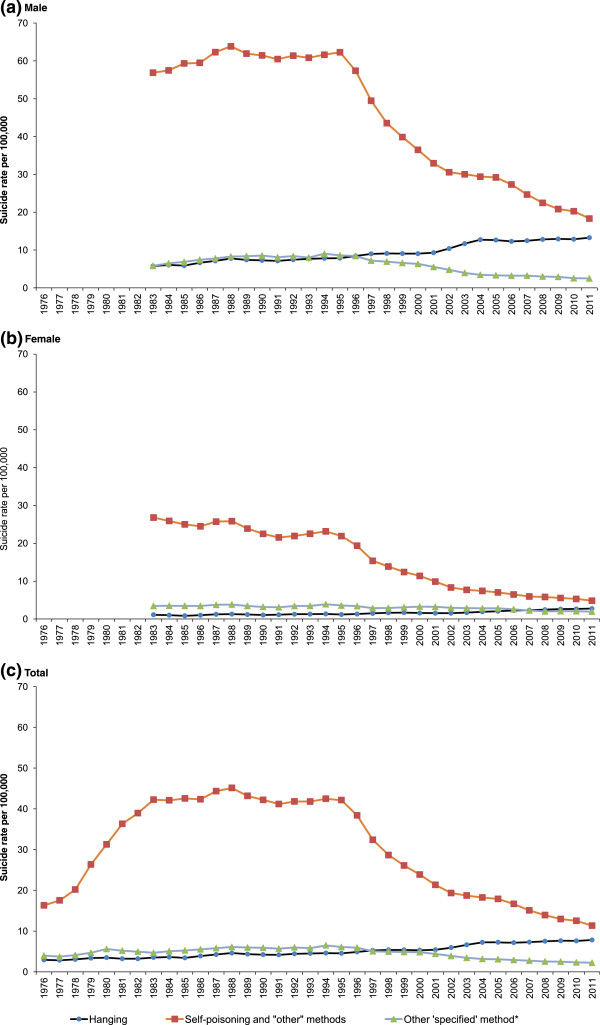
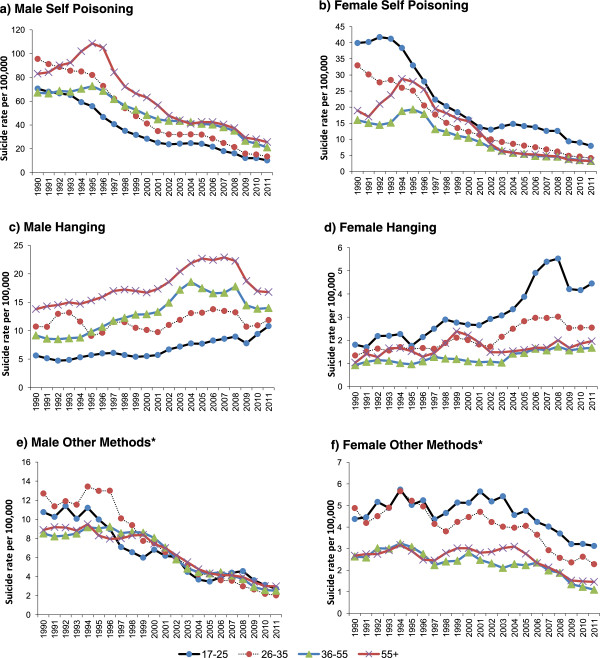
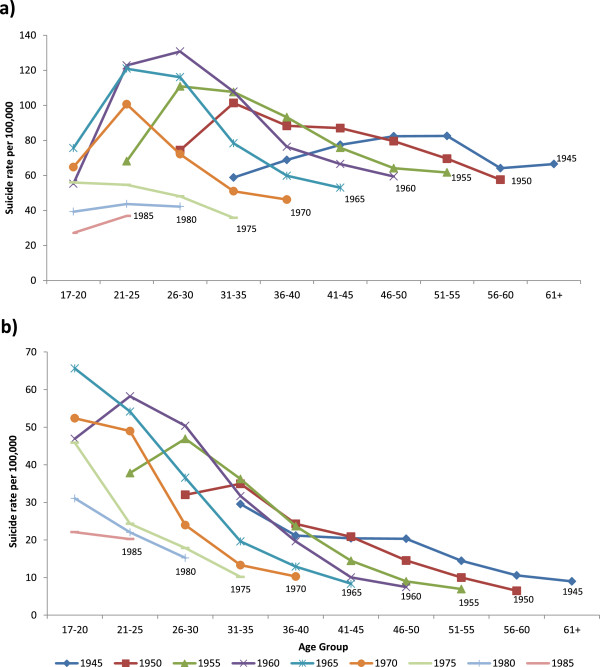
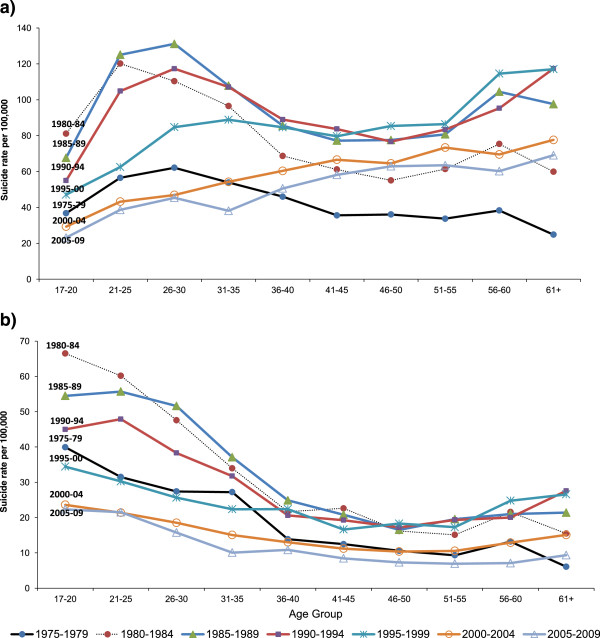
Results: There were marked changes to the age-, gender- and method-specific incidence of suicide over the study period. Year on year declines in rates began in 17-25 year olds in the early 1980s. Reduction in older age groups followed and falls in all age groups occurred after all class I (the most toxic) pesticides were banned. Distinct changes in the age/gender pattern of suicide are observed: in the 1980s suicide rates were highest in 21-35 year old men; by the 2000s, this pattern had reversed with a stepwise increase in male rates with increasing age. Throughout the study period female rates were highest in 17-25 year olds. There has been a rise in suicide by hanging, though this rise is relatively small in relation to the marked decline in self-poisoning deaths. The patterns of suicides are more consistent with a period rather than birth-cohort effect.
Conclusions: The epidemiology of suicide in Sri Lanka has changed noticeably in the last 30 years. The introduction of pesticide regulations in Sri Lanka coincides with a reduction in suicide rates, with evidence of limited method substitution.
Figures
References
-
- De Silva V, Hanwella R, Senanayake M. Age and sex specific suicide rates in Sri Lanka from 1995–2011. Sri Lanka J Psychiatry. 2013;3(2):7–11.
-
- Thalagala N. Suicide trends in Sri Lanka 1880–2006; social, demographic and geographical variations. J College of Community Physicians Sri Lanka. 2011;14(1):24–32. doi: 10.4038/jccpsl.v14i1.2945. - DOI
Pre-publication history
-
- The pre-publication history for this paper can be accessed here:http://www.biomedcentral.com/1471-2458/14/839/prepub
MeSH terms
Grants and funding
LinkOut - more resources
Full Text Sources
Other Literature Sources
Medical
