


Antiviral immunity via RIG-I-mediated recognition of RNA bearing 5'-diphosphates
- PMID: 25119032
- PMCID: PMC4201573
- DOI: 10.1038/nature13590
Antiviral immunity via RIG-I-mediated recognition of RNA bearing 5'-diphosphates
Abstract
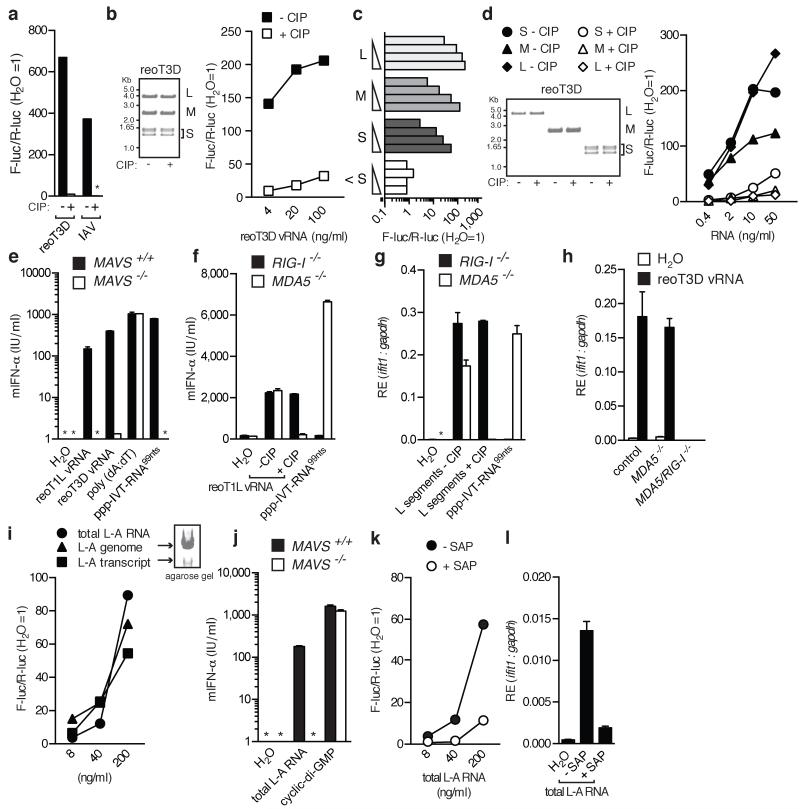
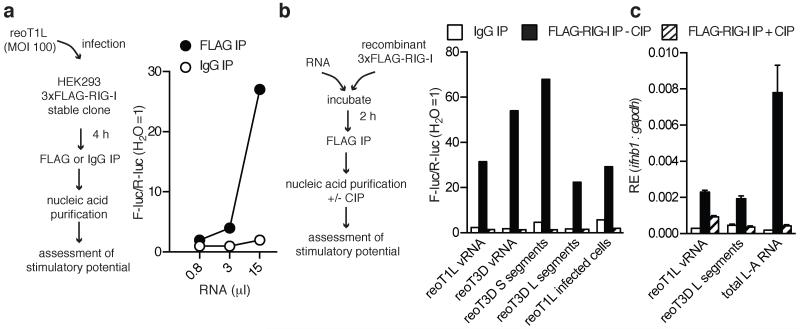
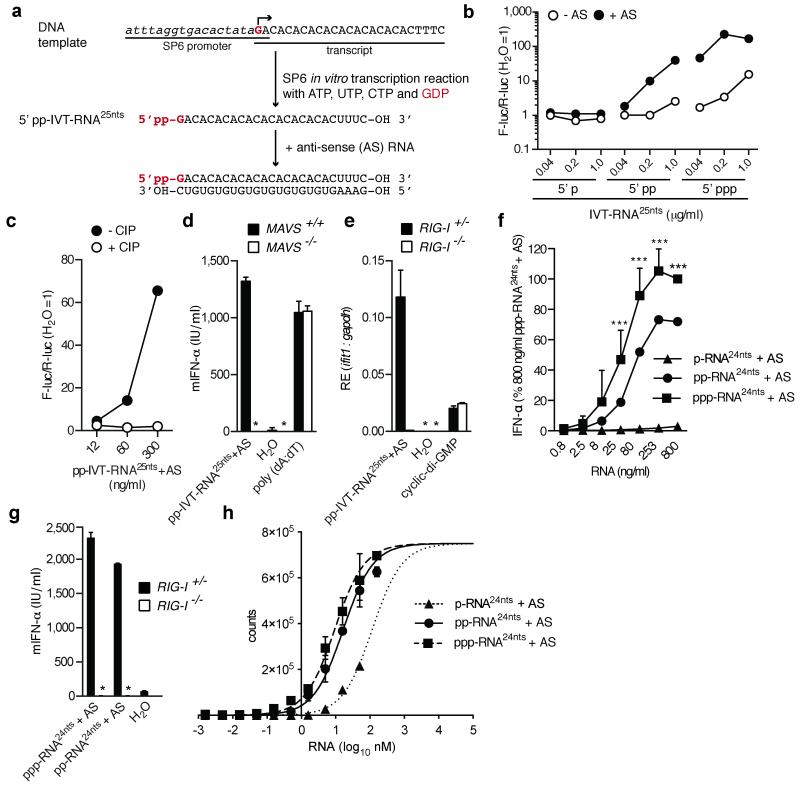
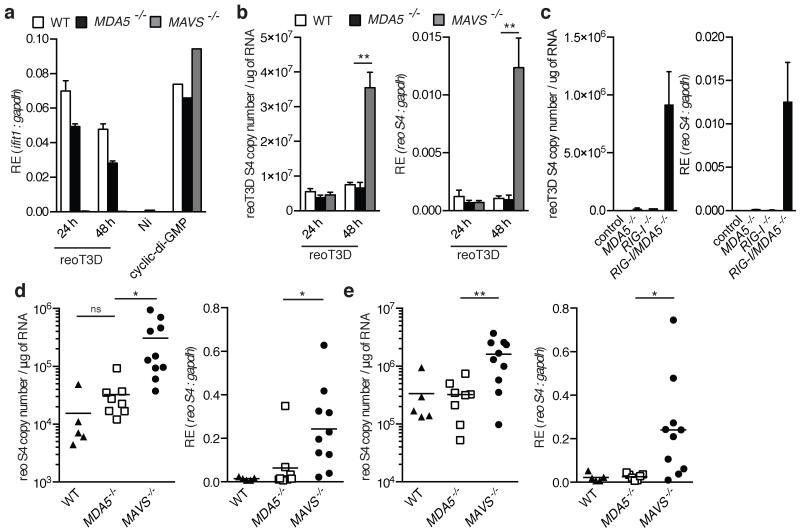
Mammalian cells possess mechanisms to detect and defend themselves from invading viruses. In the cytosol, the RIG-I-like receptors (RLRs), RIG-I (retinoic acid-inducible gene I; encoded by DDX58) and MDA5 (melanoma differentiation-associated gene 5; encoded by IFIH1) sense atypical RNAs associated with virus infection. Detection triggers a signalling cascade via the adaptor MAVS that culminates in the production of type I interferons (IFN-α and β; hereafter IFN), which are key antiviral cytokines. RIG-I and MDA5 are activated by distinct viral RNA structures and much evidence indicates that RIG-I responds to RNAs bearing a triphosphate (ppp) moiety in conjunction with a blunt-ended, base-paired region at the 5'-end (reviewed in refs 1, 2, 3). Here we show that RIG-I also mediates antiviral responses to RNAs bearing 5'-diphosphates (5'pp). Genomes from mammalian reoviruses with 5'pp termini, 5'pp-RNA isolated from yeast L-A virus, and base-paired 5'pp-RNAs made by in vitro transcription or chemical synthesis, all bind to RIG-I and serve as RIG-I agonists. Furthermore, a RIG-I-dependent response to 5'pp-RNA is essential for controlling reovirus infection in cultured cells and in mice. Thus, the minimal determinant for RIG-I recognition is a base-paired RNA with 5'pp. Such RNAs are found in some viruses but not in uninfected cells, indicating that recognition of 5'pp-RNA, like that of 5'ppp-RNA, acts as a powerful means of self/non-self discrimination by the innate immune system.
Figures
References
-
- Holm GH, et al. Retinoic acid-inducible gene-I and interferon-beta promoter stimulator-1 augment proapoptotic responses following mammalian reovirus infection via interferon regulatory factor-3. J Biol Chem. 2007;282:21953–21961. - PubMed
Publication types
MeSH terms
Substances
Grants and funding
LinkOut - more resources
Full Text Sources
Other Literature Sources
Molecular Biology Databases
Research Materials
Miscellaneous
