Prevalence and healthcare utilization of herpes zoster and postherpetic neuralgia in South Korea: disparity among patients with different immune statuses
- PMID: 25119454
- PMCID: PMC4153010
- DOI: 10.4178/epih/e2014012
Prevalence and healthcare utilization of herpes zoster and postherpetic neuralgia in South Korea: disparity among patients with different immune statuses
Abstract
Objectives: Despite the clinical and epidemiological importance of herpes zoster (HZ) and postherpetic neuralgia (PHN), their disease and economic burden related to immune status has not been studied in South Korea. Our aim was to calculate the prevalence and rate of healthcare utilization related to HZ and PHN among Korean patients stratified by immune status.
Methods: This retrospective study used the Health Insurance Review and Assessment Service National Patients Sample (HIRA K-NPS) database, which includes all medical claims from January to December 2009 on a representative sample of the Korean population. HZ and PHN patients aged ≥ 50 years were categorized into three groups by immune status: severely immunocompromised group, moderately compromised group, and non-compromised group. The prevalence, disease-related healthcare utilization, and medical costs were compared across the three groups.
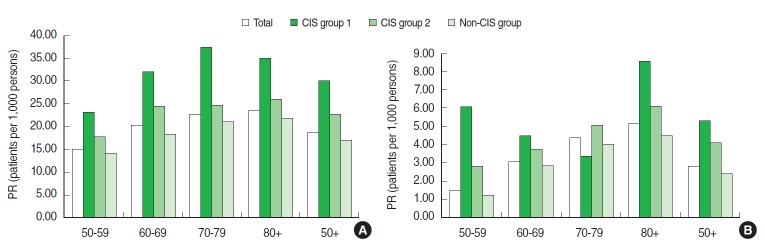
Results: We estimated that there were 312,136 HZ patients and 48,461 PHN patients ≥ 50 years in South Korea. The prevalence of HZ and PHN was 18.54 and 2.88 per 1,000 persons, respectively, and increased with deteriorating immune status. The number of outpatient visits and hospitalization rate among HZ patients were highest in the severely immunocompromised group (4.38% and 7.52%, respectively) and lowest in the non-compromised group (3.82% and 4.08%, respectively). The average medical cost per patient in the severe group was the highest (240 US dollars) and that of the non-compromised group was the lowest (161 US dollars). No parameters were significantly different among patients with PHN by immunity.
Conclusions: HZ patients with severe immunodeficiency had a higher prevalence of HZ, more outpatient visits and hospitalizations, longer hospitalizations, and higher medical costs than their counterparts did. Efforts should be made to reduce the HZ-related burden of severely immunocompromised patients.
Keywords: Health care costs; Herpes zoster; Immunocompromised host; Korea; Neuralgia; Postherpetic; Prevalence.
Conflict of interest statement
The authors have no conflicts of interest to declare for this study.
Figures
References
-
- Dolin R, Reichman RC, Mazur MH, Whitley RJ. NIH conference. Herpes zoster-varicella infections in immunosuppressed patients. Ann Intern Med. 1978;89:375–388. - PubMed
-
- Gnann JW, Jr, Whitley RJ. Clinical practice. Herpes zoster. N Engl J Med. 2002;347:340–346. - PubMed
-
- Yawn BP, Saddier P, Wollan PC, St Sauver JL, Kurland MJ, Sy LS. A population-based study of the incidence and complication rates of herpes zoster before zoster vaccine introduction. Mayo Clin Proc. 2007;82:1341–1349. - PubMed
-
- Gonzalez Chiappe S, Sarazin M, Turbelin C, Lasserre A, Pelat C, Bonmarin I, et al. Herpes zoster: burden of disease in France. Vaccine. 2010;28:7933–7938. - PubMed
LinkOut - more resources
Full Text Sources
Other Literature Sources