Association between bone mineral density and clinical consequences: cross-sectional study of Korean postmenopausal women in an orthopaedic outpatient clinic
- PMID: 25120328
- PMCID: PMC4129210
- DOI: 10.3346/jkms.2014.29.8.1152
Association between bone mineral density and clinical consequences: cross-sectional study of Korean postmenopausal women in an orthopaedic outpatient clinic
Abstract
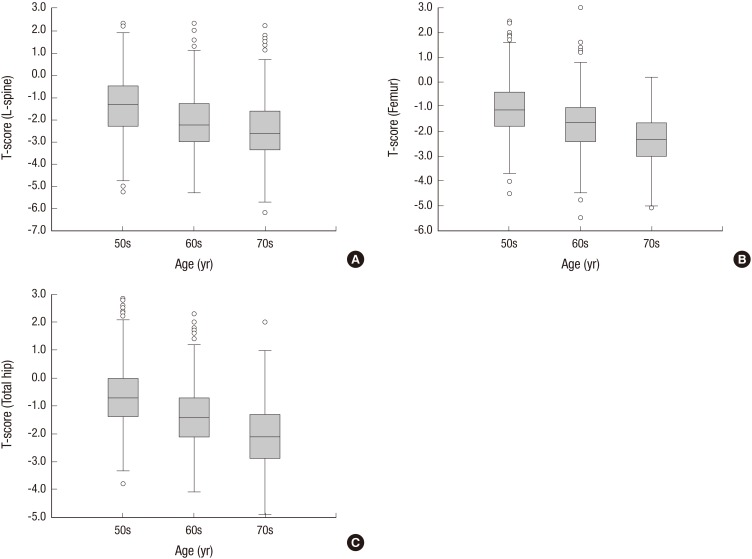
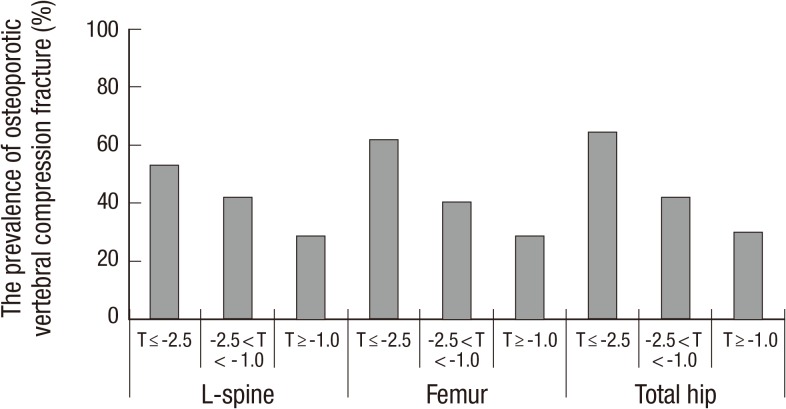
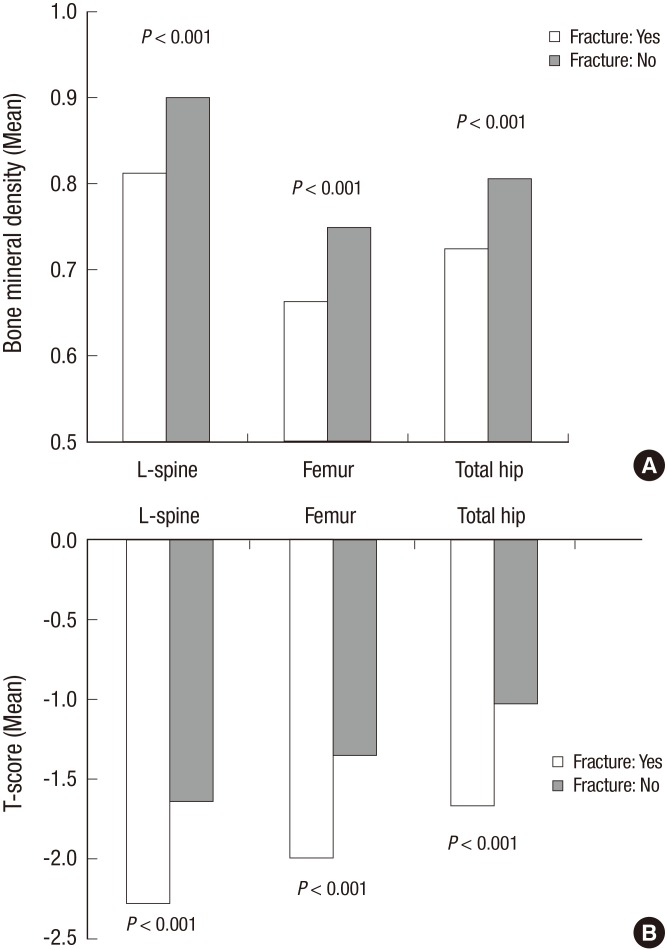
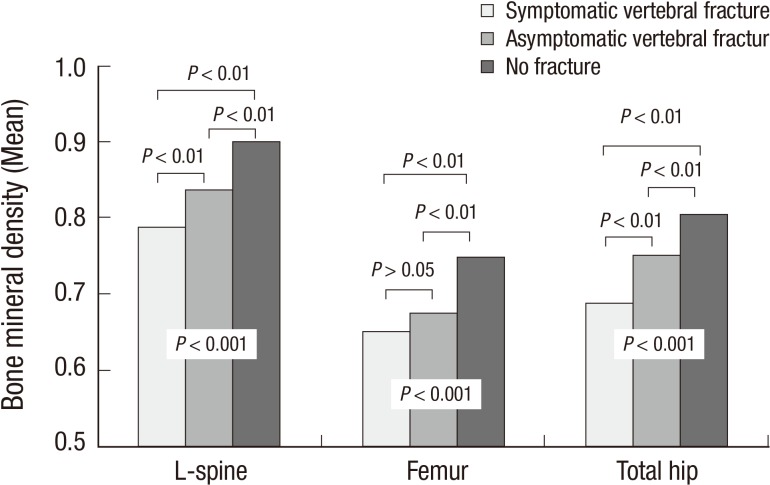
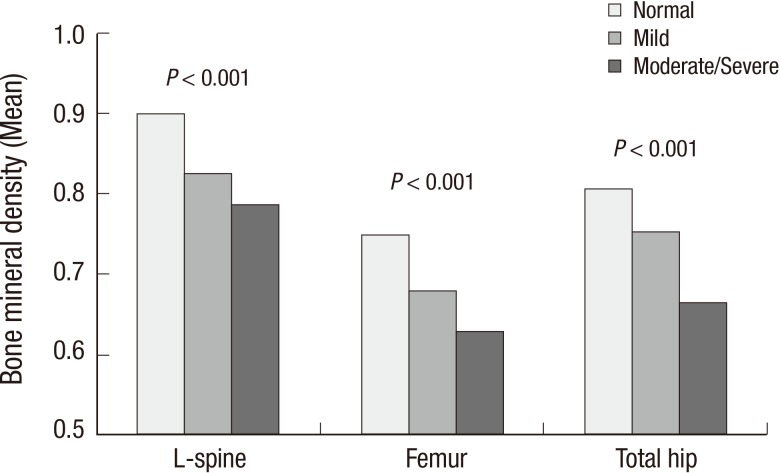
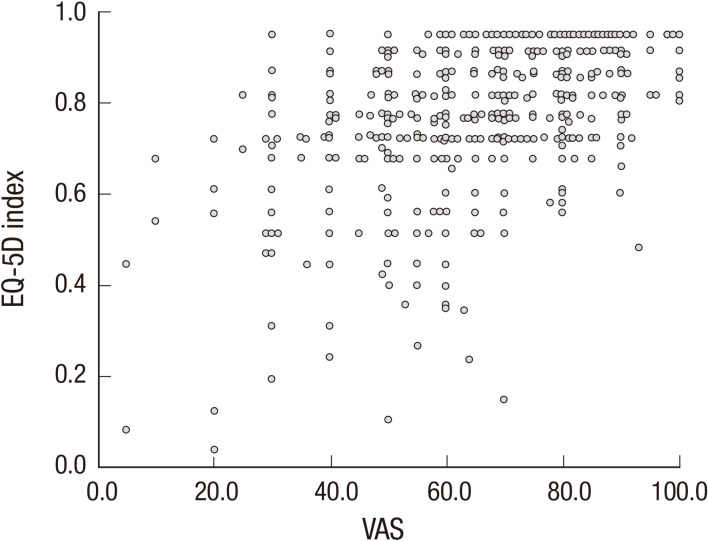
This study is to identify the characteristics of BMD and the related clinical consequences through a nationwide, consecutive, cross-sectional study. A total of 1,281 postmenopausal women was enrolled nationwide and underwent measurement for BMD using dual energy x-ray absorptiometry. Following the T-spine and L-spine plane radiography, they were evaluated for vertebral fracture by a semi-quantitative method using the Genant's method. Relationship between BMD and osteoporotic fracture and a degree of deformity in vertebral fracture, treatment history in osteoporosis and the EQ-5D was analyzed. The distribution of the normal, osteopenia and osteoporosis group was 25.9%, 37.0%, and 37.2% in lumbar spine, and 31.4%, 45.3%, and 23.3% in femur neck, respectively. BMD in subjects with symptomatic or asymptomatic vertebral fracture was significantly lower than those without fracture. The femur neck and total hip BMDs were significantly lower in hip fracture group (0.646 g/cm(2) and 0.643 g/cm(2), respectively) and wrist fracture group (0.661 g/cm(2) and 0.712 g/cm(2), respectively) than in subjects without fracture (0.721 g/cm(2) and 0.712 g/cm(2), respectively). The BMD was significantly lower with more severe degree of deformity in vertebral fracture and lower scores in mobility, usual activities and pain/discomfort of the EQ-5D. In Korean postmenopausal women, the prevalence of osteoporosis and vertebral, hip and wrist fracture increase and quality of life decreases with lower BMD.
Keywords: Bone Density; EQ-5D; Osteoporotic Fractures; Postmenopause; Women.
Conflict of interest statement
No benefits in any form have been or will be received from a commercial party related directly or indirectly to the subject of this manuscript.
Figures
References
-
- Suzuki T, Yoshida H. Low bone mineral density at femoral neck is a predictor of increased mortality in elderly Japanese women. Osteoporos Int. 2010;21:71–79. - PubMed
-
- Kanis JA, Burlet N, Cooper C, Delmas PD, Reginster JY, Borgstrom F, Rizzoli R European Society for Clinical and Economic Aspects of Osteoporosis and Osteoarthritis (ESCEO) European guidance for the diagnosis and management of osteoporosis in postmenopausal women. Osteoporos Int. 2008;19:399–428. - PMC - PubMed
-
- Kanis JA, Johnell O, De Laet C, Jonsson B, Oden A, Ogelsby AK. International variations in hip fracture probabilities: implications for risk assessment. J Bone Miner Res. 2002;17:1237–1244. - PubMed
Publication types
MeSH terms
LinkOut - more resources
Full Text Sources
Other Literature Sources
Medical