. 2014 Aug 13;16(2):257-264.
doi: 10.1016/j.chom.2014.07.006.

Hepatitis C virus subverts liver-specific miR-122 to protect the viral genome from exoribonuclease Xrn2

Affiliations

Hepatitis C virus subverts liver-specific miR-122 to protect the viral genome from exoribonuclease Xrn2

Cecilia D Sedano et al. Cell Host Microbe. .

Abstract

The abundant, liver-specific microRNA miR-122 forms extensive base-pairing interactions with the 5' noncoding region of the hepatitis C virus (HCV) RNA genome, protecting the viral RNA from degradation. We discovered that the 5'-3' exoribonuclease Xrn2, which plays a crucial role in the transcription termination of RNA polymerase II, modulates HCV RNA abundance in the cytoplasm, but is counteracted by miR-122-mediated protection. Specifically, Xrn2 depletion results in increased accumulation of viral RNA, while Xrn2 overexpression diminishes viral RNA abundance. Depletion of Xrn2 did not alter translation or replication rates of HCV RNA, but affected viral RNA stability. Importantly, during sequestration of miR-122, Xrn2 depletion restored HCV RNA abundance, arguing that Xrn2 depletion eliminates the miR-122 requirement for viral RNA stability. Thus, Xrn2 has a cytoplasmic, antiviral function against HCV that is counteracted by HCV's subversion of miR-122 to form a protective oligomeric complex at the 5' end of the viral genome.


Figures

Figure 1
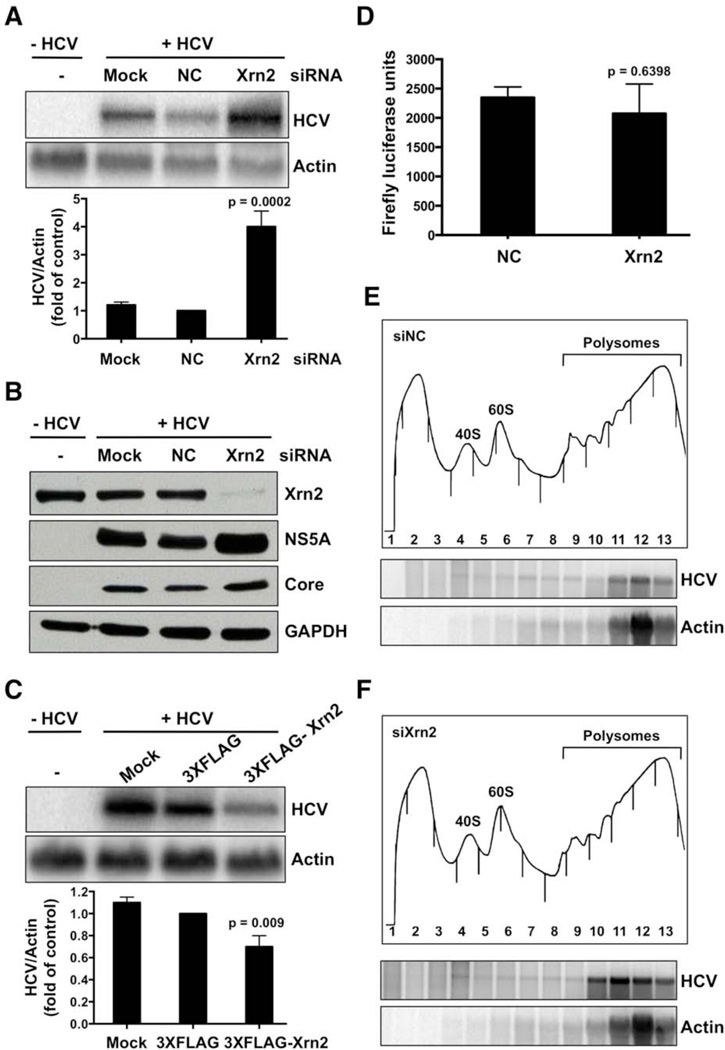
Figure 1. Effects of Xrn2 depletion on HCV RNA and protein abundance
(A) Effects on RNA abundance. Cells were mock-transfected (Mock), or transfected with control (NC) or Xrn2 siRNAs. One day later, cells were infected with HCV as indicated. RNA abundances were measured by Northern blot analysis three days after infection. The Northern blot is representative of at least three independent replicates (top). Quantitation of HCV RNA abundance (bottom). Error bars represent standard error of the mean. P value was determined by Student’s t-test. (B) siRNA-mediated depletion of Xrn2. Abundances of HCV NS5A and core proteins, and GAPDH were examined. Immunoblot shown is representative of at least three independent replicates. (C) Overexpression of Xrn2. 3XFLAG-Xrn2 or 3XFLAG plasmids were transfected one day prior to infection with HCV. HCV and actin RNA abundances were measured by Northern blot analysis three days after infection. The Northern blot shown represents at least three independent replicates (top). Quantitation of HCV RNA abundance (bottom). Error bars represent standard error of the mean. P value was determined by Student’s t-test. (D) Effects of Xrn2 depletion on HCV IRES-mediated translation, measured by luciferase assay as described in the text. The data shown represent at least three independent replicates. Error bars represent standard error of the mean. P-value was determined by Student’s t-test. (E and F) Polysomal profile from Xrn2-depleted cells (top). siRNAs were transfected one day prior to infection. Three days after infection, cell lysates from HCV-infected, siXrn2-treated or siNC-treated samples were separated in 10–60% sucrose gradients. 40S and 60S ribosomal subunits and polysomes are indicated in the A260nm profile. Northern blot analyses of the sucrose gradient fractions (bottom). The Northern blots shown represent at least three independent replicates.
Figure 2
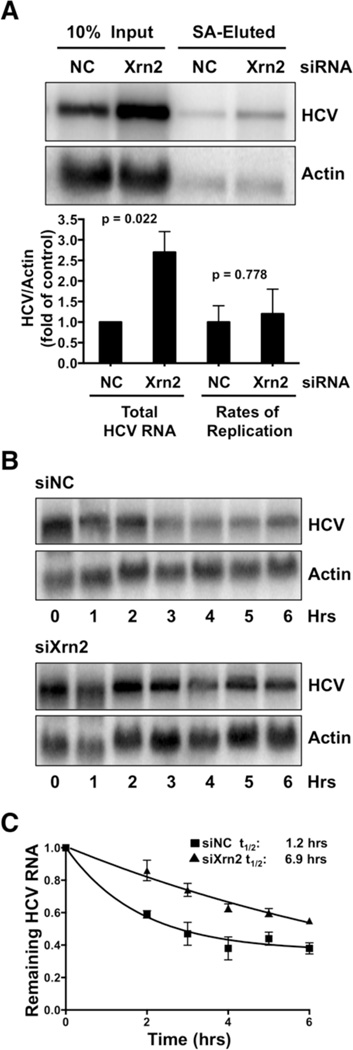
Figure 2. Effects of Xrn2 Depletion on HCV RNA synthesis and decay
(A) Effects of Xrn2 depletion on rates of HCV RNA synthesis. siRNAs were transfected one day prior to infection. Abundances of total and newly synthesized HCV and actin RNAs were examined by Northern blot analysis three days after infection (top) (Norman and Sarnow, 2010). The Northern blot shown is representative of at least three independent replicates. Replication rates of HCV RNA correspond to the ratio of newly synthesized HCV RNA to input RNA. Error bars represent standard error of the mean. P-values were determined by Student’s t-test. (B) Effects of Xrn2 depletion on HCV RNA decay. Control (siNC) or Xrn2 (siXrn2) siRNAs were transfected one day prior to infection. Three days after infection cells were treated with 25 µM of the MK-0608 nucleoside analog of HCV NS5B, and RNAs were extracted at indicated times. HCV RNA levels were measured by Northern blot analysis. Northern blots shown represent at least three independent experiments. (C) One-phase decay graph of HCV RNA. Data from cells harvested at time 0 were set to 1. Data shown represent remaining HCV RNA following addition of MK-0608. Error bars represent standard error of the mean. Estimated half-life (t1/2) of HCV RNA under these conditions is indicated; ± 95% confidence intervals (CI) are 0.54–2.24 and 5.82–8.42 in hours for NC and Xrn2 respectively (see Fig. S7). The data shown represent the means of at least three independent replicates.
Figure 3
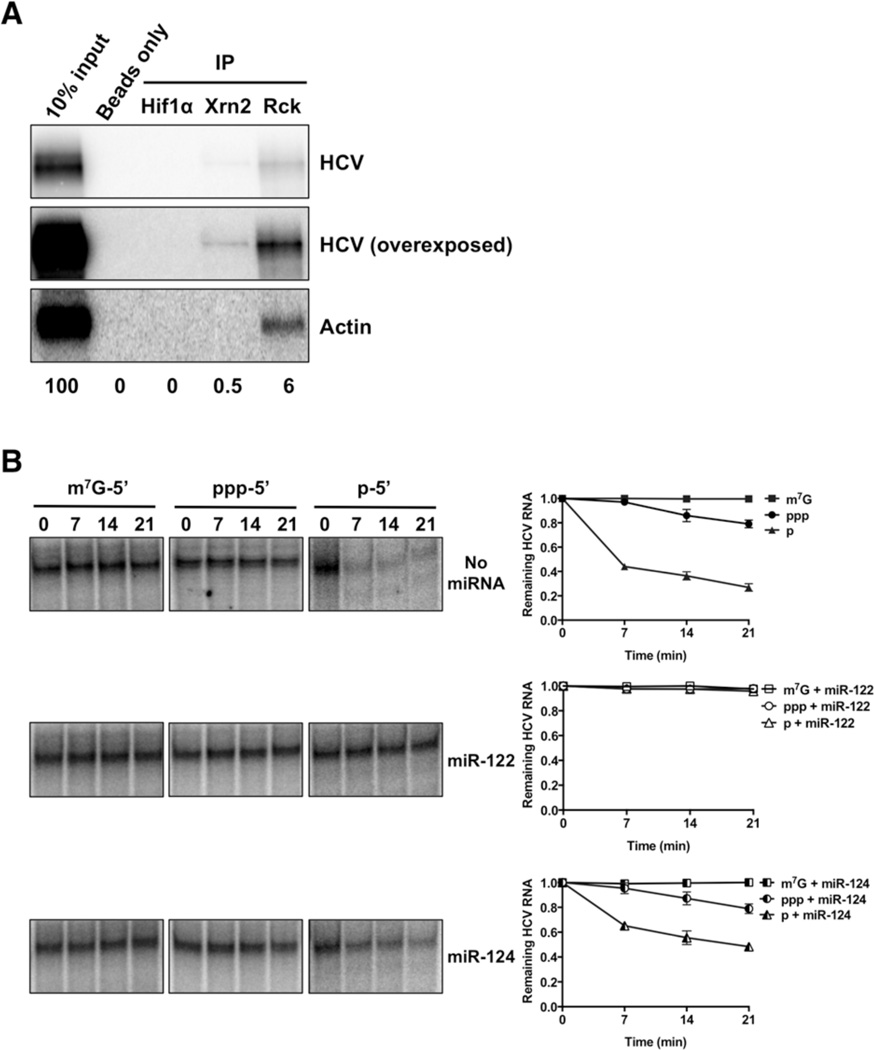
Figure 3. HCV RNA – Xrn2 interaction and protection by miR-122
A) Xrn2 association with HCV RNA. Representative Northern blot of co-immunoprecipitation reactions performed with antibodies against Hif1-α, Xrn2, and Rck. Lane 1 corresponds to 10% of input RNA. (B) Protection of viral RNA by miR-122 from Xrn2-mediated degradation. 3’-32P-labelled capped- (m7G-5’), monophosphorylated- (p-5’), and triphosphorylated- (ppp-5’) HCV reporter RNAs were incubated with recombinant human Xrn2 in the absence (top) or presence of miR-122 (middle) or miR-124 (bottom) for the indicated periods of time, and subsequently analyzed by denaturing gel electrophoresis. Quantitation of radiolabeled RNA is on the right. Results from at least three independent replicates are shown. Error bars represent standard error of the mean. Values were normalized to the 0-minute no-Xrn2 control.
Figure 4
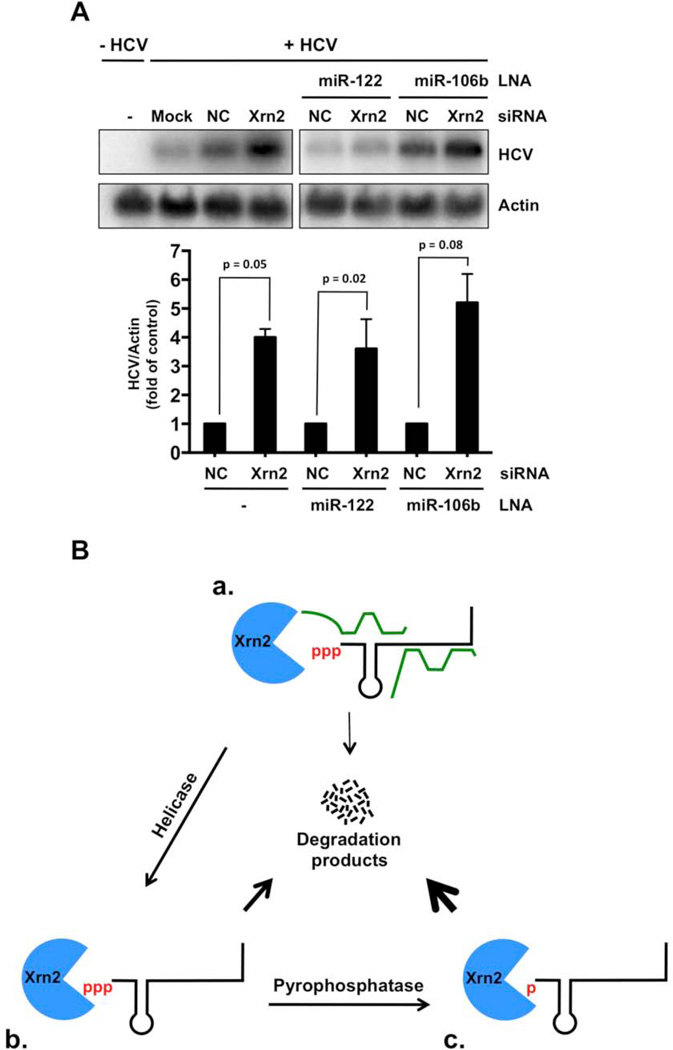
Figure 4. HCV RNA abundance during sequestration of miR-122 and depletion of Xrn2
(A) Indicated siRNAs were transfected one day prior to infection. 0.5 nM miR-122 or 0.5 nM miR-106b LNA were transfected one day post-infection, and total RNA was harvested three days after infection. HCV and γ-actin RNA abundance was measured by Northern blot analysis (top). The Northern blot shown represents three independent experiments. Quantitation of HCV RNA abundance (bottom). HCV RNA abundances were normalized to γ-actin levels. Data from cells transfected with control siRNAs were set to 1. Error bars represent standard error of the mean. P-values determined by Student’s t-test. (B) Model of protection of the 5’-end of the HCV genome by miR-122 from Xrn2-mediated 5’-3’ degradation. (a) In the presence of miR-122, Xrn2 produces few viral degradation products (thin arrow). (b) Loss of miR-122-mediated protection renders the 5’-triphosphate of viral genome susceptible to Xrn2 degradation. Helicases could remove miR-122 from the viral genome, resulting in larger amounts of degradation products (thick arrow). (c) Removal of the 5’ triphosphate moiety of HCV RNA by a pyrophosphohydrolase could generate 5’-monophosphates that would be degraded by Xrn2 (very thick arrow).

References

    1. Bartenschlager R, Penin F, Lohmann V, Andre P. Assembly of infectious hepatitis C virus particles. Trends in microbiology. 2011;19:95–103. - PubMed
    1. Benoit B, Mitou G, Chartier A, Temme C, Zaessinger S, Wahle E, Busseau I, Simonelig M. An essential cytoplasmic function for the nuclear poly(A) binding protein, PABP2, in poly(A) tail length control and early development in Drosophila. Developmental cell. 2005;9:511–522. - PubMed
    1. Chatterjee S, Grosshans H. Active turnover modulates mature microRNA activity in Caenorhabditis elegans. Nature. 2009;461:546–549. - PubMed
    1. Cleary MD, Meiering CD, Jan E, Guymon R, Boothroyd JC. Biosynthetic labeling of RNA with uracil phosphoribosyltransferase allows cell-specific microarray analysis of mRNA synthesis and decay. Nat Biotechnol. 2005;23:232–237. - PubMed
    1. El Hage A, Koper M, Kufel J, Tollervey D. Efficient termination of transcription by RNA polymerase I requires the 5' exonuclease Rat1 in yeast. Genes & development. 2008;22:1069–1081. - PMC - PubMed

Publication types

LinkOut - more resources