Incidence of retinopathy of prematurity in southwestern China and analysis of risk factors
- PMID: 25124335
- PMCID: PMC4144944
- DOI: 10.12659/MSM.890688
Incidence of retinopathy of prematurity in southwestern China and analysis of risk factors
Abstract
Background: The aim of this study was to screen for retinopathy of prematurity (ROP) in southwestern China and understand the prevalence and risk factors of ROP, which may provide evidence useful in the prevention and treatment of ROP.
Material/methods: 1864 preterm infants (gestational age of <37 weeks and birth weight of ≤2500 g) underwent ROP screening from January 2009 to November 2012 in Southwest China. The medical information of infants during perinatal period was reviewed, and risk factors of ROP were determined. A total of 1614 infants were recruited for final analysis.
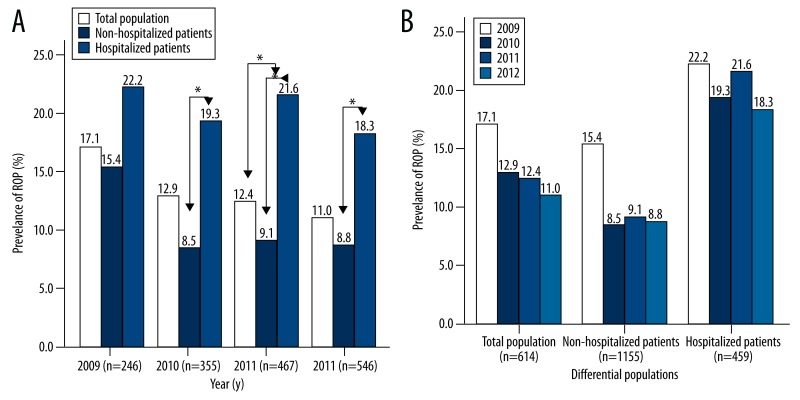
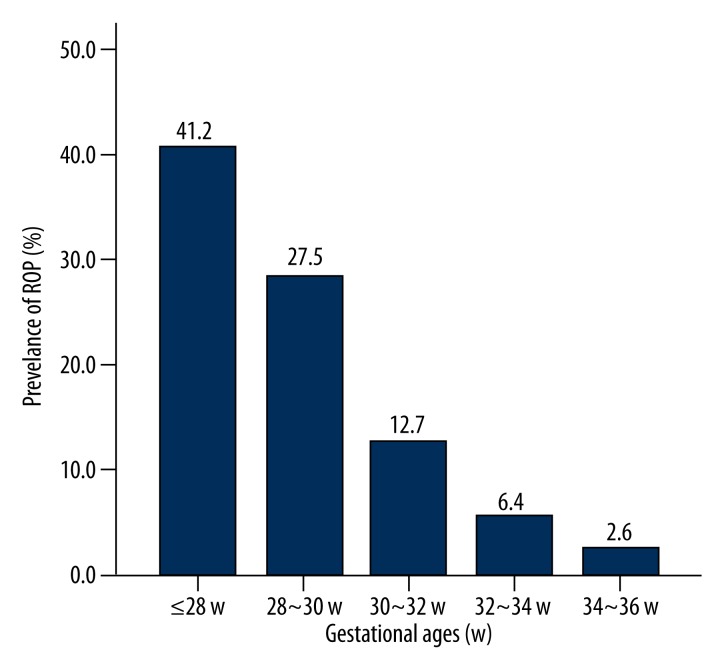
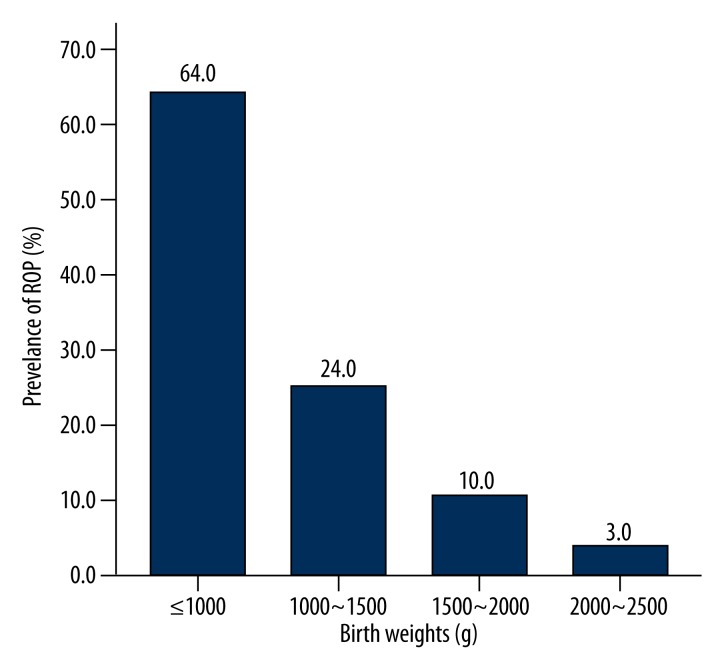
Results: Incidence of ROP was 12.8%. The first, second, third, and fourth stage of ROP was found in 64.6%, 29.6%, 3.4%, and 0.5% of infants, respectively. No fifth stage of ROP was observed. In addition, 7.7% of infants required surgical intervention. In our Department of Neonatology, the incidence of ROP was 20.0%, which was significantly higher than in non-hospitalized patients (9.9%). The incidence of ROP remained unchanged over the years. Independent risk factors of ROP included low birth weight (p=0.049), low gestational age (p=0.008), days of oxygen supplementation (p=0.008), and myocardial injury after birth (p=0.001).
Conclusions: The prevalence of ROP in preterm infants is relatively high in Southwest China, and low birth weight, low gestational age, days of oxygen supplementation, and myocardial injury after birth are independent risk factors for ROP.
Figures
References
-
- Sun BC. Low vision in clinical practice. Huaxia Publishing House. 1999
-
- Courtright P, Hutchinson AK, Lewallen S. Visual impairment in children in middle- and lower-income countries. Arch Dis Child. 2011;96:1129–34. - PubMed
-
- Forbes BJ, Khazaeni LM. Evaluation and Management of a Premature Infant’s Eyes. Pediatr Case Rev. 2003;3:105–10. - PubMed
-
- Lad EM, Hernandez-Boussard T, Morton JM, Moshfeghi DM. Incidence of retinopathy of prematurity in the United States: 1997 through 2005. Am J Ophthalmol. 2009;148:451–58. - PubMed
Publication types
MeSH terms
LinkOut - more resources
Full Text Sources
Other Literature Sources