


Cytotoxicity of dietary flavonoids on different human cancer types
- PMID: 25125885
- PMCID: PMC4127821
- DOI: 10.4103/0973-7847.134247
Cytotoxicity of dietary flavonoids on different human cancer types
Abstract
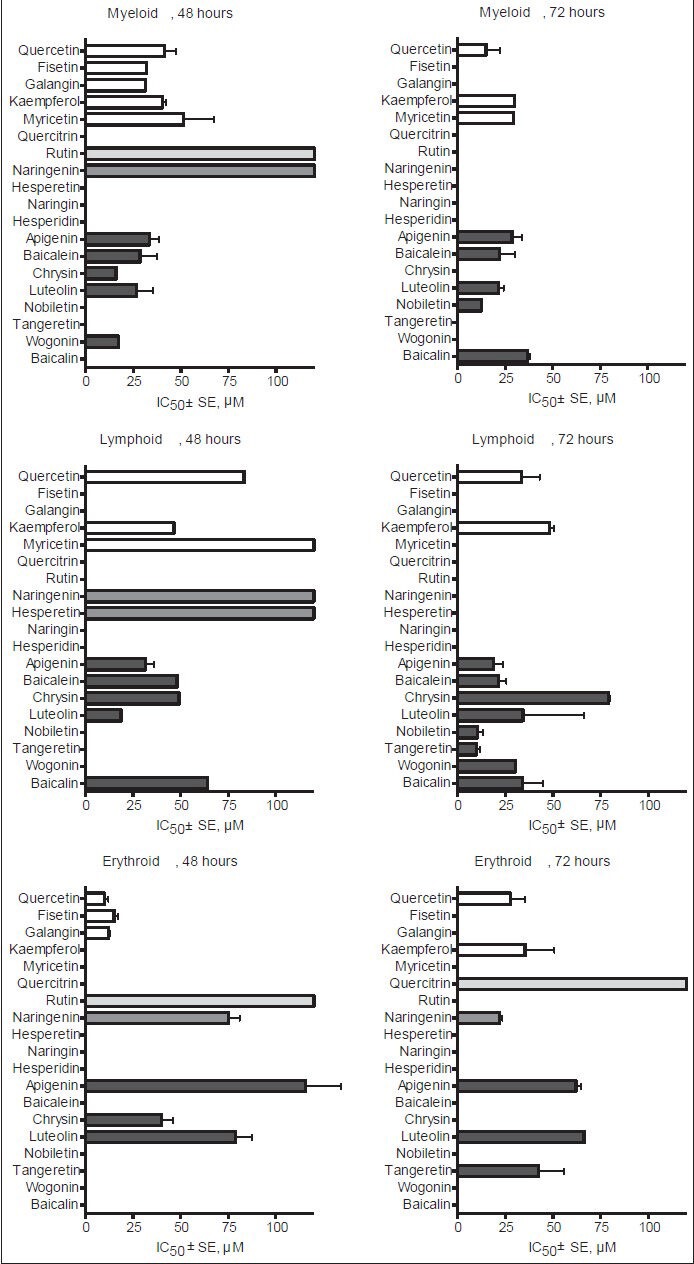
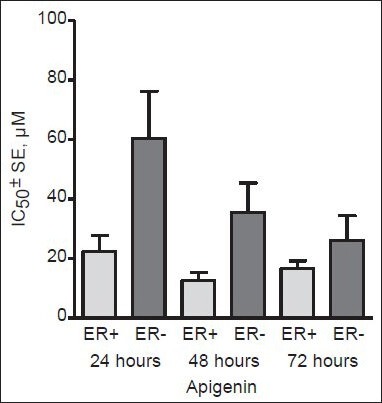
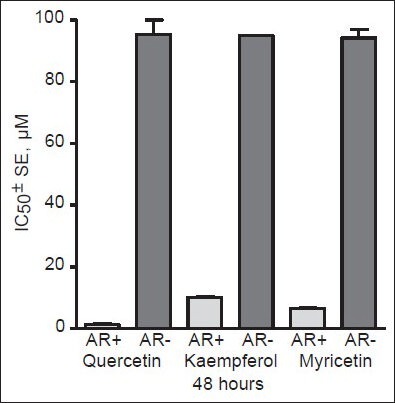
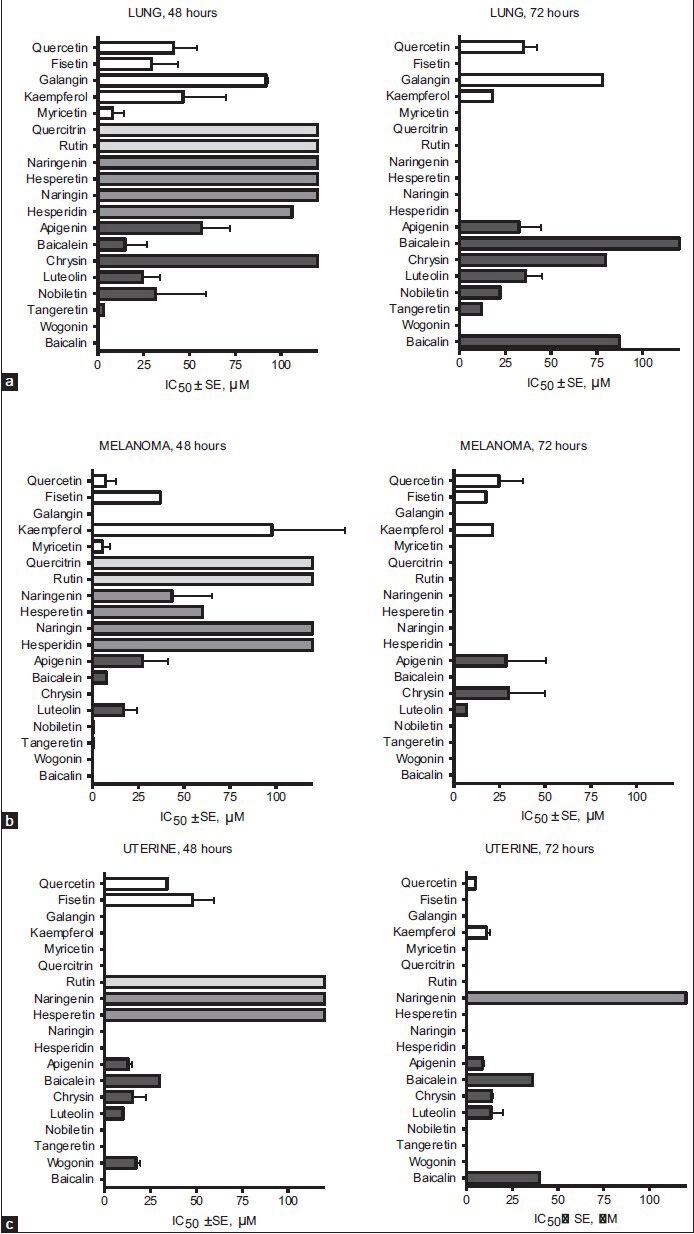
Flavonoids are ubiquitous in nature. They are also in food, providing an essential link between diet and prevention of chronic diseases including cancer. Anticancer effects of these polyphenols depend on several factors: Their chemical structure and concentration, and also on the type of cancer. Malignant cells from different tissues reveal somewhat different sensitivity toward flavonoids and, therefore, the preferences of the most common dietary flavonoids to various human cancer types are analyzed in this review. While luteolin and kaempferol can be considered as promising candidate agents for treatment of gastric and ovarian cancers, respectively, apigenin, chrysin, and luteolin have good perspectives as potent antitumor agents for cervical cancer; cells from main sites of flavonoid metabolism (colon and liver) reveal rather large fluctuations in anticancer activity probably due to exposure to various metabolites with different activities. Anticancer effect of flavonoids toward blood cancer cells depend on their myeloid, lymphoid, or erythroid origin; cytotoxic effects of flavonoids on breast and prostate cancer cells are highly related to the expression of hormone receptors. Different flavonoids are often preferentially present in certain food items, and knowledge about the malignant tissue-specific anticancer effects of flavonoids could be purposely applied both in chemoprevention as well as in cancer treatment.
Keywords: Diet; flavonoids; human cancers; prevention; treatment.
Conflict of interest statement
Figures
References
-
- Mignet N, Seguin J, Ramos Romano M, Brulle L, Touil YS, Scherman D, et al. Development of a liposomal formulation of the natural flavonoid fisetin. Int J Pharm. 2012;423:69–76. - PubMed
-
- Ying TH, Yang SF, Tsai SJ, Hsieh SC, Huang YC, Bau DT, et al. Fisetin induces apoptosis in human cervical cancer HeLa cells through ERK1/2-mediated activation of caspase-8-/caspase-3-dependent pathway. Arch Toxicol. 2012;86:263–73. - PubMed
-
- Szliszka E, Helewski KJ, Mizgala E, Krol W. The dietary flavonol fisetin enhances the apoptosis-inducing potential of TRAIL in prostate cancer cells. Int J Oncol. 2011;39:771–9. - PubMed
-
- Seguin J, Brullé L, Boyer R, Lu YM, Ramos Romano M, Touil YS, et al. Liposomal encapsulation of the natural flavonoid fisetin improves bioavailability and antitumor efficacy. Int J Pharm. 2013;444:146–54. - PubMed
-
- Tolomeo M, Grimaudo S, Di Cristina A, Pipitone RM, Dusonchet L, Meli M, et al. Galangin increases the cytotoxic activity of imatinib mesylate in imatinib-sensitive and imatinib-resistant Bcr-Abl expressing leukemia cells. Cancer Lett. 2008;265:289–97. - PubMed
Publication types
LinkOut - more resources
Full Text Sources
Other Literature Sources