


Uncommon presentations of tinea versicolor
- PMID: 25126470
- PMCID: PMC4132011
- DOI: 10.5826/dpc.0403a21
Uncommon presentations of tinea versicolor
Abstract
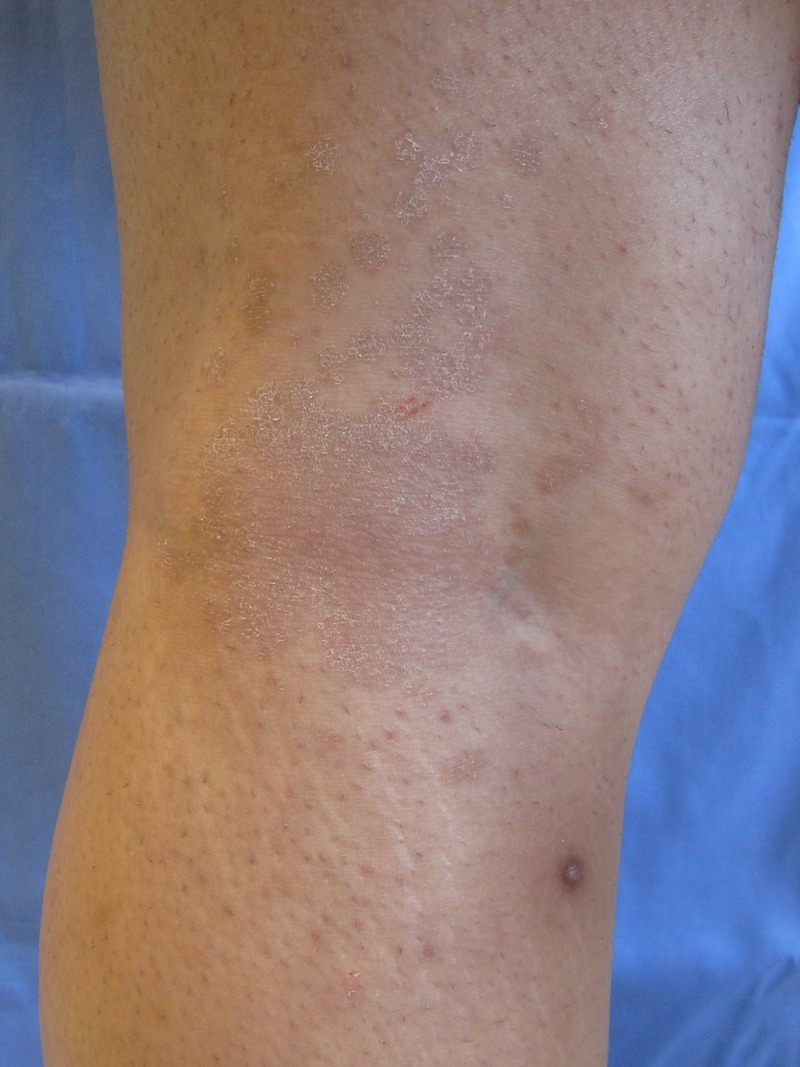
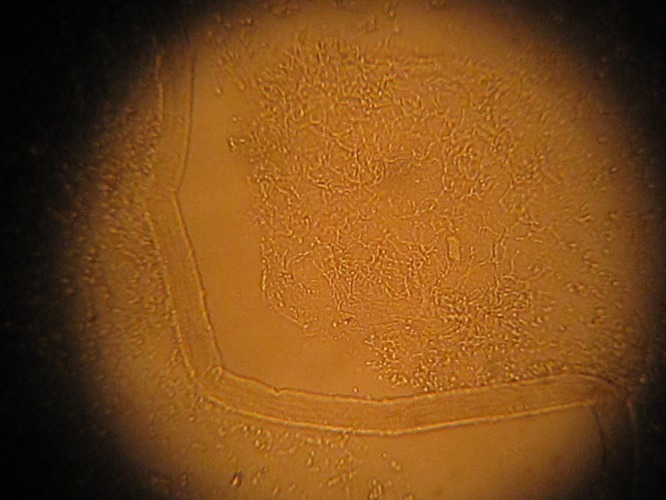
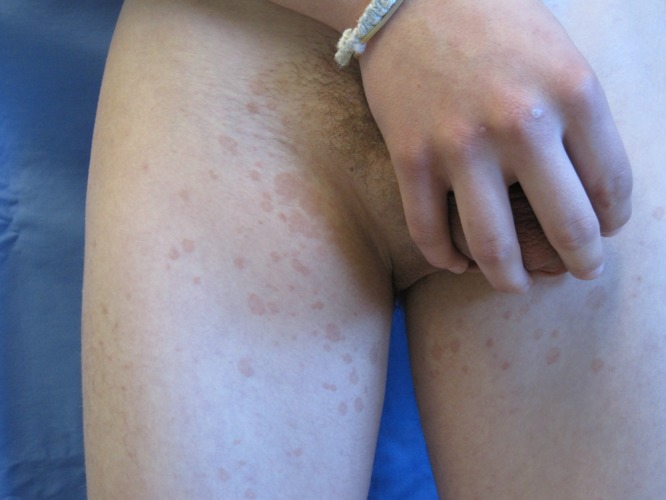
Tinea versicolor (TV) is a common cutaneous fungal infection characterized by superficial scaling and a mild disturbance of skin pigmentation. It typically affects the chest, upper back, and shoulders. However, involvement of more unusual regions of the body such as the face and scalp, arms and legs, intertriginous sites, genitalia, areolae, and palms and soles has been reported. This report details two such cases observed at our institution: a 32-year-old woman with involvement of the popliteal fossa and a 16-year-old boy with involvement of the groin. The clinician must be aware of these variations in location and perform the appropriate diagnostic workup when lesions have the characteristic morphology of TV despite an unusual location. The etiology, pathophysiology, and epidemiology of TV are reviewed and current literature describing other instances of TV in uncommon locations is discussed.
Keywords: Malassezia; flexures; groin; pityriasis versicolor; tinea versicolor.
Figures
References
-
- Terragni L, Lasagni A, Oriani A. Pityriasis versicolor of the face. Mycoses. 1991;34(7–8):345–347. - PubMed
-
- Rudolph RI, Holzwanger JM. Letter: Inverse tinea versicolor. Arch Dermatol. 1975;111(9):1213. - PubMed
-
- Kaur I, Handa S, Kumar B. Tinea versicolor: involvement of unusual sites. Int J Dermatol. 1996;35(8):604–605. - PubMed
-
- Gupta AK, Bluhm R, Summerbell R. Pityriasis versicolor. J Eur Acad Dermatol Venereol. 2002;16(1):19–33. - PubMed
-
- Aljabre SH. Intertriginous lesions in pityriasis versicolor. J Eur Acad Dermatol Venereol. 2003;17(6):659–662. - PubMed
LinkOut - more resources
Full Text Sources
Other Literature Sources
