


Mapping and introgression of QTL involved in fruit shape transgressive segregation into ‘piel de sapo’ melon (cucumis melo l.) [corrected]
- PMID: 25126852
- PMCID: PMC4134209
- DOI: 10.1371/journal.pone.0104188
Mapping and introgression of QTL involved in fruit shape transgressive segregation into ‘piel de sapo’ melon (cucumis melo l.) [corrected]
Erratum in
- PLoS One. 2014;9(12):e116098
Abstract
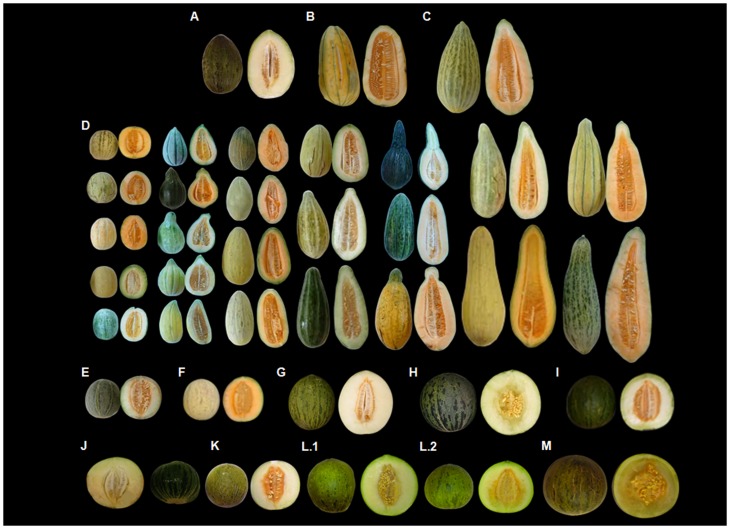
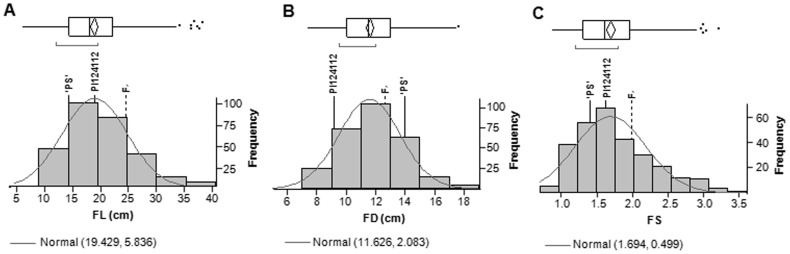
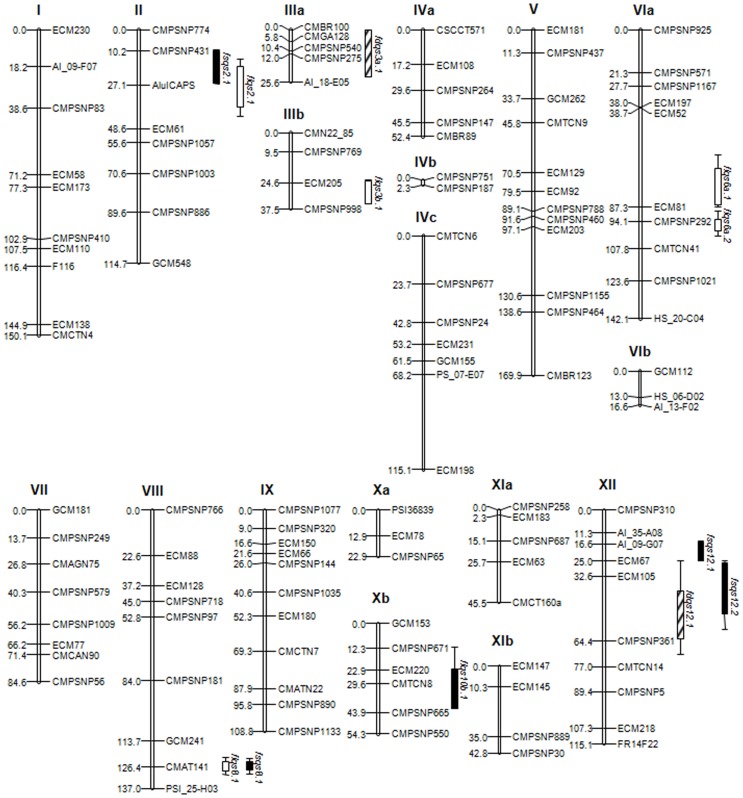
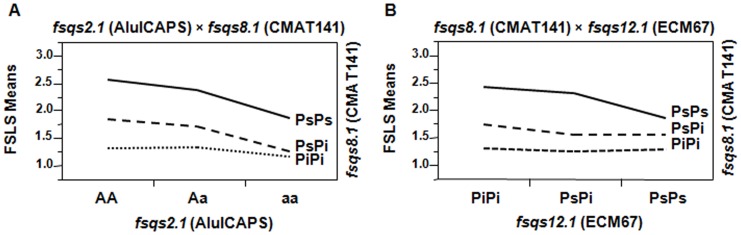
A mapping F2 population from the cross 'Piel de Sapo' × PI124112 was selectively genotyped to study the genetic control of morphological fruit traits by QTL (Quantitative Trait Loci) analysis. Ten QTL were identified, five for FL (Fruit Length), two for FD (Fruit Diameter) and three for FS (Fruit Shape). At least one robust QTL per character was found, flqs8.1 (LOD = 16.85, R2 = 34%), fdqs12.1 (LOD = 3.47, R2 = 11%) and fsqs8.1 (LOD = 14.85, R2 = 41%). flqs2.1 and fsqs2.1 cosegregate with gene a (andromonoecious), responsible for flower sex determination and with pleiotropic effects on FS. They display a positive additive effect (a) value, so the PI124112 allele causes an increase in FL and FS, producing more elongated fruits. Conversely, the negative a value for flqs8.1 and fsqs8.1 indicates a decrease in FL and FS, what results in rounder fruits, even if PI124112 produces very elongated melons. This is explained by a significant epistatic interaction between fsqs2.1 and fsqs8.1, where the effects of the alleles at locus a are attenuated by the additive PI124112 allele at fsqs8.1. Roundest fruits are produced by homozygous for PI124112 at fsqs8.1 that do not carry any dominant A allele at locus a (PiPiaa). A significant interaction between fsqs8.1 and fsqs12.1 was also detected, with the alleles at fsqs12.1 producing more elongated fruits. fsqs8.1 seems to be allelic to QTL discovered in other populations where the exotic alleles produce elongated fruits. This model has been validated in assays with backcross lines along 3 years and ultimately obtaining a fsqs8.1-NIL (Near Isogenic Line) in 'Piel de Sapo' background which yields round melons.
Conflict of interest statement
Figures
References
-
- FAO (2014) Food and Agricultural Organization of the United Nations: FAOSTAT [http://faostat3.fao.org/faostat-gateway/go/to/download/Q/QC/E].
-
- Ferguson A (1999) Kiwifruit cultivars: breeding and selection. Acta Hortic 498: 43–51.
-
- Butelli E, Titta L, Giorgio M, Mock HP, Matros A, et al. (2008) Enrichment of tomato fruit with health-promoting anthocyanins by expression of select transcription factors. Nat Biotech 26: 1301–1308. - PubMed
-
- Stepansky A, Kovalski I, Perl-Treves R (1999) Intraspecific classifcation of melons (Cucumis melo L.) in view of their phenotypic and molecular variation. Plant Syst Evol 217: 313–332.
-
- Monforte AJ, Eduardo I, Abad S, Arus P (2005) Inheritance mode of fruit traits in melon: Heterosis for fruit shape and its correlation with genetic distance. Euphytica 144: 31–38.
Publication types
MeSH terms
LinkOut - more resources
Full Text Sources
Other Literature Sources
Miscellaneous
