


Emotional speech synchronizes brains across listeners and engages large-scale dynamic brain networks
- PMID: 25128711
- PMCID: PMC4229500
- DOI: 10.1016/j.neuroimage.2014.07.063
Emotional speech synchronizes brains across listeners and engages large-scale dynamic brain networks
Abstract
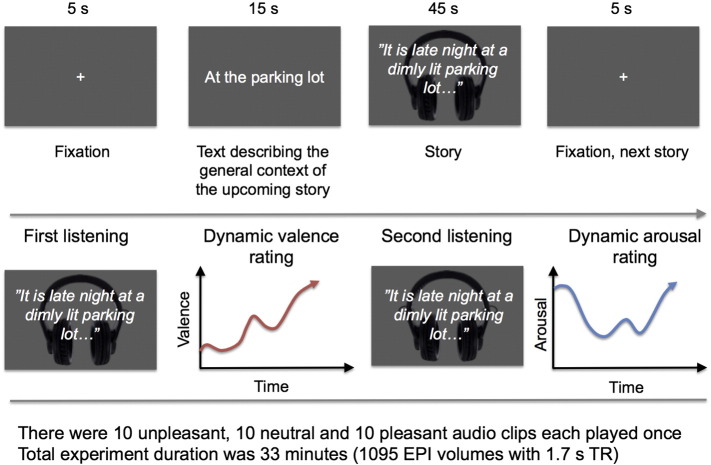
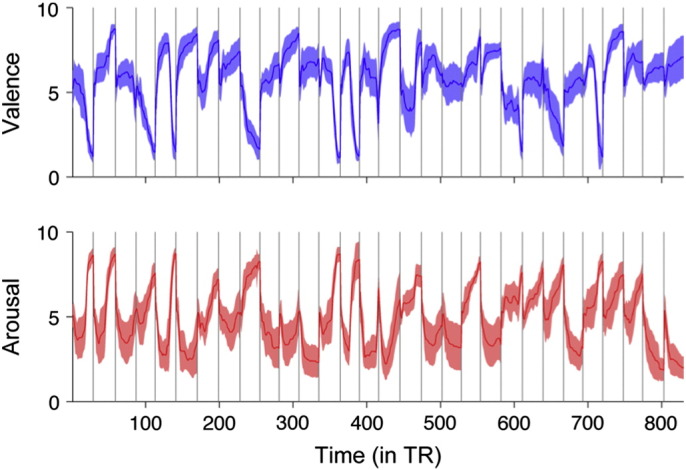
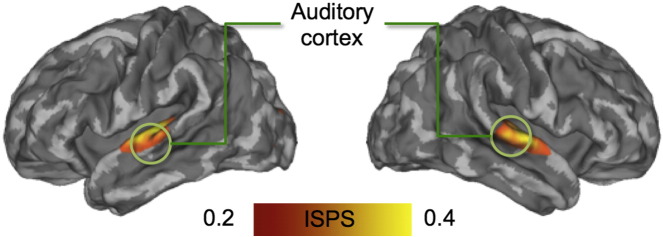
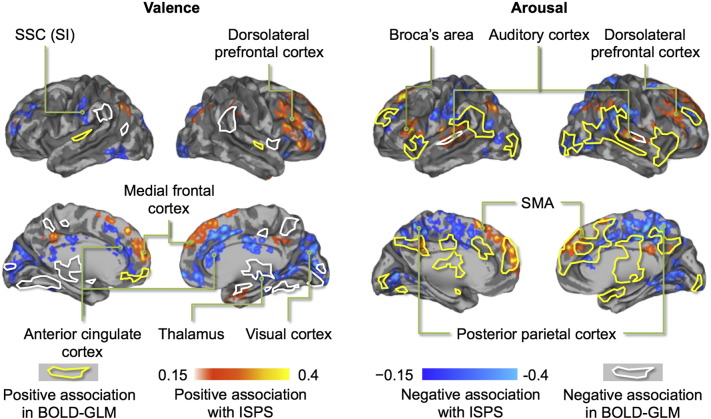
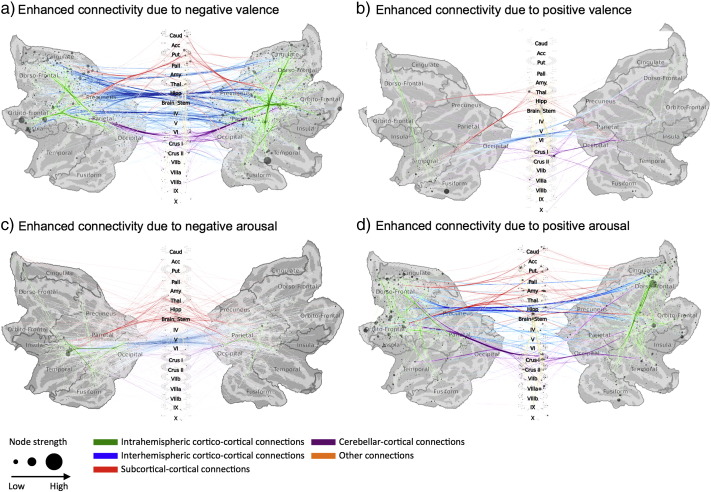
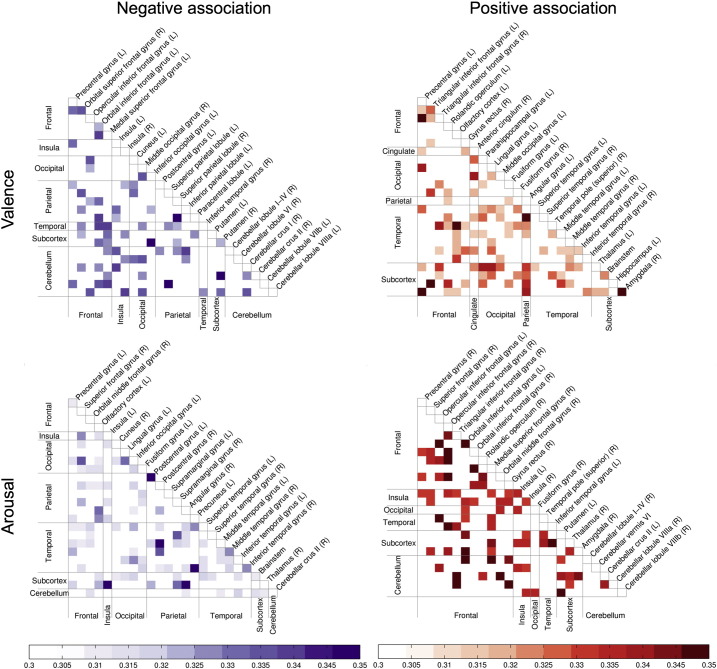
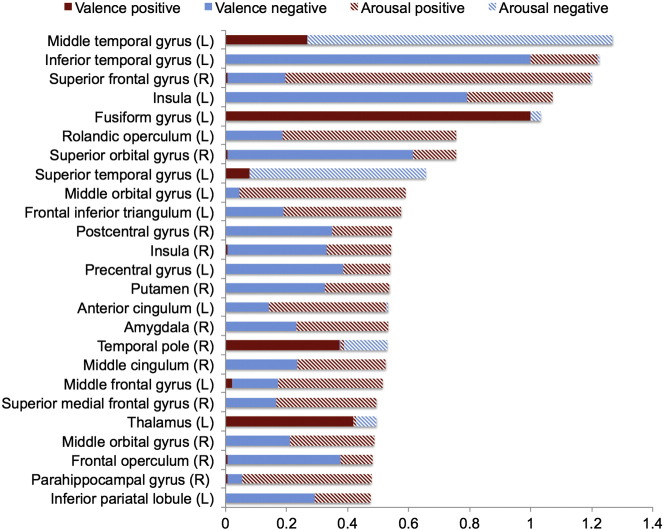
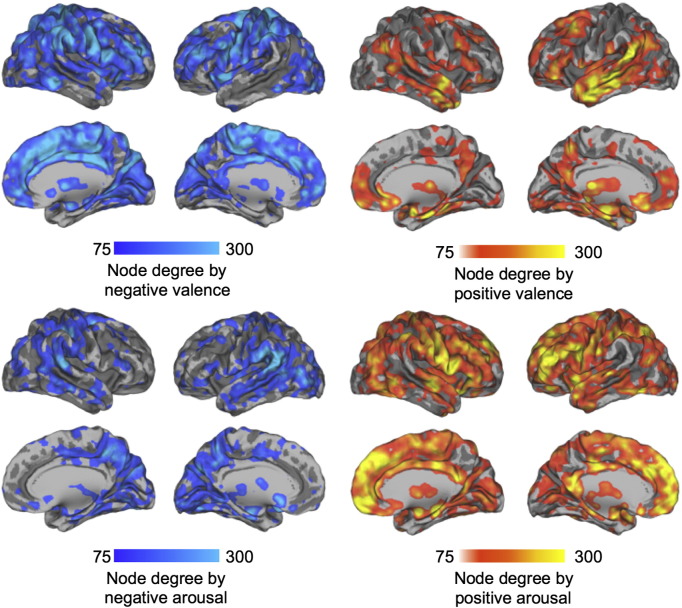
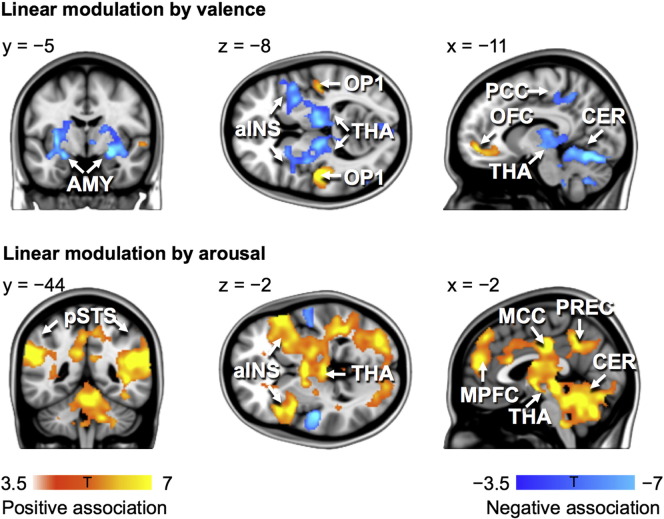
Speech provides a powerful means for sharing emotions. Here we implement novel intersubject phase synchronization and whole-brain dynamic connectivity measures to show that networks of brain areas become synchronized across participants who are listening to emotional episodes in spoken narratives. Twenty participants' hemodynamic brain activity was measured with functional magnetic resonance imaging (fMRI) while they listened to 45-s narratives describing unpleasant, neutral, and pleasant events spoken in neutral voice. After scanning, participants listened to the narratives again and rated continuously their feelings of pleasantness-unpleasantness (valence) and of arousal-calmness. Instantaneous intersubject phase synchronization (ISPS) measures were computed to derive both multi-subject voxel-wise similarity measures of hemodynamic activity and inter-area functional dynamic connectivity (seed-based phase synchronization, SBPS). Valence and arousal time series were subsequently used to predict the ISPS and SBPS time series. High arousal was associated with increased ISPS in the auditory cortices and in Broca's area, and negative valence was associated with enhanced ISPS in the thalamus, anterior cingulate, lateral prefrontal, and orbitofrontal cortices. Negative valence affected functional connectivity of fronto-parietal, limbic (insula, cingulum) and fronto-opercular circuitries, and positive arousal affected the connectivity of the striatum, amygdala, thalamus, cerebellum, and dorsal frontal cortex. Positive valence and negative arousal had markedly smaller effects. We propose that high arousal synchronizes the listeners' sound-processing and speech-comprehension networks, whereas negative valence synchronizes circuitries supporting emotional and self-referential processing.
Keywords: Connectivity; Emotion; Network; Speech comprehension; Synchronization.
Copyright © 2014. Published by Elsevier Inc.
Figures
References
-
- Anderson A.K., Christoff K., Stappen I., Panitz D., Ghahremani D.G., Glover G., Sobel N. Dissociated neural representations of intensity and valence in human olfaction. Nat. Neurosci. 2003;6:196–202. - PubMed
-
- Barsade S.G. The ripple effect: emotional contagion and its influence on group behavior. Adm. Sci. Q. 2002;47:644–675.
-
- Bastian M., Heymann S., Jacomy M. Paper presented at the International AAAI Conference on Weblogs and Social Media. 2009. Gephi: an open source software for exploring and manipulating networks.
Publication types
MeSH terms
Grants and funding
LinkOut - more resources
Full Text Sources
Other Literature Sources
