Review
. 2014 Dec:36:50-6.
doi: 10.1016/j.semcdb.2014.08.002. Epub 2014 Aug 13.

Patterning the renal vascular bed

Affiliations
Review

Patterning the renal vascular bed

Doris Herzlinger et al. Semin Cell Dev Biol. 2014 Dec.

Abstract

The renal vascular bed has a stereotypic architecture that is essential for the kidney's role in excreting metabolic waste and regulating the volume and composition of body fluids. The kidney's excretory functions are dependent on the delivery of the majority of renal blood flow to the glomerular capillaries, which filter plasma removing from it metabolic waste, as well as vast quantities of solutes and fluids. The renal tubules reabsorb from the glomerular filtrate solutes and fluids required for homeostasis, while the post-glomerular capillary beds return these essential substances back into the systemic circulation. Thus, the kidney's regulatory functions are dependent on the close proximity or alignment of the post-glomerular capillary beds with the renal tubules. This review will focus on our current knowledge of the mechanisms controlling the embryonic development of the renal vasculature. An understanding of this process is critical for developing novel therapies to prevent vessel rarefaction and will be essential for engineering renal tissues suitable for restoring kidney function to the ever-increasing population of patients with end stage renal disease.

Keywords: Angiogeneis; Kidney development; Vascular patterning; Vasculogenesis.


Figures

Figure 1
Figure 1. Anatomy of the renal vascular bed
Reconstructed scan of an entire mouse kidney corrosion cast by nano-CT A-C, [42]. Thresholding for large vessels (A) illustrates the stereotypic architecture of the renal artery and its major branches. As thresholding is adjusted to visualize smaller vessels, the cortical arterial tree up to the level of the intralobular arteries is detected (B). Finer thresholding allows for the visualization of the complex architecture of the cortical microvasculature (C). Corrosion cast of rat kidney imaged by scanning electronmicrogroscopy. The glomerului (g), peritubular capillaries (pt) and vasa recta (vr) are easily visualized. (E) A corrosion cast of an isolated glomerulus imaged by nano-CT illustrating the complexity of the capillary loops [42]. (F Representaion of a single nephron and its associated glomerulus (g), peritubular capillaries (pt) and vasa recta (vr).
Figure 2
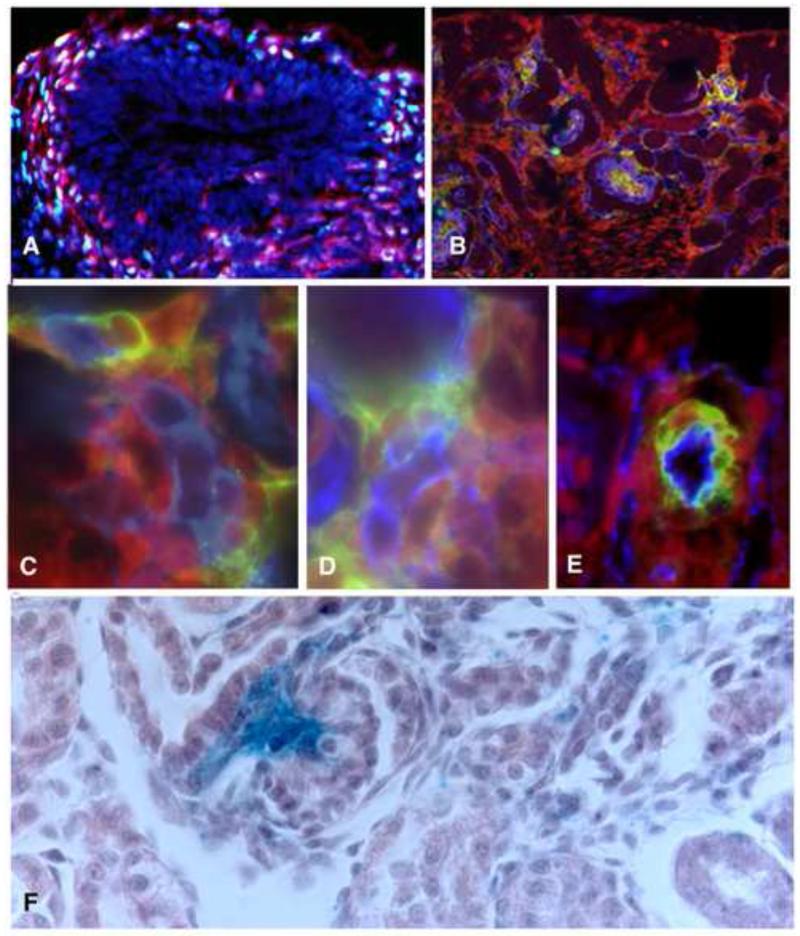
Figure 2. The Foxd1 lineage gives rise to vascular mural cells
A) Immunoflorescent image of an E11.5 mouse kidney rudiment expressing YFP in the Foxd1 lineage (red) co-stained with antibodies specific for Foxd1 (green). Most if not all YFP+ cells express Foxd1 at this early stage of renal development. B) Immunoflorescent image of E15.5 mouse kidney expressing YFP in Foxd1 derived cells, co-stained for the endothelial marker VE-Cadherin (blue) and the mural cell marker (green), Platelet derived growth factor Receptor –β PDGFR– βC-E Cells derived from the Foxd1 lineage (red) closely associated with nascent blood vessels (blue) express mural cell markes including PDGFR-β (C), NG2 (D) and SMA (E). In the mature kidney, Foxd1 derived cells labeled with blue, b-gal reaction product are present in the glomerulus (g) with a distrubution consistent with mesganigal cells(m) and around renal vessels (v).
Figure 3
Figure 3. Development of the renal arterial tree
To determine the structure of the renal vasculature in the developing kidney, fluorescent-labeled lectin was injected into the embryonic circulation at various stages. Lectin binds to vascular endothelia, thus serving to mark the conducting blood vessels. At E12.5 lateral branches coming off the central aorta can be seen invading the developing embryonic kidney rudiment arrows (A, whole mount; B, high magnification). By E13.5 the renal vasculature consists of a central artery (c) that gives rise to 3-4 major lateral braches (l) (C). Analyses at E17.5 revealed the stereotypic architecture that is characteristic of the renal arterial tree (D), with a paucity of blood vessel branching in the central medullary region of the kidney, and more extensive branching in the outer cortical region of the kidney.
Figure 4
Figure 4. Endothelia are detected in the developing nephron at the S-shaped body stage
Nephrogenesis can be sub-divided into at least 3 stages including the condensation of mesenchymal nephron progenitors into pretubular aggregates, the conversion of the pretubular aggregate into an the renal epithelial vesicle, and finally the generation of diverse nephron cells types from the homogeneous epithelial progenitors present in the renal vesicle. Endothelial progenitors (red) first appear within a crevice of the S-shaped body.

References

    1. Madsen C, Nielsen S, Tisher C. The Anatomy of the Kidney. In: Rector Ba., editor. The Kidney. 8th ed. WB Saunders; Philadelphia: 2007.
    1. Lee HW, Qin YX, Kim YM, Park EY, Hwang JS, Huo GH, et al. Expression of lymphatic endothelium-specific hyaluronan receptor LYVE-1 in the developing mouse kidney. Cell Tissue Res. 343:429–44. - PubMed
    1. Humphreys BD, Lin SL, Kobayashi A, Hudson TE, Nowlin BT, Bonventre JV, et al. Fate tracing reveals the pericyte and not epithelial origin of myofibroblasts in kidney fibrosis. Am J Pathol. 176:85–97. - PMC - PubMed
    1. Tufro-McReddie A, Norwood VF, Aylor KW, Botkin SJ, Carey RM, Gomez RA. Oxygen regulates vascular endothelial growth factor-mediated vasculogenesis and tubulogenesis. Dev Biol. 1997;183:139–49. - PubMed
    1. Woolf AS, Loughna S. Origin of glomerular capillaries: is the verdict in? Exp Nephrol. 1998;6:17–21. - PubMed

Publication types

MeSH terms

LinkOut - more resources