


Severe depressive symptoms are associated with elevated endothelin-1 in younger patients with acute coronary syndrome
- PMID: 25129849
- PMCID: PMC4252375
- DOI: 10.1016/j.jpsychores.2014.07.019
Severe depressive symptoms are associated with elevated endothelin-1 in younger patients with acute coronary syndrome
Abstract
Objective: To explore the relationship of depressive symptom severity to circulating endothelin (ET)-1 in younger patients with acute coronary syndrome (ACS). Younger patients report greater depressive symptom severity, which predicts poorer post-ACS prognosis. The pathways linking depression to post-ACS prognosis require further elucidation. ET-1 is a potent endogenous vasoconstrictor which has been previously linked to adverse post-ACS outcomes.
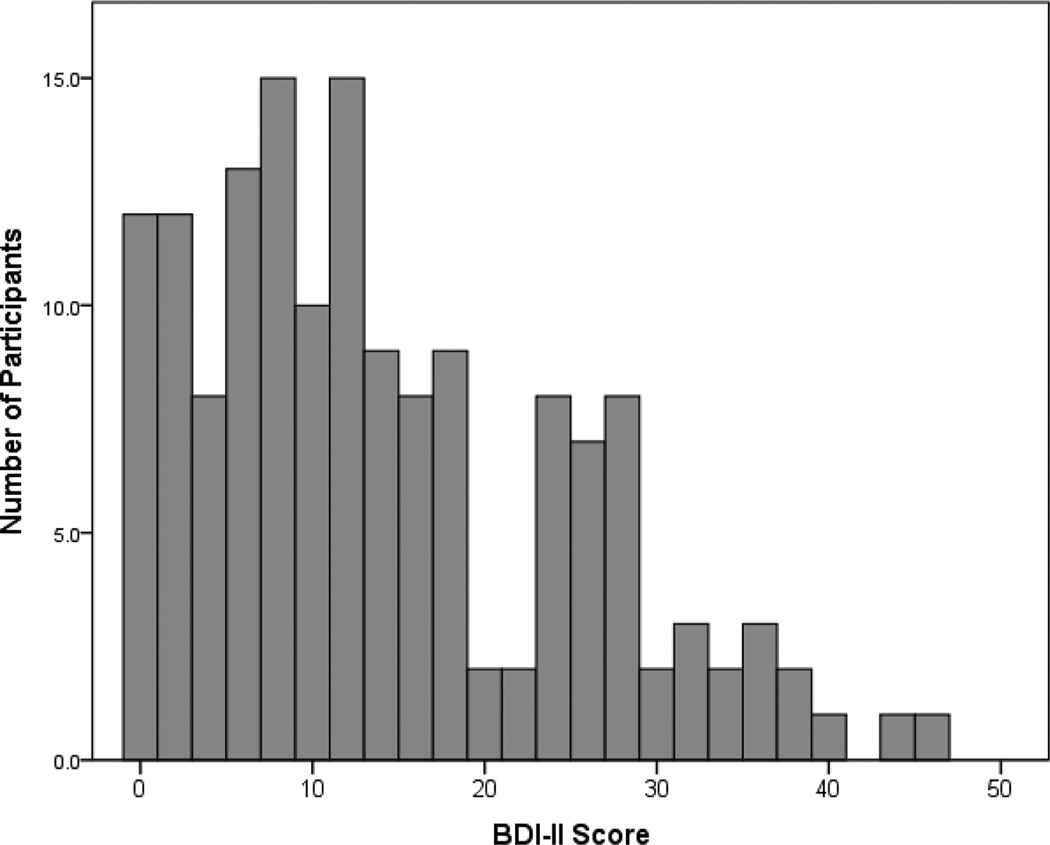
Methods: The sample (n=153) included males ≤ 50 years of age and females ≤ 55 years of age who participated in a larger study. Blood samples for ET-1 assessment were collected within 2-3h of ACS admission. Depressive symptoms were assessed with the Beck Depression Inventory (BDI) II within 2-5 days of admission. ET-1 was treated as a transformed continuous variable (ET-1T). BDI-II scores were classified into four categories using conventional thresholds demarcating mild, moderate, and severe levels of depressive symptoms. The relationship of classified BDI-II score to ET-1T was examined in simple and multivariable linear regression models.
Results: Classified BDI-II score was related to ET-1T in both unadjusted (χ(2)=9.469, p=0.024) and multivariable (χ(2)=8.430, p=0.038) models, with ET-1T being significantly higher in patients with severe depressive symptoms than in those with mild and moderate depressive symptoms.
Conclusions: In this sample of younger post-ACS patients, severe depressive symptoms were associated with elevated ET-1. We acknowledge that the observed association could be eliminated by the inclusion of some unmeasured variable(s). Longitudinal research should examine whether ET-1 mediates the relationship of depressive symptoms to long-term post-ACS outcomes.
Keywords: Acute coronary syndrome; Depression; Depressive symptoms; Endothelin; Myocardial infarction; Younger patients.
Copyright © 2014 Elsevier Inc. All rights reserved.
Figures
References
-
- Huffman JC, Celano CM, Januzzi JL. The relationship between depression, anxiety, and cardiovascular outcomes in patients with acute coronary syndromes. Neuropsychiatr Dis Treat. 2010 May 6;6:123–136. - PMC - PubMed
- Khawaja IS, Westermeyer JJ, Gajwani P, Feinstein RE. Depression and coronary artery disease: The association, mechanisms, and therapeutic implications. Psychiatry (Edgmont) 2009 Jan;6(1):38–51. - PMC - PubMed
-
- Nicholson A, Kuper H, Hemingway H. Depression as an aetiologic and prognostic factor in coronary heart disease: A meta-analysis of 6362 events among 146 538 participants in 54 observational studies. Eur Heart J. 2006 Dec;27(23):2763–2774. - PubMed
-
- Meijer A, Conradi HJ, Bos EH, Thombs BD, van Melle JP, de Jonge P. Prognostic association of depression following myocardial infarction with mortality and cardiovascular events: A meta-analysis of 25 years of research. Gen Hosp Psychiatry. 2011 May-Jun;33(3):203–216. - PubMed
-
- Winkles JA, Alberts GF, Brogi E, Libby P. Endothelin-1 and endothelin receptor mRNA expression in normal and atherosclerotic human arteries. Biochem Biophys Res Commun. 1993 Mar 31;191(3):1081–1088. - PubMed
Publication types
MeSH terms
Substances
Grants and funding
LinkOut - more resources
Full Text Sources
Other Literature Sources
Medical
