Review
. 2014 Sep 17;29(3):250-60.
doi: 10.1264/jsme2.me14031. Epub 2014 Aug 12.

Microbial monitoring of crewed habitats in space-current status and future perspectives

Affiliations
Review

Microbial monitoring of crewed habitats in space-current status and future perspectives

Nobuyasu Yamaguchi et al. Microbes Environ. .

Abstract

Previous space research conducted during short-term flight experiments and long-term environmental monitoring on board orbiting space stations suggests that the relationship between humans and microbes is altered in the crewed habitat in space. Both human physiology and microbial communities adapt to spaceflight. Microbial monitoring is critical to crew safety in long-duration space habitation and the sustained operation of life support systems on space transit vehicles, space stations, and surface habitats. To address this critical need, space agencies including NASA (National Aeronautics and Space Administration), ESA (European Space Agency), and JAXA (Japan Aerospace Exploration Agency) are working together to develop and implement specific measures to monitor, control, and counteract biological contamination in closed-environment systems. In this review, the current status of microbial monitoring conducted in the International Space Station (ISS) as well as the results of recent microbial spaceflight experiments have been summarized and future perspectives are discussed.


Figures
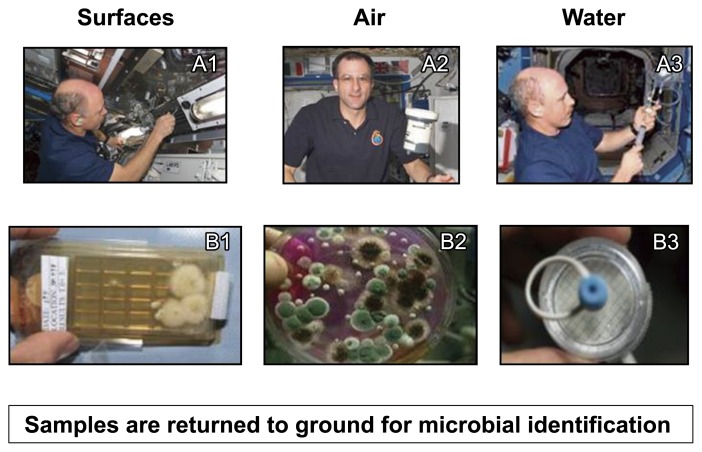
Fig. 1
Fig. 1
Spaceflight surface, air, and water samples are collected and microbial colonies are enumerated during flight, while microbial identification is performed on the ground. Inflight sample collection activities include swabbing surfaces (A1), air sample collection using air sample equipment (A2), and collecting water from potable water sources (A3). Enumeration is performed on incubated samples that include contact slides from surface samples (B1), culture plates from air samples (B2), and colony growth on filter discs from water samples (B3).
Fig. 2
Fig. 2
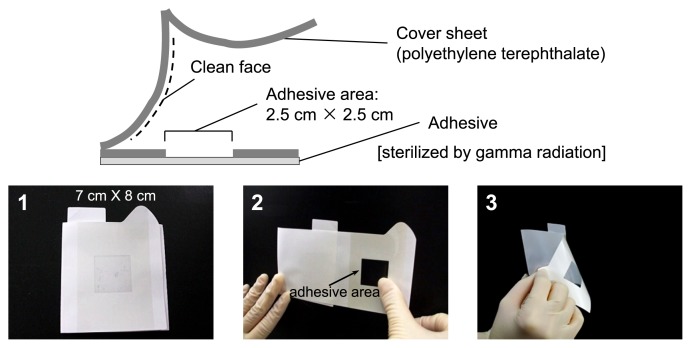
Adhesive sheet for microbial monitoring in the space habitat. 1. Photograph of the adhesive sheet; 2. Attach the adhesive area to the sampling site and press; 3. peel the adhesive sheet off the sampling site.
Fig. 3
Fig. 3
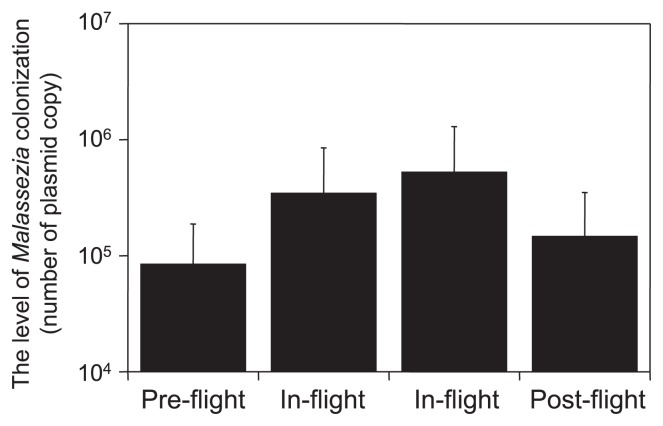
Temporal change in the colonization level of Malassezia in cheek skin samples from astronauts. The colonization level of Malassezia was determined using qPCR. Values show the average + standard deviation. Scale samples were collected before the visit to the ISS (pre-flight), during the stay in the ISS, and the return to earth (postflight).
Fig. 4
Fig. 4
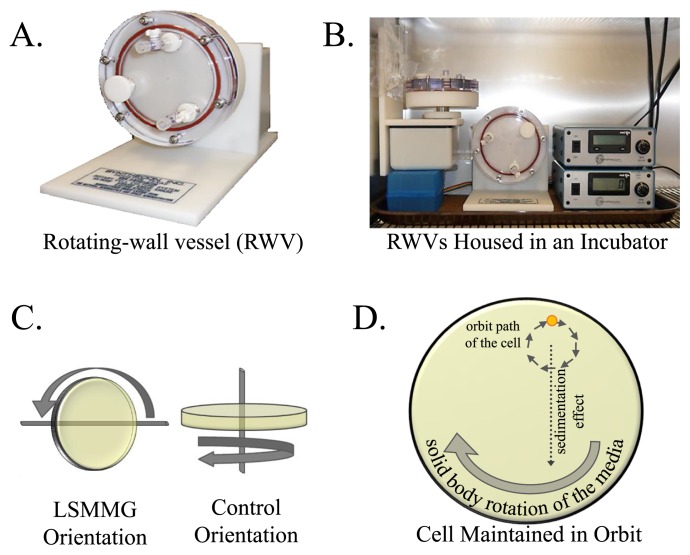
The Rotating-Wall Vessel (RWV) Bioreactor. (A and B) Image of the NASA-designed RWV apparatus. (C) The altered positioning of the RWV resulting in two culture orientations, the arrows depict the directions of rotation. The low-shear modeled microgravity (LSMMG) environment is achieved by rotation of the RWV on an axis parallel to the ground, whereas the axis of rotation in the control orientation is perpendicular to the ground. (D) Depiction of the orbital path of a cell when cultured in the LSMMG orientation. The continued combination of the sedimentation effect, whereby gravity and a lack of motility cause a cell to settle to the bottom of the vessel, and the clock-wise solid body rotation of the media results in continuous suspension of the cell in an orbit. Modified from Castro, et al., 2011 (8).
Fig. 5
Fig. 5
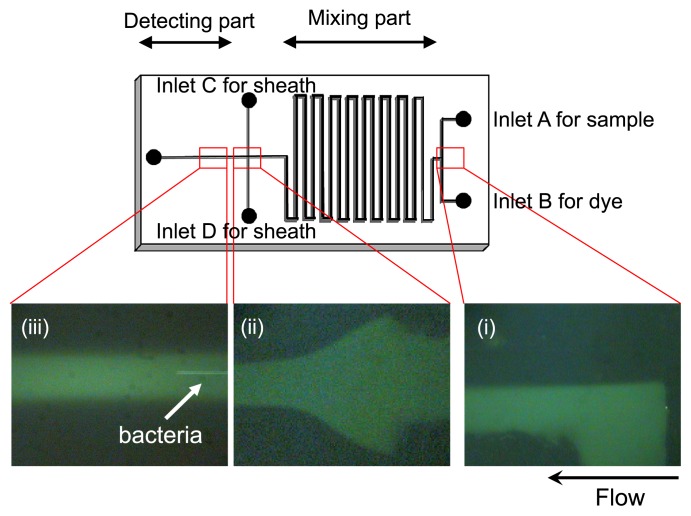
Details of the microfluidic device for on-chip staining and counting of bacterial cells (size: 5 cm × 2.5 cm). (i) Samples and fluorescent dye solution flow separately and are then mixed through the “mixing part” of the microchannel. (ii) Alignment of sample flow by sheath fluid. (iii) Flow of bacterial cells in the “detecting part” of the microchannel.

References

    1. Allen CA, Galindo CL, Pandya U, Watson DA, Chopra AK, Niesel DW. Transcription profiles of Streptococcus pneumoniae grown under different conditions of normal gravitation. Acta Astronautica. 2006;60:433–444.
    1. Allen CA, Niesel DW, Torres AG. The effects of low-shear stress on adherent-invasive Escherichia coli. Environ Microbiol. 2008;10:1512–1525. - PubMed
    1. Altenburg SD, Nielsen-Preiss SM, Hyman LE. Increased filamentous growth of Candida albicans in simulated microgravity. Genom Proteom Bioinform. 2008;6:42–50. - PMC - PubMed
    1. Baker PW, Leff L. The effect of simulated microgravity on bacteria from the Mir space station. Microgravity Sci Technol. 2004;15:35–41. - PubMed
    1. Blankenstein G, Larsen UD. Modular concept of a laboratory on a chip for chemical and biochemical analysis. Biosens Bioelectron. 1998;13:427–438.