


Exercise decreases speedball self-administration
- PMID: 25132360
- PMCID: PMC4175302
- DOI: 10.1016/j.lfs.2014.08.005
Exercise decreases speedball self-administration
Abstract
Aims: Epidemiological studies report that individuals who exercise are less likely to abuse drugs. Preclinical studies report that exercise, in the form of treadmill or wheel running, reliably decreases the self-administration of psychomotor stimulants and opioids. To date, preclinical studies have only examined the effects of exercise on responding maintained by individual drugs and not by combinations of multiple drugs. This limits the translational appeal of these studies because polydrug abuse is common among substance abusing populations. The purpose of this study was to examine the effects of exercise on the self-administration of speedball, a combination of cocaine and heroin that is frequently encountered in intravenous drug abusing populations.
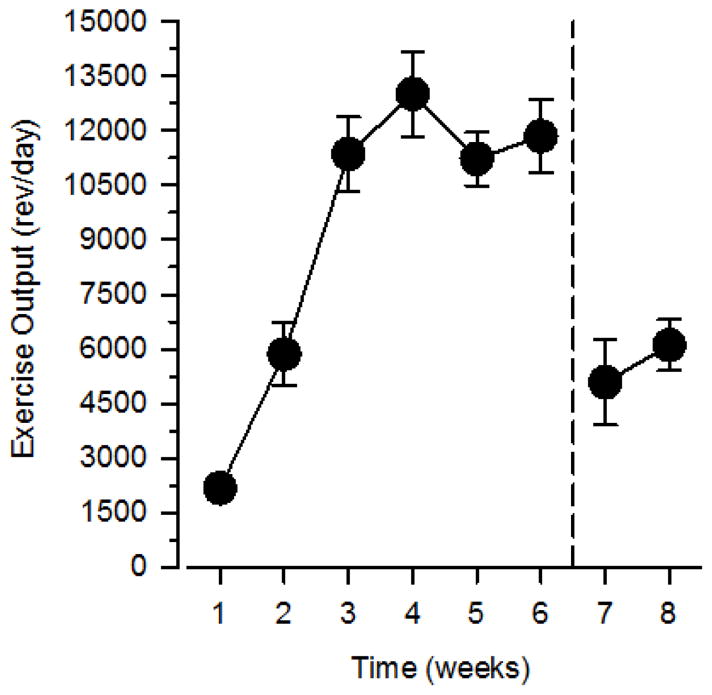
Main methods: Female rats were obtained at weaning and assigned to sedentary or exercising conditions. Sedentary rats were housed in standard cages that permitted no exercise beyond normal cage ambulation; exercising rats were housed in similar cages with an activity wheel. After 6weeks, rats were implanted with intravenous catheters and trained to self-administer cocaine, heroin, and dose combinations of cocaine and heroin (i.e., speedball) on a progressive ratio schedule of reinforcement.
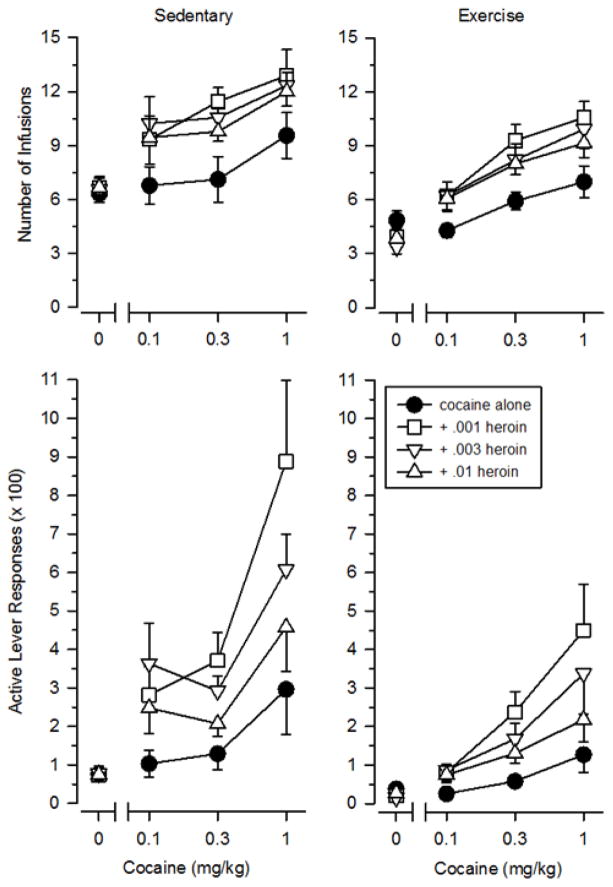
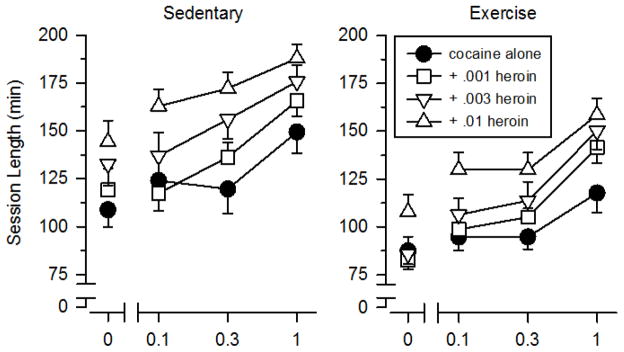
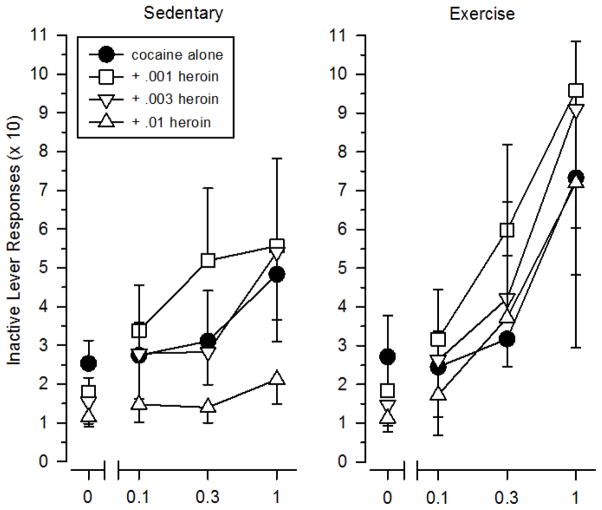
Key findings: Doses of speedball maintained greater levels of responding than corresponding doses of cocaine and heroin alone. Importantly, responding maintained by cocaine, heroin, and speedball was lower in exercising rats than sedentary rats.
Significance: These data indicate that exercise decreases the self-administration of speedball and suggest that exercise may reduce the abuse of drug combinations that have traditionally been resistant to treatment.
Keywords: Cocaine; Exercise; Heroin; Progressive ratio; Rat; Self-administration; Speedball.
Copyright © 2014 Elsevier Inc. All rights reserved.
Conflict of interest statement
The authors have no conflicts of interest to report in regard to this study.
Figures
References
-
- Arnold JM, Roberts DC. A critique of fixed and progressive ratio schedules used to examine the neural substrates of drug reinforcement. Pharmacol Biochem Behav. 1997;57:441–7. - PubMed
-
- Boakes RA, Mills KJ, Single JP. Sex differences in the relationship between activity and weight loss in the rat. Behav Neurosci. 1999;113:1080–1089. - PubMed
-
- Cosgrove KP, Hunter RG, Carroll ME. Wheel-running attenuates intravenous cocaine self-administration in rats: sex differences. Pharmacol Biochem Behav. 2002;73:663–71. - PubMed
-
- Cox GM, Comiskey CM. Does concurrent cocaine use compromise 1-year treatment outcomes for opiate users? Subst Use Misuse. 2011;46:1206–16. - PubMed
Publication types
MeSH terms
Substances
Grants and funding
LinkOut - more resources
Full Text Sources
Other Literature Sources
Medical
