


Monodisperse colloidal gallium nanoparticles: synthesis, low temperature crystallization, surface plasmon resonance and Li-ion storage
- PMID: 25133552
- PMCID: PMC4525770
- DOI: 10.1021/ja506712d
Monodisperse colloidal gallium nanoparticles: synthesis, low temperature crystallization, surface plasmon resonance and Li-ion storage
Abstract
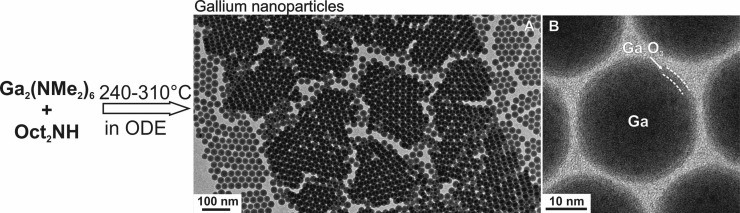
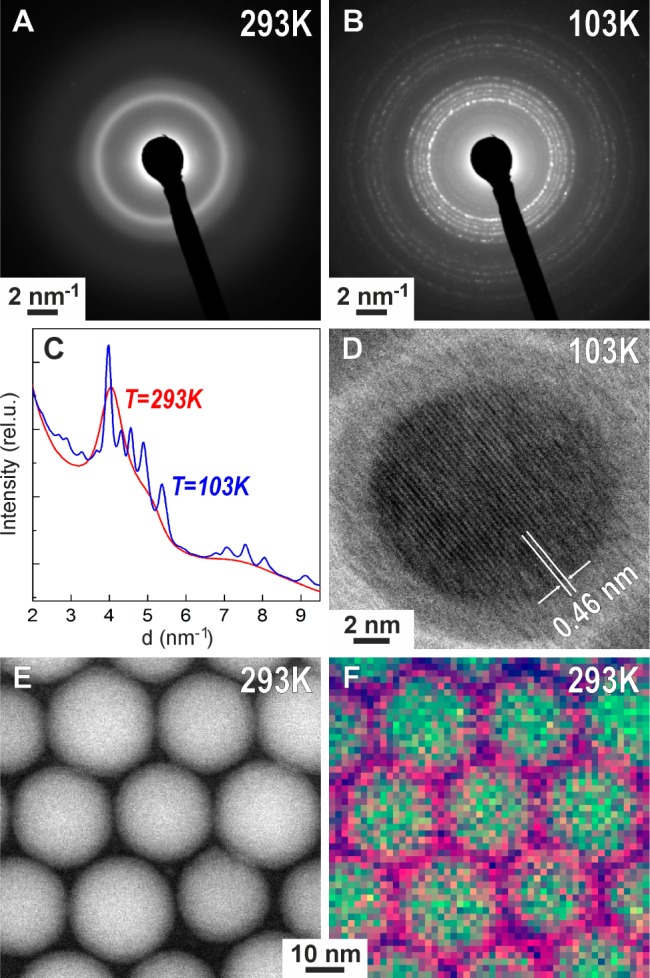
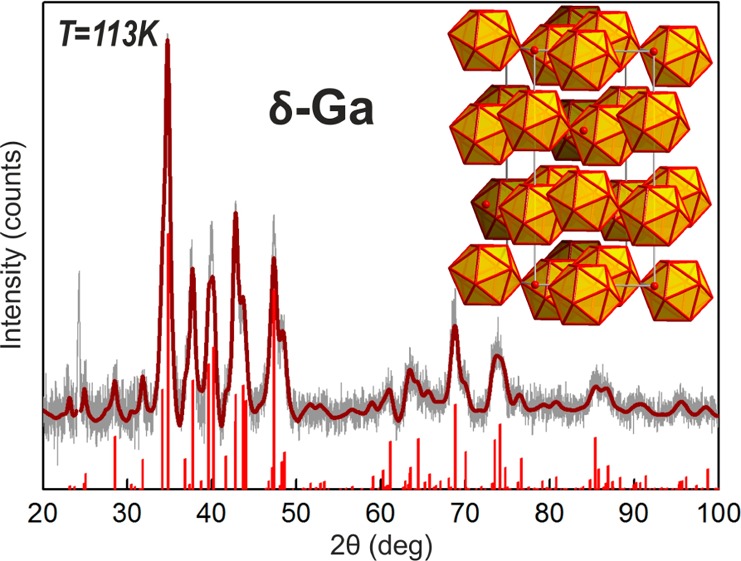
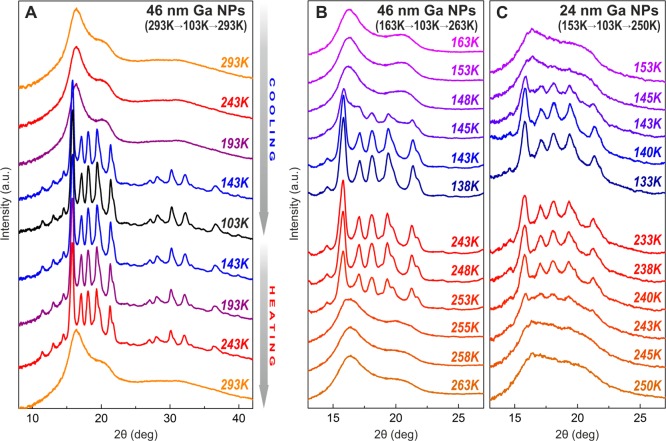
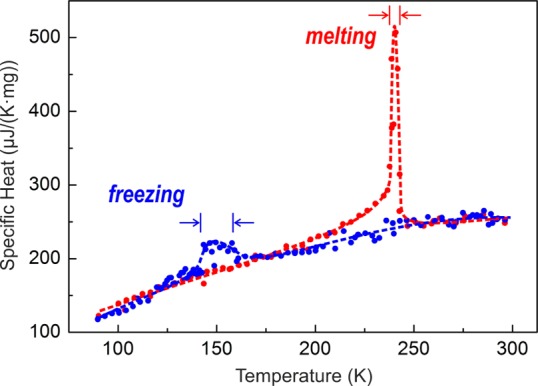
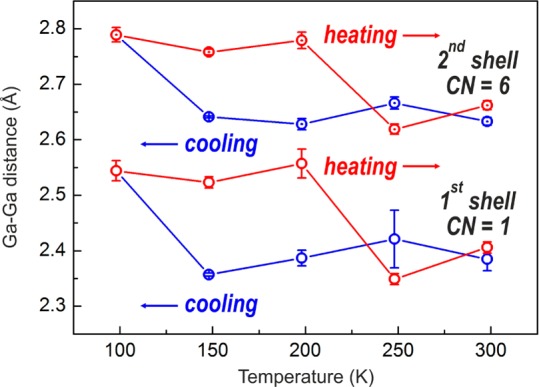
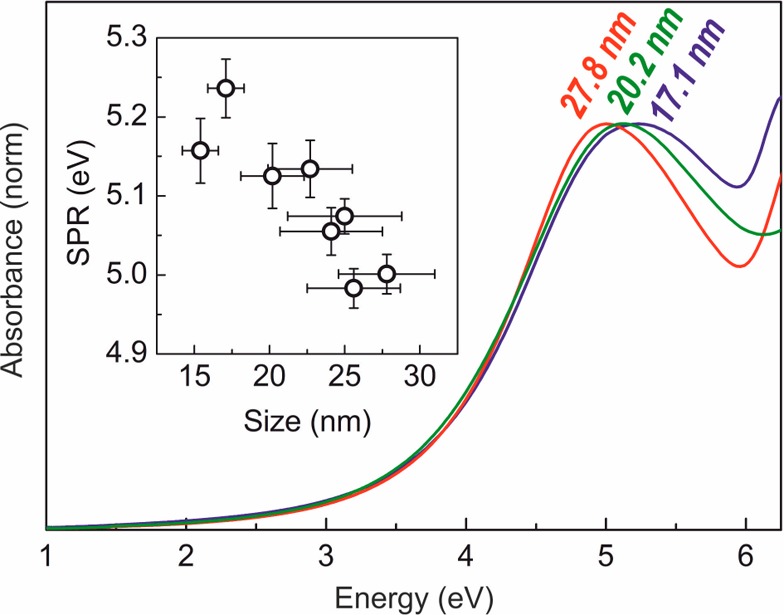
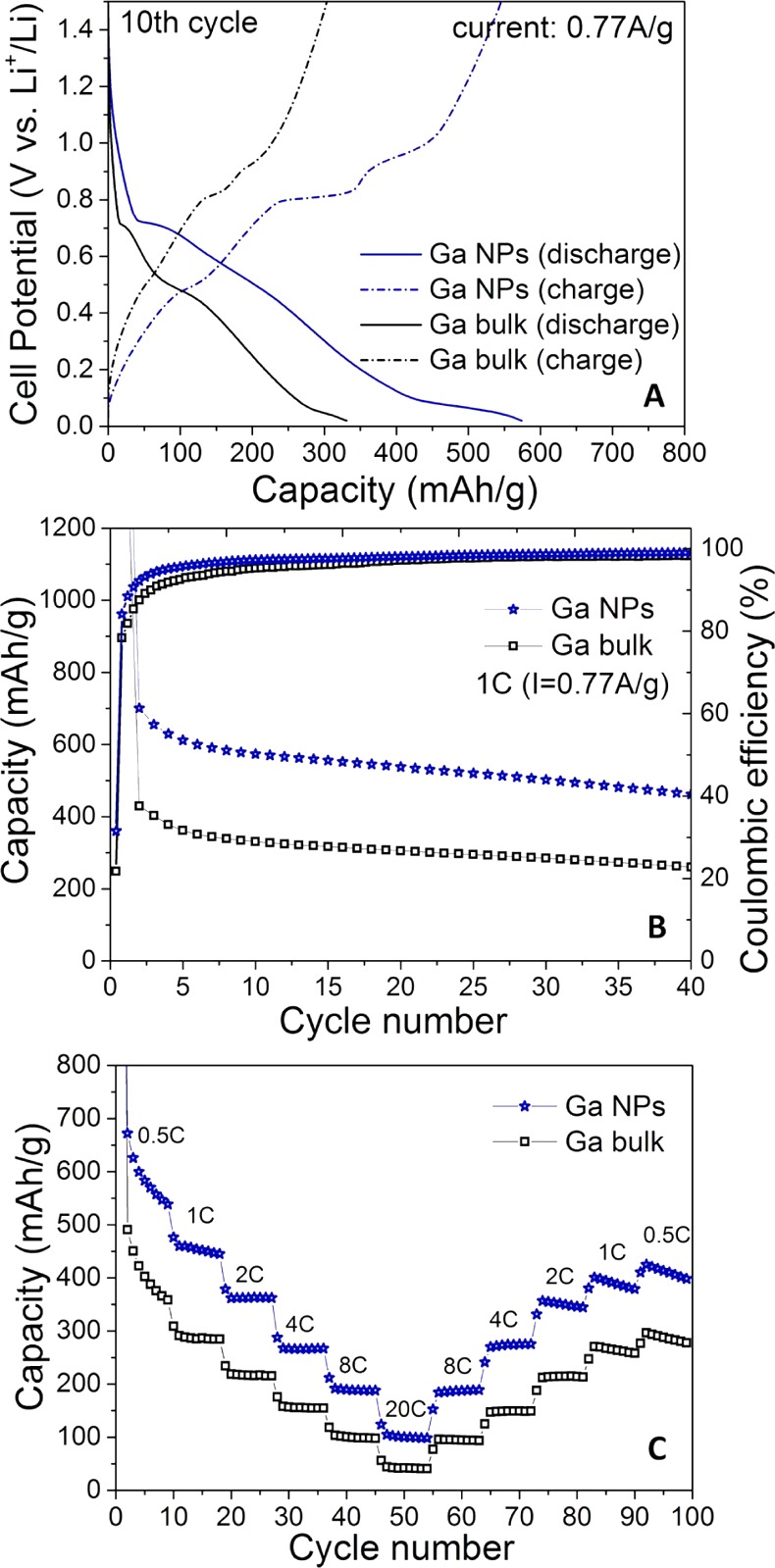
We report a facile colloidal synthesis of gallium (Ga) nanoparticles with the mean size tunable in the range of 12-46 nm and with excellent size distribution as small as 7-8%. When stored under ambient conditions, Ga nanoparticles remain stable for months due to the formation of native and passivating Ga-oxide layer (2-3 nm). The mechanism of Ga nanoparticles formation is elucidated using nuclear magnetic resonance spectroscopy and with molecular dynamics simulations. Size-dependent crystallization and melting of Ga nanoparticles in the temperature range of 98-298 K are studied with X-ray powder diffraction, specific heat measurements, transmission electron microscopy, and X-ray absorption spectroscopy. The results point to delta (δ)-Ga polymorph as a single low-temperature phase, while phase transition is characterized by the large hysteresis and by the large undercooling of crystallization and melting points down to 140-145 and 240-250 K, respectively. We have observed size-tunable plasmon resonance in the ultraviolet and visible spectral regions. We also report stable operation of Ga nanoparticles as anode material for Li-ion batteries with storage capacities of 600 mAh g(-1), 50% higher than those achieved for bulk Ga under identical testing conditions.
Figures
References
-
- Robinson G. H. Acc. Chem. Res. 1999, 32, 773.
-
- Ghigna P.; Spinolo G.; Parravicini G. B.; Stella A.; Migliori A.; Kofman R. J. Am. Chem. Soc. 2007, 129, 8026. - PubMed
-
- Wu P. C.; Khoury C. G.; Kim T.-H.; Yang Y.; Losurdo M.; Bianco G. V.; Vo-Dinh T.; Brown A. S.; Everitt H. O. J. Am. Chem. Soc. 2009, 131, 12032. - PMC - PubMed
- Wu P. C.; Losurdo M.; Kim T.-H.; Giangregorio M.; Bruno G.; Everitt H. O.; Brown A. S. Langmuir 2008, 25, 924. - PubMed
- Yang Y.; Callahan J. M.; Kim T. H.; Brown A. S.; Everitt H. O. Nano Lett. 2013, 13, 2837. - PubMed
-
- Zheludev N. Nat. Photonics 2007, 1, 551.
- Soares B.; Jonsson F.; Zheludev N. Phys. Rev. Lett. 2007, 98, 153905. - PubMed
- Zheludev N. I. J. Opt. A: Pure Appl. Opt. 2006, 8, S1.
-
- Liang W.; Hong L.; Yang H.; Fan F.; Liu Y.; Li H.; Li J.; Huang J. Y.; Chen L. Q.; Zhu T.; Zhang S. Nano Lett. 2013, 13, 5212. - PubMed
Grants and funding
LinkOut - more resources
Full Text Sources
Other Literature Sources
