


A possible link between food and mood: dietary impact on gut microbiota and behavior in BALB/c mice
- PMID: 25133574
- PMCID: PMC4136797
- DOI: 10.1371/journal.pone.0103398
A possible link between food and mood: dietary impact on gut microbiota and behavior in BALB/c mice
Abstract
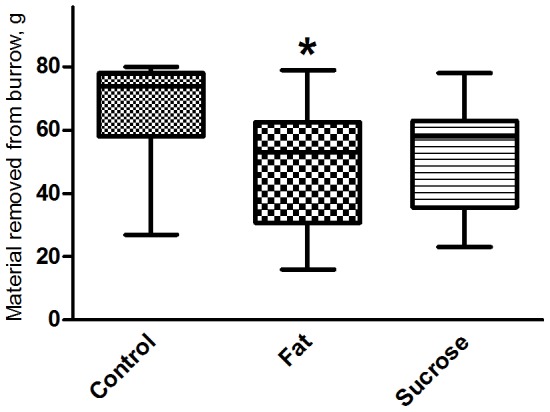
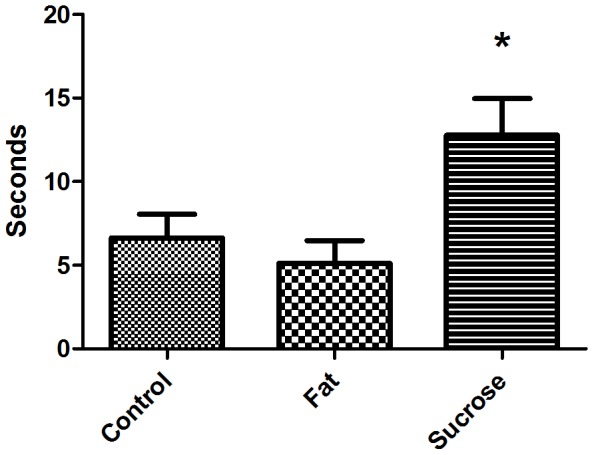
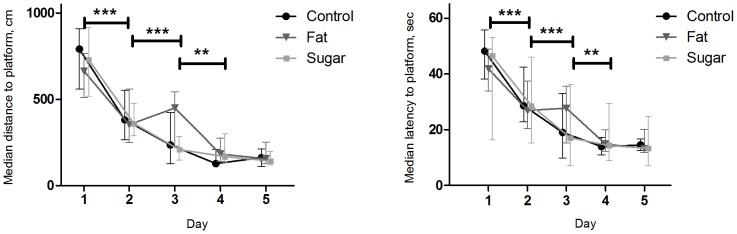
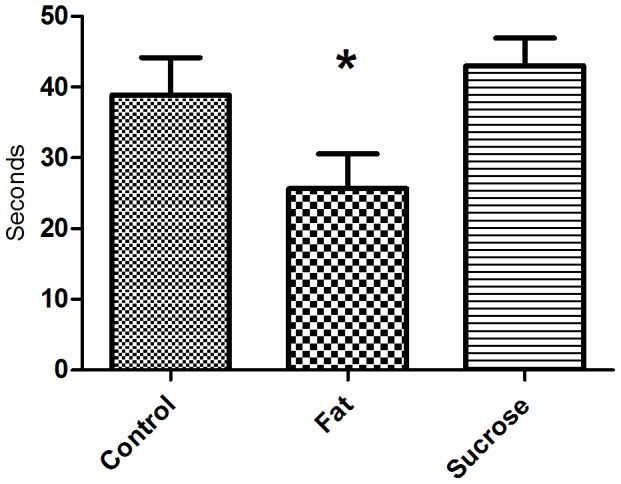
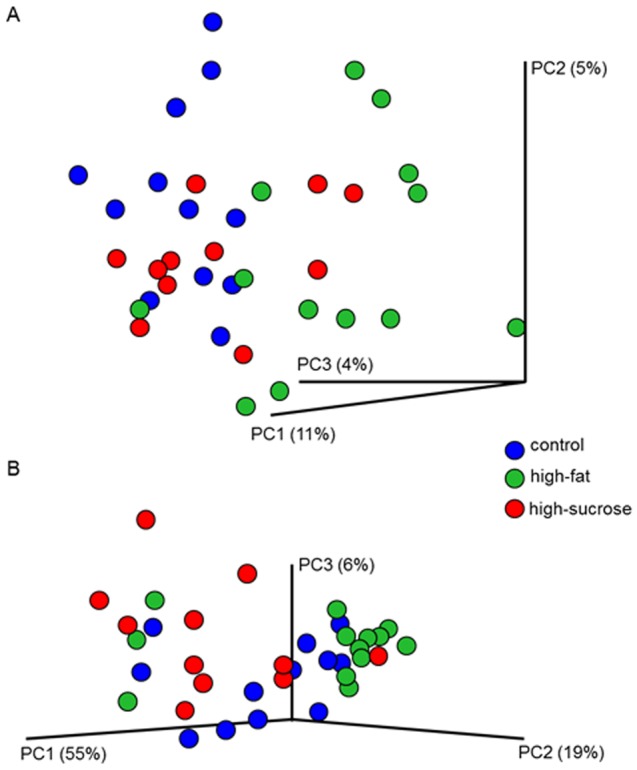
Major depressive disorder is a debilitating disease in the Western World. A western diet high in saturated fat and refined sugar seems to play an important part in disease development. Therefore, this study is aimed at investigating whether saturated fat or sucrose predisposes mice to develop behavioral symptoms which can be interpreted as depression-like, and the possible influence of the gut microbiota (GM) in this. Fourty-two mice were randomly assigned to one of three experimental diets, a high-fat, a high-sucrose or a control diet for thirteen weeks. Mice on high-fat diet gained more weight (p = 0.00009), displayed significantly less burrowing behavior than the control mice (p = 0.034), and showed decreased memory in the Morris water maze test compared to mice on high-sucrose diet (p = 0.031). Mice on high-sucrose diet burrowed less goal-oriented, showed greater latency to first bout of immobility in the forced swim test when compared to control mice (p = 0.039) and high-fat fed mice (p = 0.013), and displayed less anxiety than mice on high-fat diet in the triple test (p = 0.009). Behavioral changes were accompanied by a significant change in GM composition of mice fed a high-fat diet, while no difference between diet groups was observed for sucrose preferences, LPS, cholesterol, HbA1c, BDNF and the cytokines IL-1α, IL-1β, IL-6, IL-10, IL-12(p70), IL-17 and TNF-α. A series of correlations was found between GM, behavior, BDNF and inflammatory mediators. In conclusion, the study shows that dietary fat and sucrose affect behavior, sometimes in opposite directions, and suggests a possible association between GM and behavior.
Conflict of interest statement
Figures

References
-
- Wong M, Licinio J (2001) Research and treatment approaches to depression RID D-7903-2011. Nat Rev Neurosci 2: 343–351. - PubMed
-
- Frazer A, Morilak D (2005) What should animal models of depression model? Neurosci Biobehav Rev 29: 515–523. - PubMed
-
- Deussing JM (2006) Animal models of depression. Drug Discovery Today: Disease Models 3: 375–383.
-
- Lopresti AL, Hood SD, Drummond PD (2013) A review of lifestyle factors that contribute to important pathways associated with major depression: Diet, sleep and exercise. J Affect Disord 148: 12–27. - PubMed
MeSH terms
Substances
LinkOut - more resources
Full Text Sources
Other Literature Sources
