


Incidence and predisposing factors of vancomycin-induced nephrotoxicity in children
- PMID: 25135822
- PMCID: PMC4108093
- DOI: 10.1007/s40121-013-0004-8
Incidence and predisposing factors of vancomycin-induced nephrotoxicity in children
Abstract
Introduction: To investigate the pattern of vancomycin-associated nephrotoxicity in children and to examine potential predisposing factors for nephrotoxicity, including average serum trough concentrations ≥10 μg/mL.
Methods: Patients ≥1 week old to ≤15 years with normal baseline serum creatinine values who received vancomycin for ≥48 h between October 2010 and September 2012 were retrospectively evaluated. Nephrotoxicity was defined as a serum creatinine increase of ≥0.5 mg/dL or ≥50% baseline increase over 2 days. Patients with average serum trough concentrations ≥10 μg/mL were compared with a lower trough group.
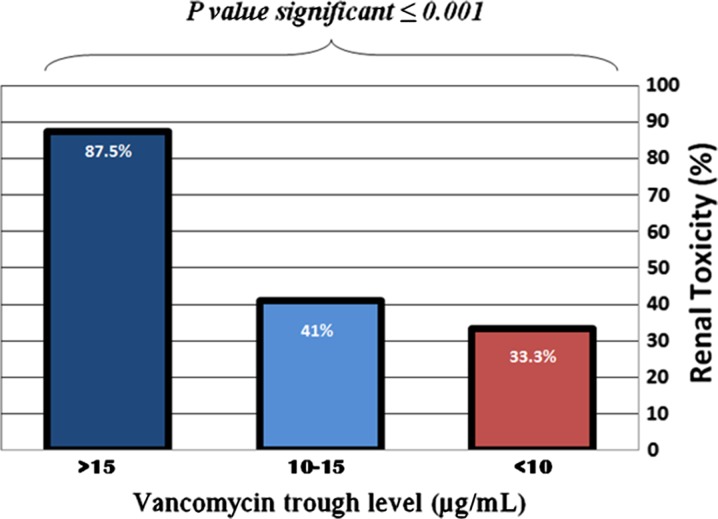
Results: Renal toxicity occurred in 72 (27.2%) of the 265 studied pediatric cases. High trough vancomycin levels ≥10 μg/mL were presented in 59 pediatric patients suffering from nephrotoxicity. Using multiple regression analysis, cases admitted to the intensive care unit (ICU) and to whom aminoglycoside medication was administered concurrently with vancomycin medication showed a significant high renal toxicity incidence [odds ratio (OR) 2.91; 95% confidence interval (CI) 1.70, 8.61; P value <0.03)] and (OR 9.11; 95% CI 4.11, 24.13; P < 0.05), respectively.
Conclusion: Renal function tests and continuous monitoring of vancomycin trough levels for children receiving vancomycin therapy, especially admitted to the ICU and given other aminoglycoside medications, are essential.
Figures
References
-
- Ryback M, Lomaestro B, Rotschafer JC, et al. Therapeutic monitoring of vancomycin in adult patients: a consensus review of the American Society of Health-System Pharmacists, the Infectious Diseases Society of American, and the Society of Infectious Diseases Pharmacists. Am J Health Syst Pharm. 2009;66:82–98. doi: 10.2146/ajhp080434. - DOI - PubMed
-
- Geraci JE, Heilman FR, Nichols DR, Wellman WE. Antibiotic therapy of bacterial endocarditis. VII. Vancomycin for acute micrococcal endocarditis: preliminary report. Proc Staff Meet Mayo Clin. 1958;33:172–181. - PubMed
-
- Kralovicova K, Spanik S, Halko J. Do vancomycin serum levels predict failures of vancomycin therapy or nephrotoxicity in cancer patients? J Chemother. 1997;9:420–426. - PubMed
LinkOut - more resources
Full Text Sources
Other Literature Sources
Medical
