


Extracellular vesicles as modulators of cell-to-cell communication in the healthy and diseased brain
- PMID: 25135977
- PMCID: PMC4142037
- DOI: 10.1098/rstb.2013.0516
Extracellular vesicles as modulators of cell-to-cell communication in the healthy and diseased brain
Abstract
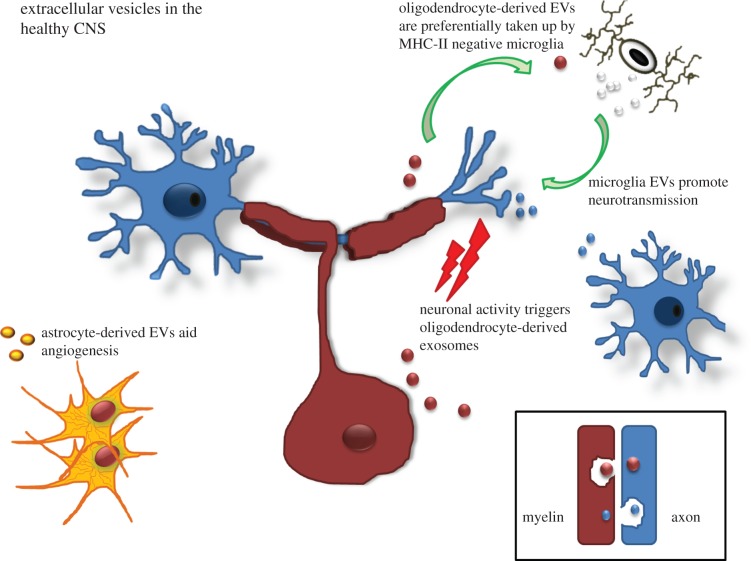
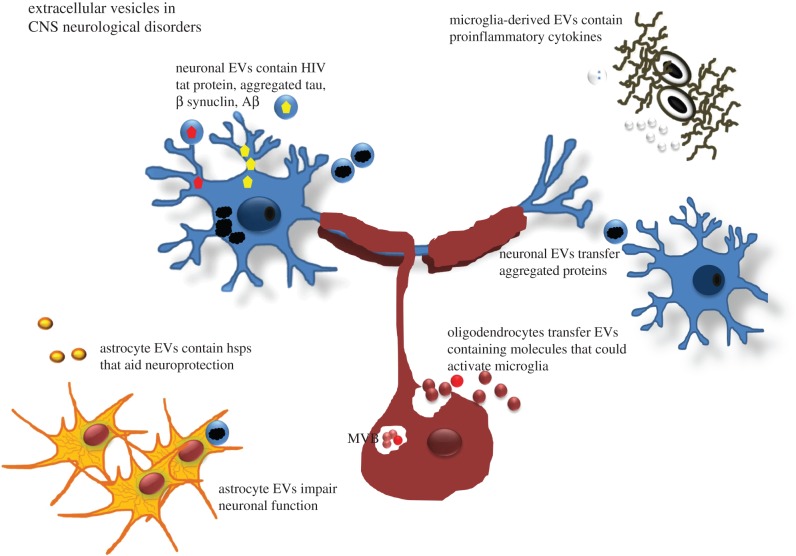
Homeostasis relies heavily on effective cell-to-cell communication. In the central nervous system (CNS), probably more so than in other organs, such communication is crucial to support and protect neurons especially during ageing, as well as to control inflammation, remove debris and infectious agents. Emerging evidence indicates that extracellular vesicles (EVs) including endosome-derived exosomes and fragments of the cellular plasma membrane play a key role in intercellular communication by transporting messenger RNA, microRNA (miRNA) and proteins. In neurodegenerative diseases, secreted vesicles not only remove misfolded proteins, but also transfer aggregated proteins and prions and are thus thought to perpetuate diseases by 'infecting' neighbouring cells with these pathogenic proteins. Conversely, in other CNS disorders signals from stressed cells may help control inflammation and inhibit degeneration. EVs may also reflect the status of the CNS and are present in the cerebrospinal fluid indicating that exosomes may act as biomarkers of disease. That extracellular RNA and in particular miRNA, can be transferred by EV also indicates that these vesicles could be used as carriers to specifically target the CNS to deliver immune modulatory drugs, neuroprotective agents and anti-cancer drugs. Here, we discuss the recent evidence indicating the potential role of exosomes in neurological disorders and how knowledge of their biology may enable a Trojan-horse approach to deliver drugs into the CNS and treat neurodegenerative and other disorders of the CNS.
Keywords: drug delivery; exosomes; extracellular vesicles; neurodegeneration; therapy.
© 2014 The Author(s) Published by the Royal Society. All rights reserved.
Figures
References
Publication types
MeSH terms
LinkOut - more resources
Full Text Sources
Other Literature Sources
Medical
