Endotoxin-induced lung alveolar cell injury causes brain cell damage
- PMID: 25135986
- PMCID: PMC4935184
- DOI: 10.1177/1535370214547156
Endotoxin-induced lung alveolar cell injury causes brain cell damage
Abstract
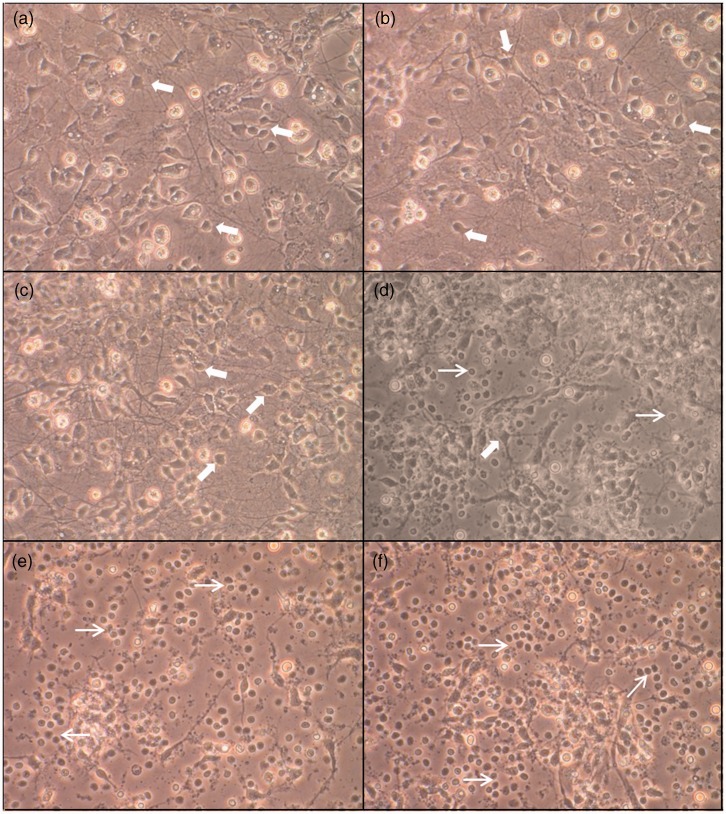
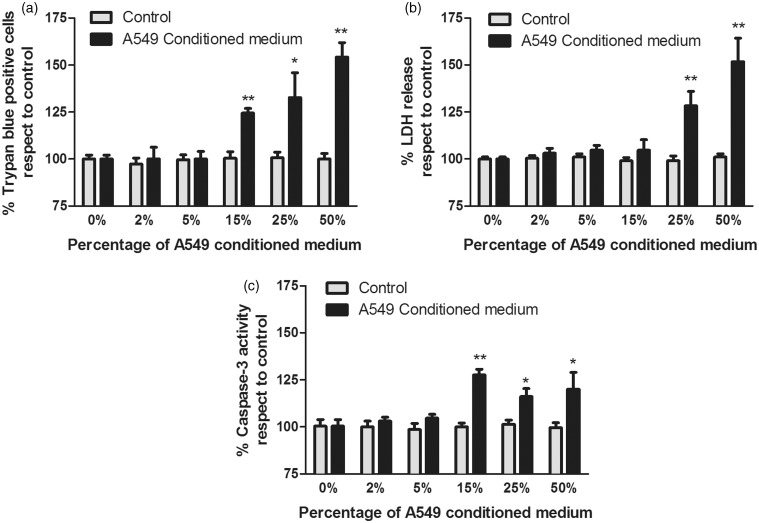
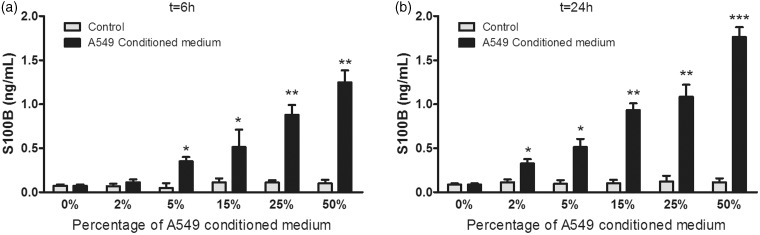
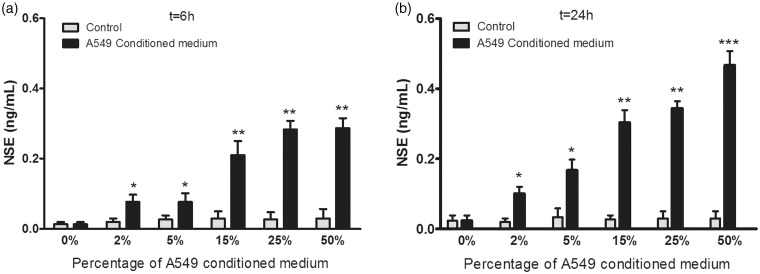
Sepsis is the most common cause of acute respiratory distress syndrome, a severe lung inflammatory disorder with an elevated morbidity and mortality. Sepsis and acute respiratory distress syndrome involve the release of inflammatory mediators to the systemic circulation, propagating the cellular and molecular response and affecting distal organs, including the brain. Since it has been reported that sepsis and acute respiratory distress syndrome contribute to brain dysfunction, we investigated the brain-lung crosstalk using a combined experimental in vitro airway epithelial and brain cell injury model. Conditioned medium collected from an in vitro lipopolysaccharide-induced airway epithelial cell injury model using human A549 alveolar cells was subsequently added at increasing concentrations (no conditioned, 2%, 5%, 10%, 15%, 25%, and 50%) to a rat mixed brain cell culture containing both astrocytes and neurons. Samples from culture media and cells from mixed brain cultures were collected before treatment, and at 6 and 24 h for analysis. Conditioned medium at 15% significantly increased apoptosis in brain cell cultures 24 h after treatment, whereas 25% and 50% significantly increased both necrosis and apoptosis. Levels of brain damage markers S100 calcium binding protein B and neuron-specific enolase, interleukin-6, macrophage inflammatory protein-2, as well as matrix metalloproteinase-9 increased significantly after treating brain cells with ≥2% conditioned medium. Our findings demonstrated that human epithelial pulmonary cells stimulated with bacterial lipopolysaccharide release inflammatory mediators that are able to induce a translational clinically relevant and harmful response in brain cells. These results support a brain-lung crosstalk during sepsis and sepsis-induced acute respiratory distress syndrome.
Keywords: Sepsis; acute respiratory distress syndrome; apoptosis; brain injury; inflammation; lung injury.
© 2014 by the Society for Experimental Biology and Medicine.
Figures
References
-
- Blanco J, Muriel-Bombin A, Sagredo V, Taboada F, Gandía F, Tamayo L, Collado J, García-Labattut A, Carriedo D, Valledor M, De Frutos M, López MJ, Caballero A, Guerra J, Alvarez B, Mayo A, Villar J. Grupo de Estudios y Análisis en Cuidados Intensivos. Incidence, organ dysfunction and mortality in severe sepsis: a Spanish multicentre study. Crit Care 2008; 12: R158–R158. - PMC - PubMed
-
- Villar J. What is the acute respiratory distress syndrome? Respir Care 2011; 56: 1539–45. - PubMed
Publication types
MeSH terms
Substances
LinkOut - more resources
Full Text Sources
Other Literature Sources