


Astrocytic modulation of blood brain barrier: perspectives on Parkinson's disease
- PMID: 25136294
- PMCID: PMC4120694
- DOI: 10.3389/fncel.2014.00211
Astrocytic modulation of blood brain barrier: perspectives on Parkinson's disease
Abstract
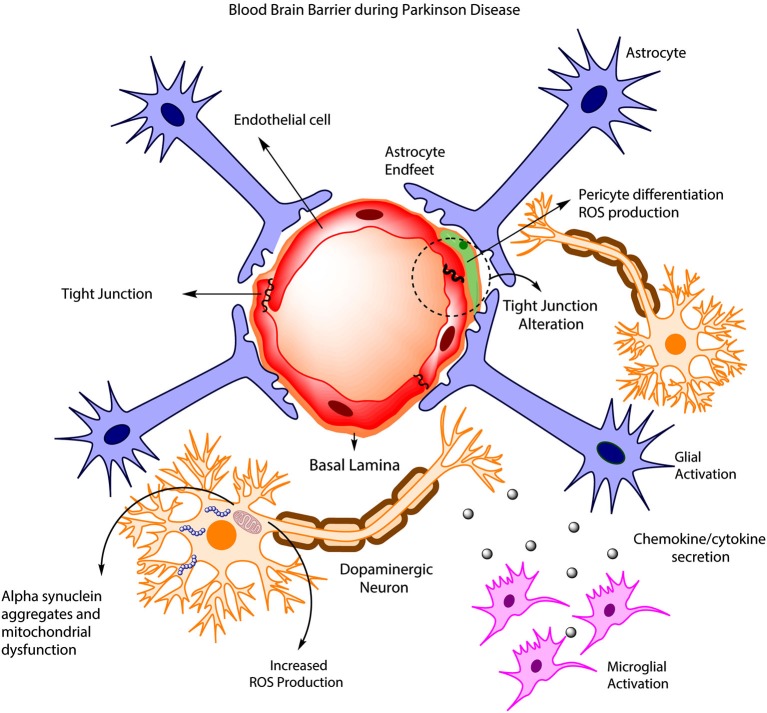
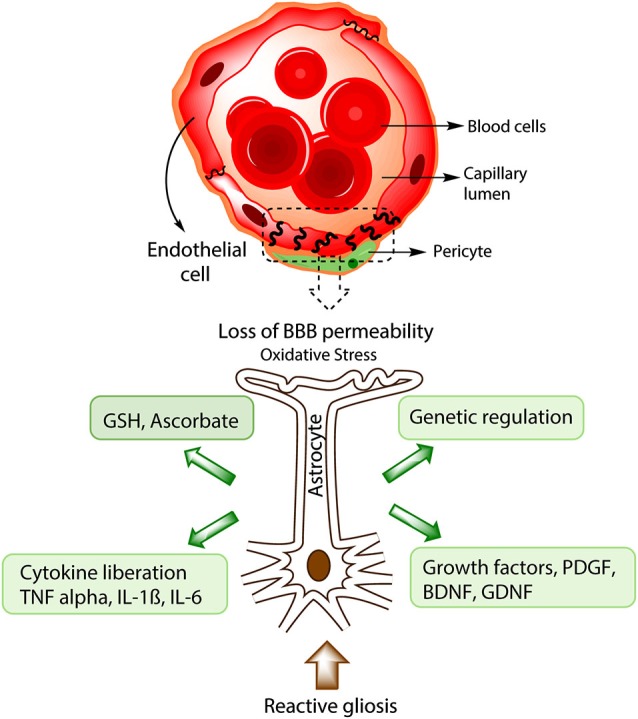
The blood-brain barrier (BBB) is a tightly regulated interface in the Central Nervous System (CNS) that regulates the exchange of molecules in and out from the brain thus maintaining the CNS homeostasis. It is mainly composed of endothelial cells (ECs), pericytes and astrocytes that create a neurovascular unit (NVU) with the adjacent neurons. Astrocytes are essential for the formation and maintenance of the BBB by providing secreted factors that lead to the adequate association between the cells of the BBB and the formation of strong tight junctions. Under neurological disorders, such as chronic cerebral ischemia, brain trauma, Epilepsy, Alzheimer and Parkinson's Diseases, a disruption of the BBB takes place, involving a lost in the permeability of the barrier and phenotypical changes in both the ECs and astrocytes. In this aspect, it has been established that the process of reactive gliosis is a common feature of astrocytes during BBB disruption, which has a detrimental effect on the barrier function and a subsequent damage in neuronal survival. In this review we discuss the implications of astrocyte functions in the protection of the BBB, and in the development of Parkinson's disease (PD) and related disorders. Additionally, we highlight the current and future strategies in astrocyte protection aimed at the development of restorative therapies for the BBB in pathological conditions.
Keywords: BBB; Parkinson disease; astrocytes; endothelial cells; reactive astrogliosis.
Figures
References
Publication types
LinkOut - more resources
Full Text Sources
Other Literature Sources
