


Low-dose paroxetine (7.5 mg) improves sleep in women with vasomotor symptoms associated with menopause
- PMID: 25137243
- PMCID: PMC4274337
- DOI: 10.1097/GME.0000000000000311
Low-dose paroxetine (7.5 mg) improves sleep in women with vasomotor symptoms associated with menopause
Abstract
Objective: Sleep disturbances are common among women in midlife; prevalence increases among perimenopausal/postmenopausal women with vasomotor symptoms. Paroxetine 7.5 mg is the only nonhormonal treatment that has been approved in the United States for moderate to severe vasomotor symptoms associated with menopause. In two pivotal phase 3 studies evaluating its efficacy and safety, improvements in sleep disturbances were also prospectively evaluated.
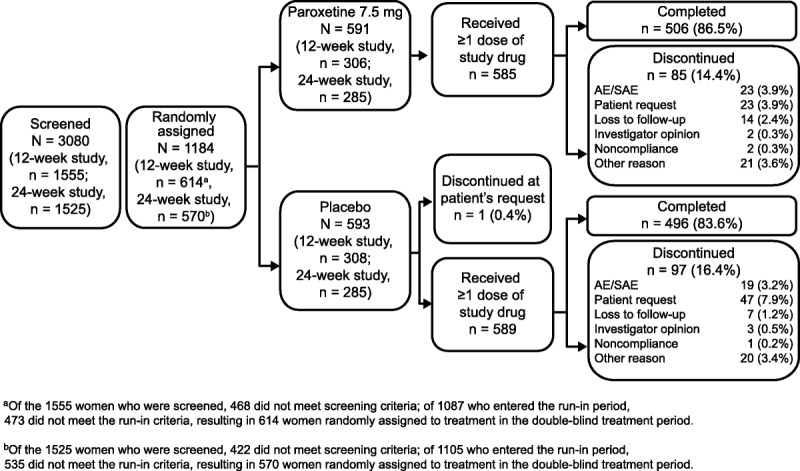
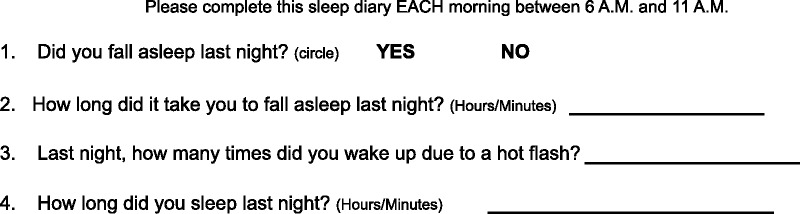
Methods: Postmenopausal women with moderate to severe vasomotor symptoms were randomly assigned to paroxetine 7.5 mg (n = 591) or placebo (n = 593) once daily for 12 weeks (both studies) or 24 weeks (24-wk study). Predefined assessments on weeks 4, 12, and 24 included number of nighttime awakenings attributed to vasomotor symptoms, sleep-onset latency, sleep duration, and sleep-related adverse events. The two studies' data for weeks 1 to 12 were pooled.
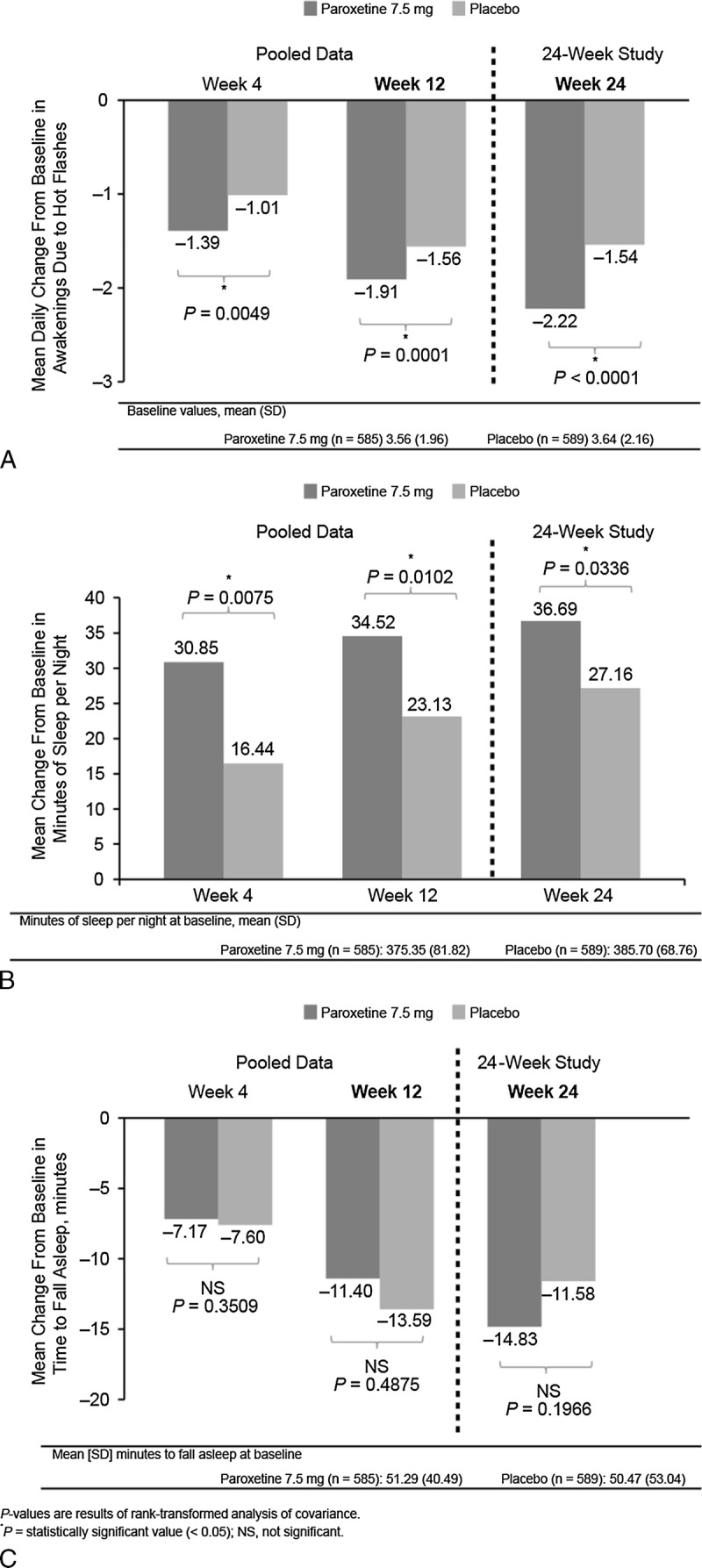
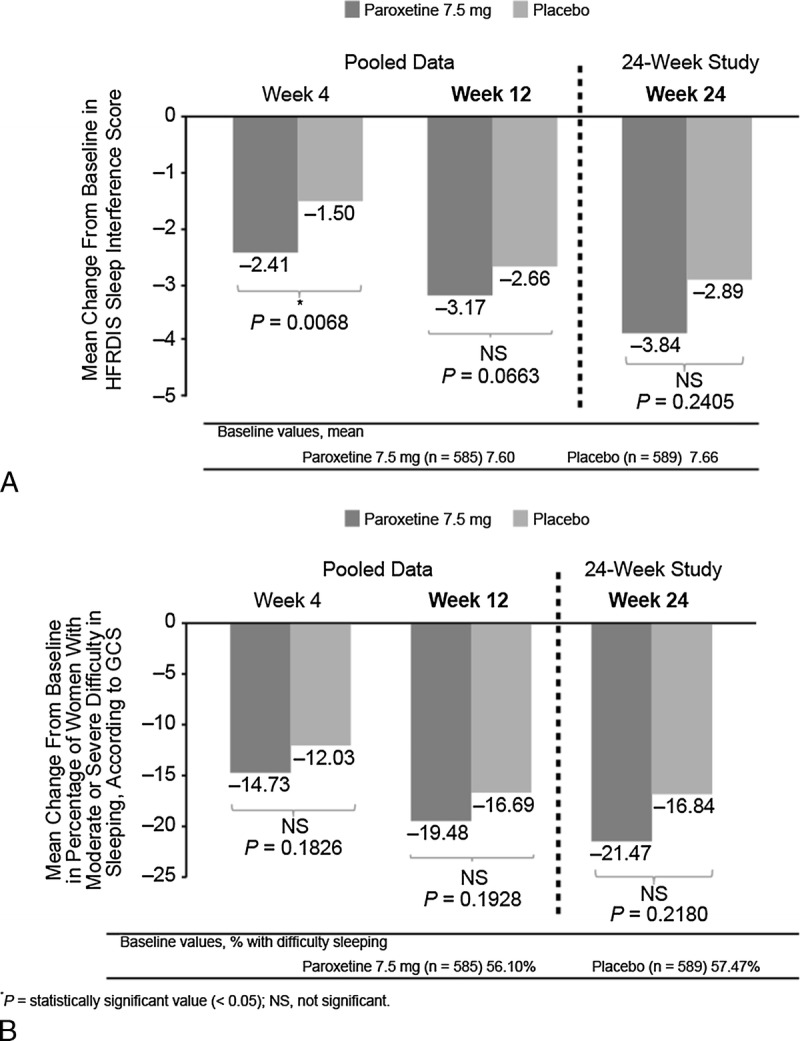
Results: At baseline, participants reported a mean of 3.6 awakenings/night attributed to vasomotor symptoms. Nighttime awakenings attributed to vasomotor symptoms were significantly reduced within 4 weeks of initiating paroxetine 7.5 mg treatment (39% reduction vs 28% for placebo; P = 0.0049), and reductions were sustained through 12 or 24 weeks of treatment. Paroxetine 7.5 mg treatment also significantly increased nighttime sleep duration (week 4, +31 vs +16 min for placebo; P = 0.0075), but no significant between-group differences in sleep-onset latency or sleep-related adverse events such as sedation were observed.
Conclusions: In postmenopausal women treated for menopausal vasomotor symptoms, paroxetine 7.5 mg significantly reduces the number of nighttime awakenings attributed to vasomotor symptoms and increases sleep duration without differentially affecting sleep-onset latency or sedation.
Trial registration: ClinicalTrials.gov NCT01101841 NCT01361308.
Figures
References
-
- Guidozzi F. Sleep and sleep disorders in menopausal women. Climacteric 2013; 16: 214- 219. - PubMed
-
- Blumel JE, Cano A, Mezones-Holguin E, et al. A multinational study of sleep disorders during female mid-life. Maturitas 2012; 72: 359- 366. - PubMed
-
- Polo-Kantola P. Sleep problems in midlife and beyond. Maturitas 2011; 68: 224- 232. - PubMed
-
- Williams RE, Kalilani L, DiBenedetti DB, et al. Frequency and severity of vasomotor symptoms among peri- and postmenopausal women in the United States. Climacteric 2008; 11: 32- 43. - PubMed
Publication types
MeSH terms
Substances
Associated data
LinkOut - more resources
Full Text Sources
Medical
