


Effects of tai chi for patients with knee osteoarthritis: a systematic review
- PMID: 25140112
- PMCID: PMC4135213
- DOI: 10.1589/jpts.26.1133
Effects of tai chi for patients with knee osteoarthritis: a systematic review
Abstract
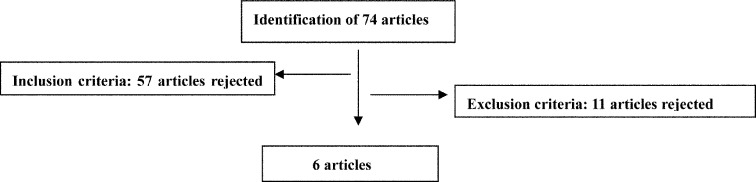
[Purpose] The aim of the present study was to seek evidence for the effectiveness of Tai Chi for patients with knee osteoarthritis (KOA). [Subjects and Methods] Systematic searches were conducted of the China Journals Full-text Database, Pubmed, Medline, Science Direct-Online Journals and CINAHL for studies published between 2000 and 2012. Studies were evaluated based on following inclusion criteria: 1) design: randomized control, clinical trial; 2) subjects: patients with a knee osteoarthritis diagnosis; 3) intervention: exercise involving Tai Chi; 4) studies published in English or Chinese. [Results] Six randomized control studies involving Tai Chi and knee osteoarthritis were found. [Conclusion] Tai Chi was an effective way of relieving pain and improving physical function. Further randomized controlled trials with large sample sizes and long training period are needed to compare groups who perform Tai Chi training with other groups who undergo other forms of physical exercise in order to confirm the efficacy of Tai Chi.
Keywords: Degenerative arthritis; Knee osteoarthritis; Tai Chi.
Figures
References
-
- World Health Organization: Chronic rheumatic conditions. http:// www. who.int/ chp/ topics / rheumatic/en/print.html (Accessed Jun. 22, 2007)
-
- Centers for Disease Control and Prevention: Prevention of arthritis –United States, 1997. MMWR, 2001, 50: 334–336 - PubMed
-
- Jordan KM, Arden NK, Doherty M, et al. Standing Committee for International Clinical Studies Including Therapeutic Trials ESCISIT: EULAR Recommendations 2003: an evidence based approach to the management of knee osteoarthritis: Report of a Task Force of the Standing Committee for International Clinical Studies Including Therapeutic Trials (ESCISIT). Ann Rheum Dis, 2003, 62: 1145–1155 - PMC - PubMed
Publication types
LinkOut - more resources
Full Text Sources
Other Literature Sources