


mRNA-binding protein TIA-1 reduces cytokine expression in human endometrial stromal cells and is down-regulated in ectopic endometrium
- PMID: 25140393
- PMCID: PMC4255110
- DOI: 10.1210/jc.2013-3488
mRNA-binding protein TIA-1 reduces cytokine expression in human endometrial stromal cells and is down-regulated in ectopic endometrium
Abstract
Background: Cytokines and growth factors play important roles in endometrial function and the pathogenesis of endometriosis. mRNAs encoding cytokines and growth factors undergo rapid turnover; primarily mediated by adenosine- and uridine-rich elements (AREs) located in their 3'-untranslated regions. T-cell intracellular antigen (TIA-1), an mRNA-binding protein, binds to AREs in target transcripts, leading to decreased gene expression.
Objective: The purpose of this article was to determine whether TIA-1 plays a role in the regulation of endometrial cytokine and growth factor expression during the normal menstrual cycle and whether TIA-1 expression is altered in women with endometriosis.
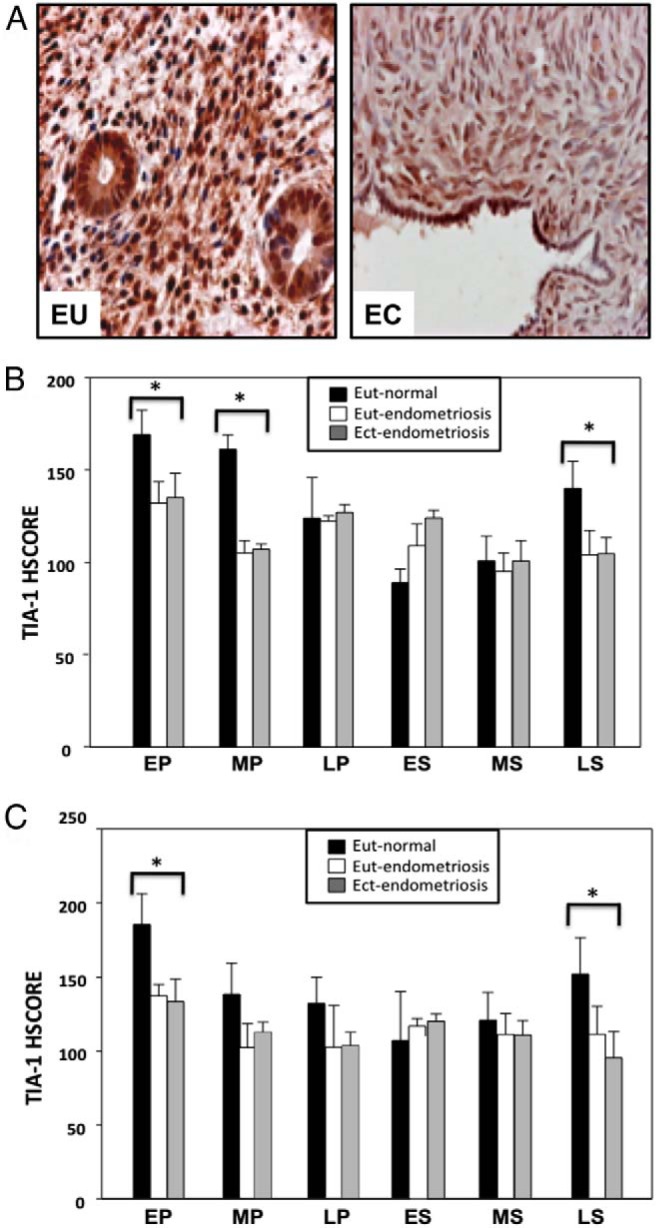
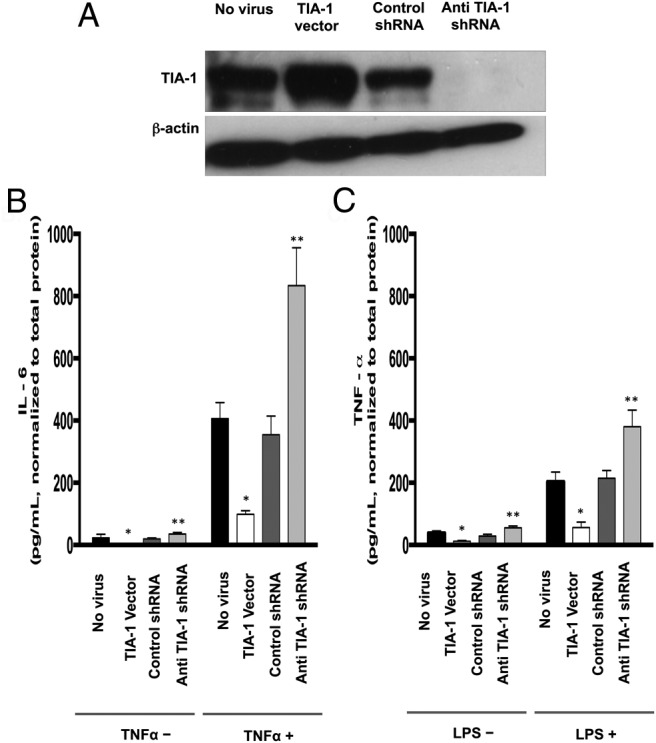
Methods: Eutopic endometrial tissue obtained from women without endometriosis (n = 30) and eutopic and ectopic endometrial tissues from women with endometriosis (n = 17) were immunostained for TIA-1. Staining intensities were evaluated by histological scores (HSCOREs). The regulation of endometrial TIA-1 expression by immune factors and steroid hormones was studied by treating primary cultured human endometrial stromal cells (HESCs) with vehicle, lipopolysaccharide, TNF-α, IL-6, estradiol, or progesterone, followed by protein blot analyses. HESCs were engineered to over- or underexpress TIA-1 to test whether TIA-1 regulates IL-6 or TNF-α expression in these cells.
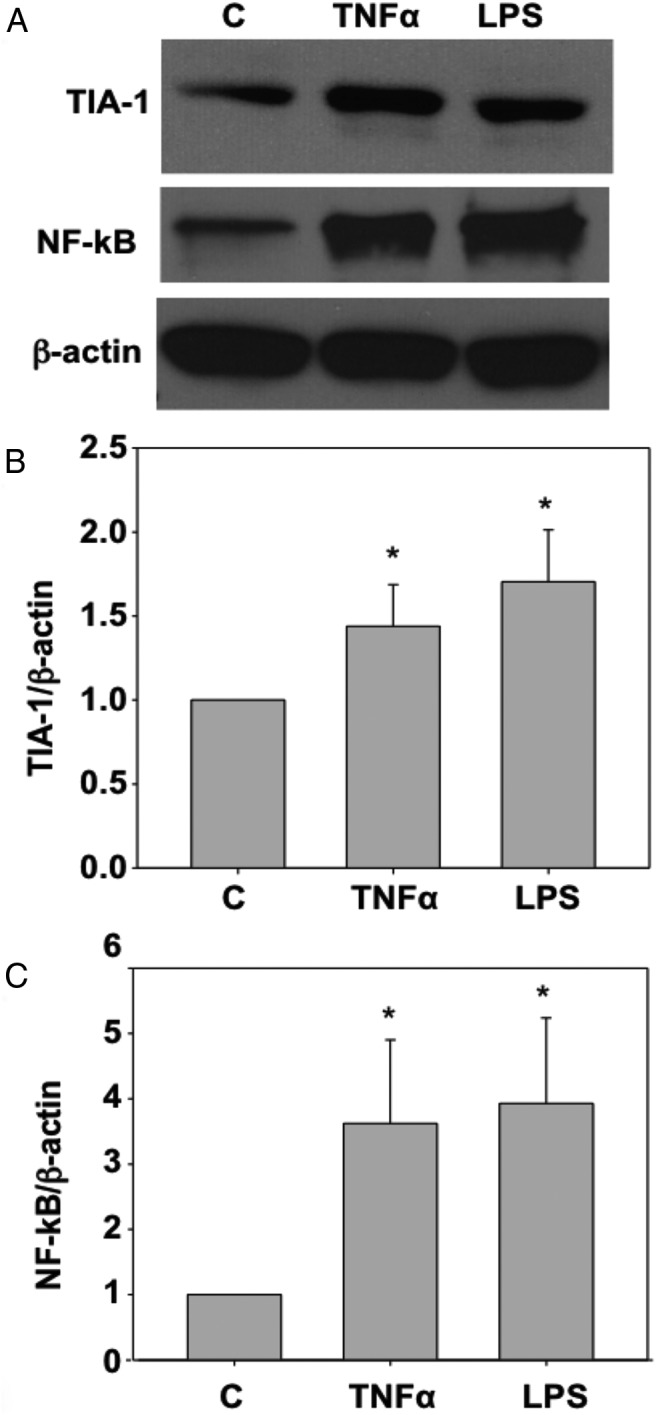
Results: We found that TIA-1 is expressed in endometrial stromal and glandular cells throughout the menstrual cycle and that this expression is significantly higher in the perimenstrual phase. In women with endometriosis, TIA-1 expression in eutopic and ectopic endometrium was reduced compared with TIA-1 expression in eutopic endometrium of unaffected control women. Lipopolysaccharide and TNF-α increased TIA-1 expression in HESCs in vitro, whereas IL-6 or steroid hormones had no effect. In HESCs, down-regulation of TIA-1 resulted in elevated IL-6 and TNF-α expression, whereas TIA-1 overexpression resulted in decreased IL-6 and TNF-α expression.
Conclusions: Endometrial TIA-1 is regulated throughout the menstrual cycle, TIA-1 modulates the expression of immune factors in endometrial cells, and downregulation of TIA-1 may contribute to the pathogenesis of endometriosis.
Figures


References
-
- Seli E, Berkkanoglu M, Arici A. Pathogenesis of endometriosis. Obstet Gynecol Clin North Am. 2003;30:41–61. - PubMed
-
- Wheeler JM. Epidemiology of endometriosis-associated infertility. J Reprod Med. 1989;34:41–46. - PubMed
-
- Gao X, Outley J, Botteman M, Spalding J, Simon JA, Pashos CL. Economic burden of endometriosis. Fertil Steril. 2006;86:1561–1572. - PubMed
-
- Simoens S, Hummelshoj L, D'Hooghe T. Endometriosis: cost estimates and methodological perspective. Hum Reprod Update. 2007;13:394–404. - PubMed
-
- Seli E, Arici A. Endometriosis: Interaction of immune and endocrine systems. Semin Reprod Med. 2003;21:135–144. - PubMed
Publication types
MeSH terms
Substances
Grants and funding
LinkOut - more resources
Full Text Sources
Other Literature Sources
Miscellaneous
