


A randomized controlled trial of mindfulness meditation for chronic insomnia
- PMID: 25142566
- PMCID: PMC4153063
- DOI: 10.5665/sleep.4010
A randomized controlled trial of mindfulness meditation for chronic insomnia
Abstract
Study objectives: To evaluate the efficacy of mindfulness meditation for the treatment of chronic insomnia.
Design: Three-arm, single-site, randomized controlled trial.
Setting: Academic medical center.
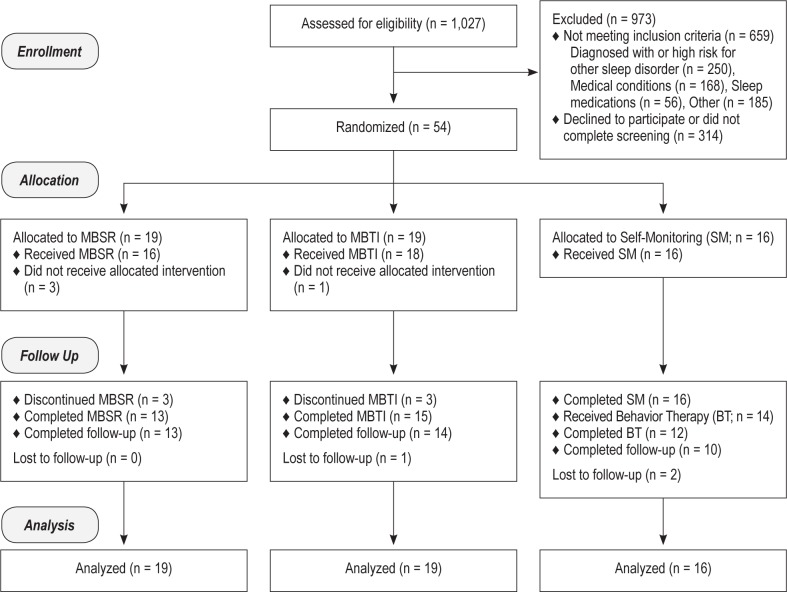
Participants: Fifty-four adults with chronic insomnia.
Interventions: Participants were randomized to either mindfulness-based stress reduction (MBSR), mindfulness-based therapy for insomnia (MBTI), or an eight-week self-monitoring (SM) condition.
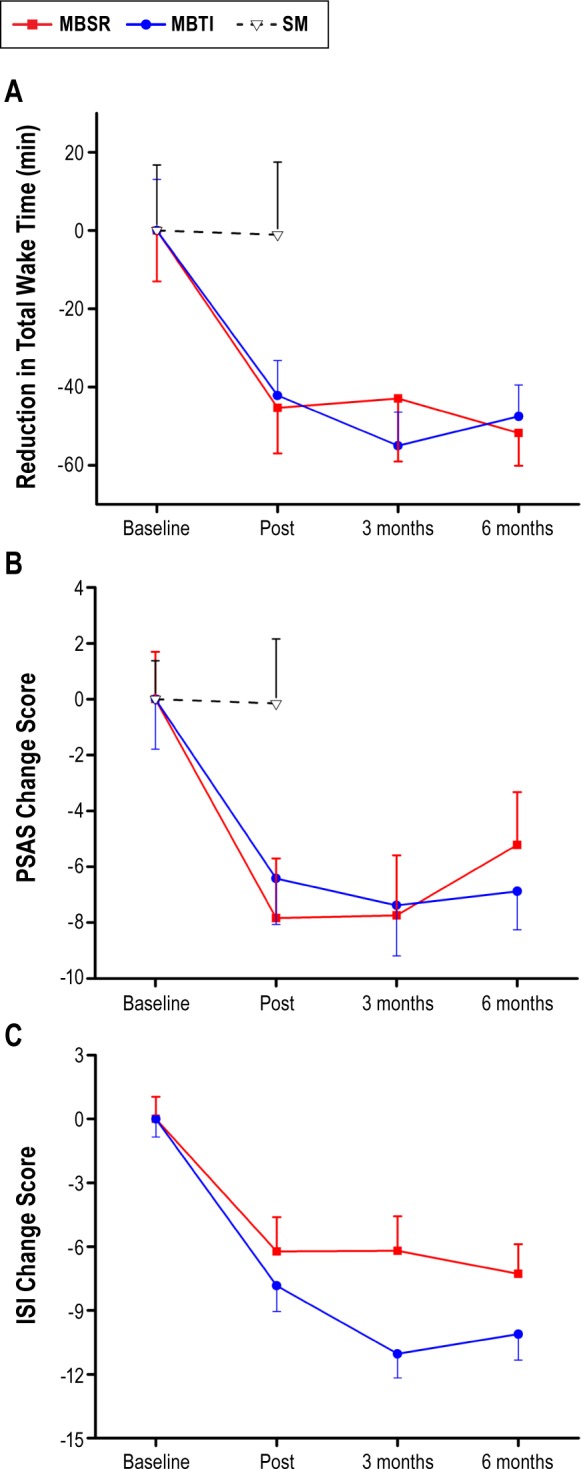
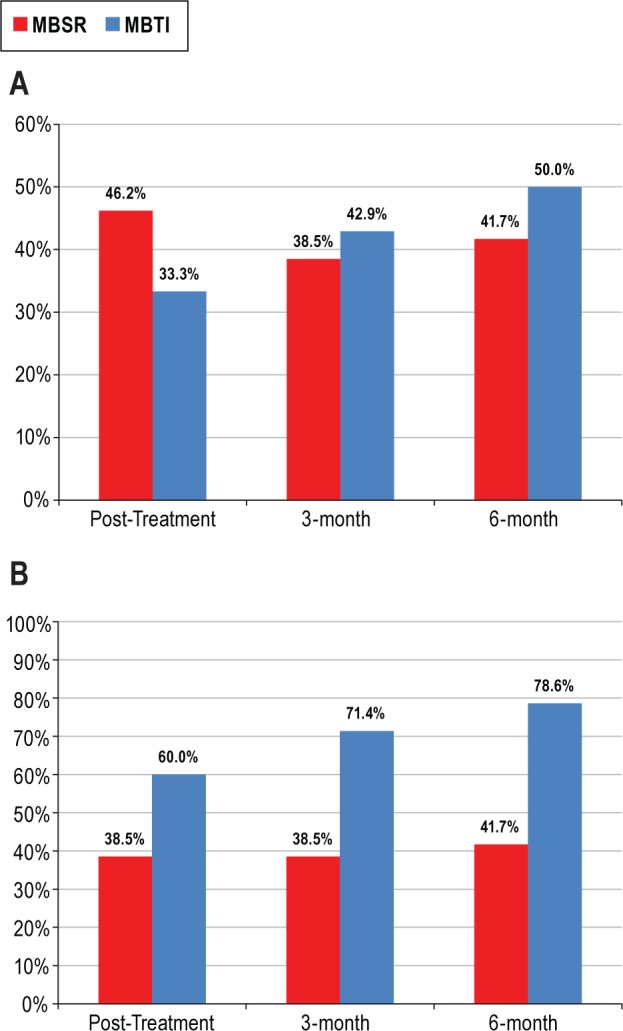
Measurements and results: Patient-reported outcome measures were total wake time (TWT) from sleep diaries, the pre-sleep arousal scale (PSAS), measuring a prominent waking correlate of insomnia, and the Insomnia Severity Index (ISI) to determine remission and response as clinical endpoints. Objective sleep measures were derived from laboratory polysomnography and wrist actigraphy. Linear mixed models showed that those receiving a meditation-based intervention (MBSR or MBTI) had significantly greater reductions on TWT minutes (43.75 vs 1.09), PSAS (7.13 vs 0.16), and ISI (4.56 vs 0.06) from baseline-to-post compared to SM. Post hoc analyses revealed that each intervention was superior to SM on each of the patient-reported measures, but no significant differences were found when comparing MBSR to MBTI from baseline-to-post. From baseline to 6-month follow-up, MBTI had greater reductions in ISI scores than MBSR (P < 0.05), with the largest difference occurring at the 3-month follow-up. Remission and response rates in MBTI and MBSR were sustained from post-treatment through follow-up, with MBTI showing the highest rates of treatment remission (50%) and response (78.6%) at the 6-month follow-up.
Conclusions: Mindfulness meditation appears to be a viable treatment option for adults with chronic insomnia and could provide an alternative to traditional treatments for insomnia.
Trial registration: Mindfulness-Based Approaches to Insomnia: clinicaltrials.gov, identifier: NCT00768781.
Keywords: behavior therapy; clinical trial; complementary and alternative medicine; insomnia; meditation; mindfulness; sleep.
© 2014 Associated Professional Sleep Societies, LLC.
Figures
References
-
- Ohayon MM. Epidemiology of insomnia: What we know and what we still need to learn. Sleep Med Rev. 2002;6:97–111. - PubMed
-
- Morin CM, LeBlanc M, Belanger L, Ivers H, Merette C, Savard J. Prevalence of insomnia and its treatment in canada. Can J Psychiatry. 2011;56:540–8. - PubMed
-
- Roth T, Coulouvrat C, Hajak G, et al. Prevalence and perceived health associated with insomnia based on DSM-IV-TR; international statistical classification of diseases and related health problems, tenth revision; and research diagnostic criteria/international classification of sleep disorders, second edition criteria: results from the America insomnia survey. Biol Psychiatry. 2011;69:592–600. - PubMed
-
- Morgenthaler T, Kramer M, Alessi C, et al. Practice parameters for the psychological and behavioral treatment of insomnia: an update. an American Academy of Sleep Medicine report. Sleep. 2006;29:1415–9. - PubMed
Publication types
MeSH terms
Associated data
Grants and funding
LinkOut - more resources
Full Text Sources
Other Literature Sources
Medical
