Alternative scoring models of STOP-bang questionnaire improve specificity to detect undiagnosed obstructive sleep apnea
- PMID: 25142767
- PMCID: PMC4153119
- DOI: 10.5664/jcsm.4022
Alternative scoring models of STOP-bang questionnaire improve specificity to detect undiagnosed obstructive sleep apnea
Abstract
Background: Obstructive sleep apnea (OSA) is common among surgical patients. The STOP-Bang questionnaire is a validated screening tool with a high sensitivity. However, its moderate specificity may yield fairly high false positive rate. We hypothesized that the specific combinations of predicting factors in the STOP-Bang questionnaire would improve its specificity.
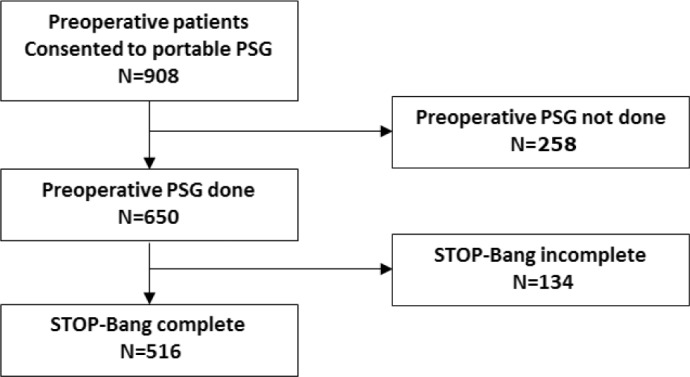
Methods: After research ethics approval, consented patients were asked to complete the STOP-Bang questionnaire and then underwent sleep studies. The predictive performance of the STOP-Bang alternative scoring models was evaluated. Five hundred sixteen patients with complete data on the STOP-Bang questionnaire and polysomnography were reported.
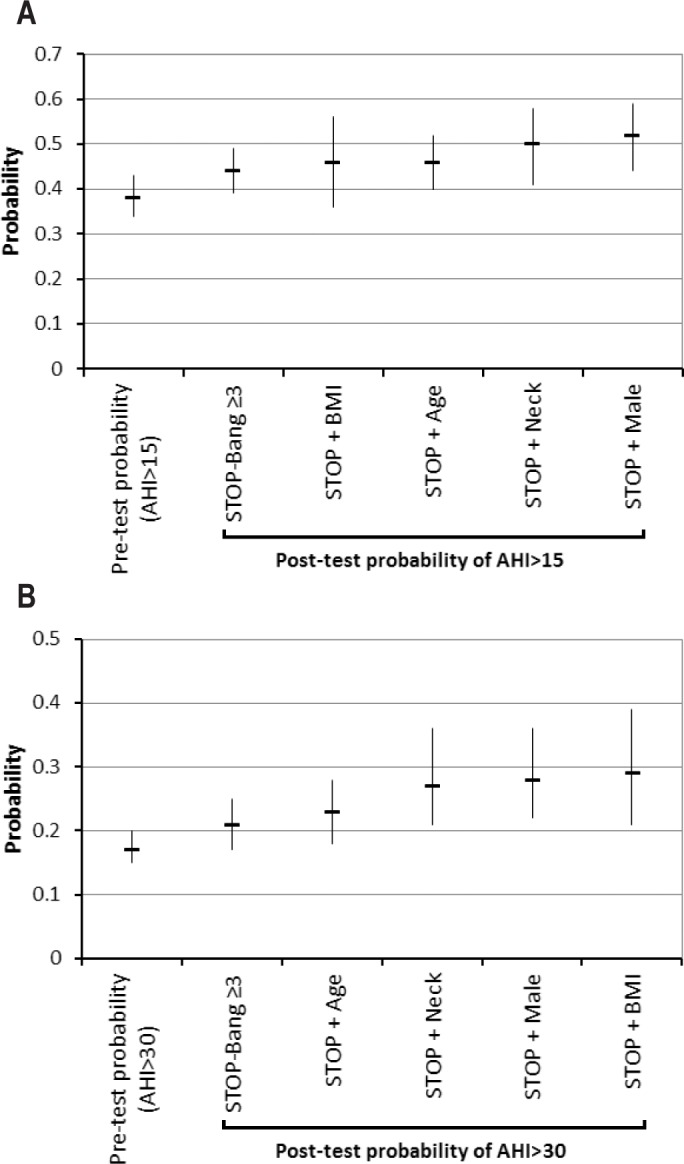
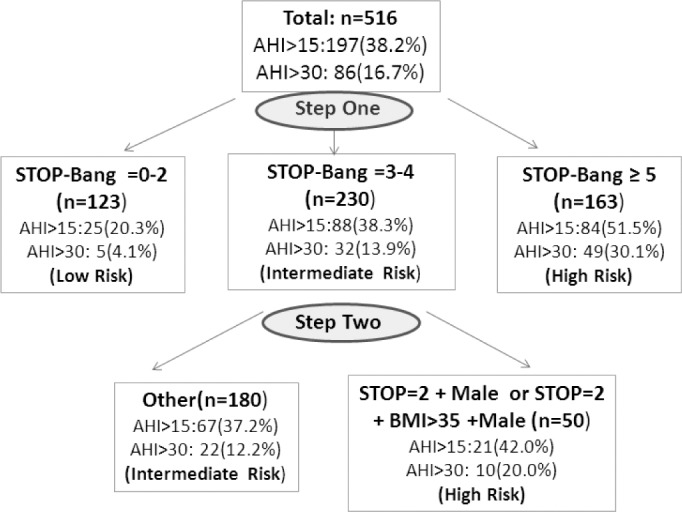
Results: When the STOP-Bang score was ≥ 3 (any 3 positive items), the sensitivity and specificity for identifying moderate-severe OSA was 87% and 31%, respectively. The specificity for any 2 positive items from the 4 STOP questions plus BMI > 35 kg/m(2), male gender, or neck circumference > 40 cm for identifying moderate-severe OSA was 85%, 77%, and 79%, respectively. Compared with STOP-Bang score ≥ 3, the predicted probability for severe OSA of the specific combinations of STOP score ≥ 2 + male and STOP score ≥ 2 + BMI increased by 36% and 42%, respectively. For severe OSA, the specific combination of STOP score ≥ 2 + BMI + male demonstrated a specificity of 97% and 86% increase in predicted probability versus any 4 positive items of STOP-Bang questionnaire.
Conclusions: The specific constellations of predictive factors improved the specificity of STOP-Bang questionnaire. For patients with STOP score ≥ 2, male gender, and BMI > 35 kg/m(2) were more predictive than age ≥ 50 and neck circumference > 40 cm.
Keywords: Obstructive Sleep Apnea; perioperative care; polysomnography; preoperative screening; sleep apnea questionnaire.
© 2014 American Academy of Sleep Medicine.
Figures

References
-
- Chung F, Yegneswaran B, Liao P, et al. STOP questionnaire: a tool to screen patients for obstructive sleep apnea. Anesthesiology. 2008;108:812–21. - PubMed
-
- Finkel KJ, Searleman AC, Tymkew H, et al. Prevalence of undiagnosed obstructive sleep apnea among adult surgical patients in an academic medical center. Sleep Med. 2009;10:753–8. - PubMed
-
- Young T, Evans L, Finn L, Palta M. Estimation of the clinically diagnosed proportion of sleep apnea syndrome in middle-aged men and women. Sleep. 1997;20:705–6. - PubMed
-
- Singh M, Liao P, Kobah S, Wijeysundera DN, Shapiro C, Chung F. Proportion of surgical patients with undiagnosed obstructive sleep apnoea. Br J Anaesth. 2013;110:629–36. - PubMed
Publication types
MeSH terms
LinkOut - more resources
Full Text Sources
Other Literature Sources