


Blocking autocrine VEGF signaling by sunitinib, an anti-cancer drug, promotes embryonic stem cell self-renewal and somatic cell reprogramming
- PMID: 25145356
- PMCID: PMC4152737
- DOI: 10.1038/cr.2014.112
Blocking autocrine VEGF signaling by sunitinib, an anti-cancer drug, promotes embryonic stem cell self-renewal and somatic cell reprogramming
Abstract
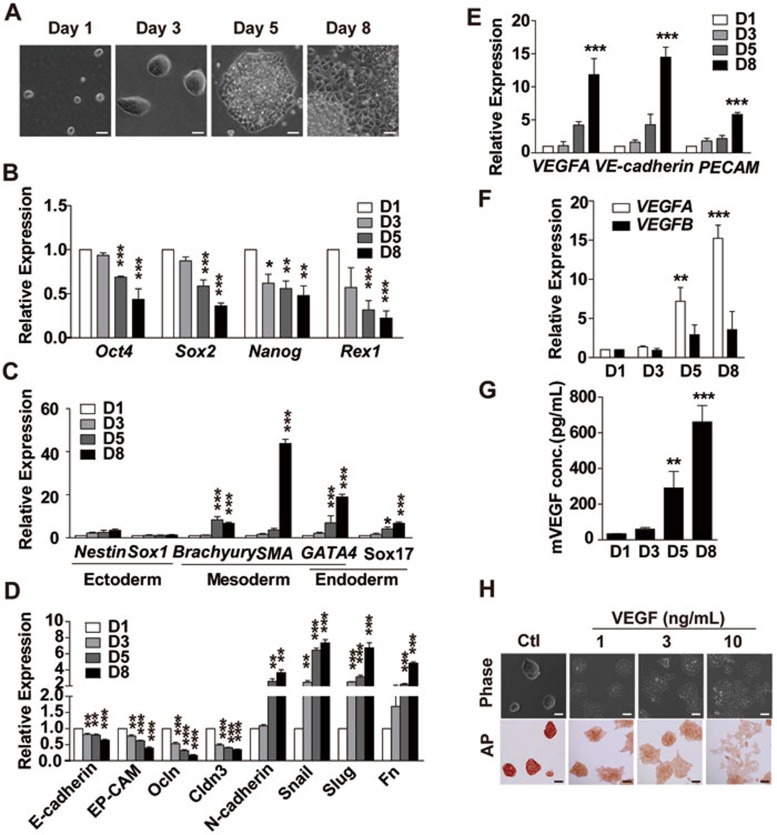
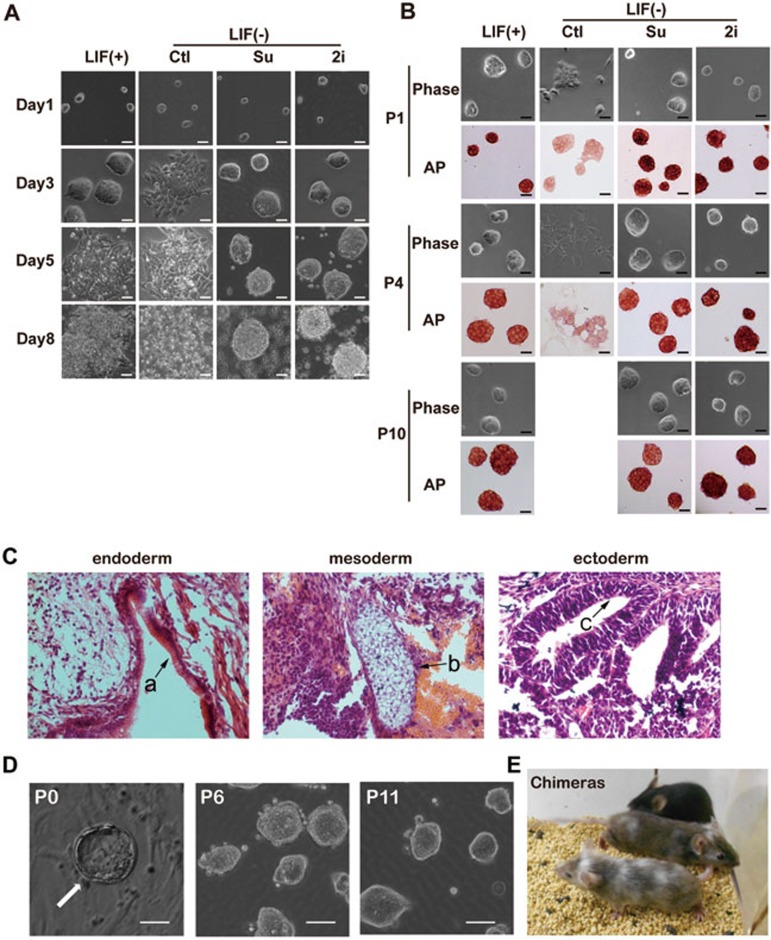
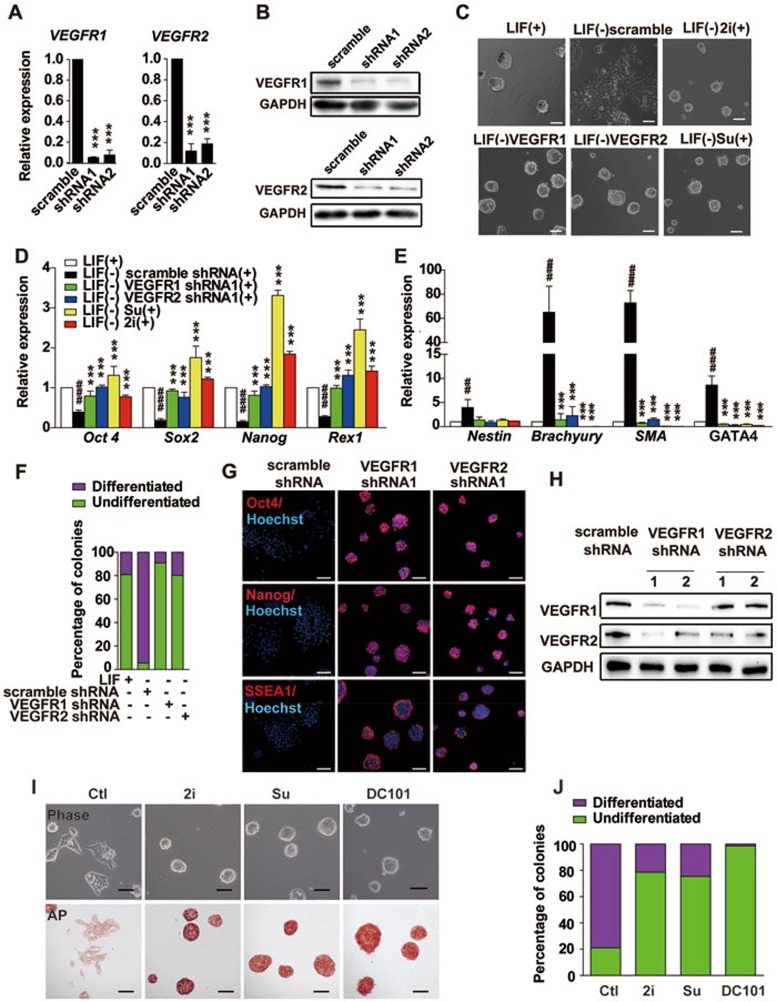
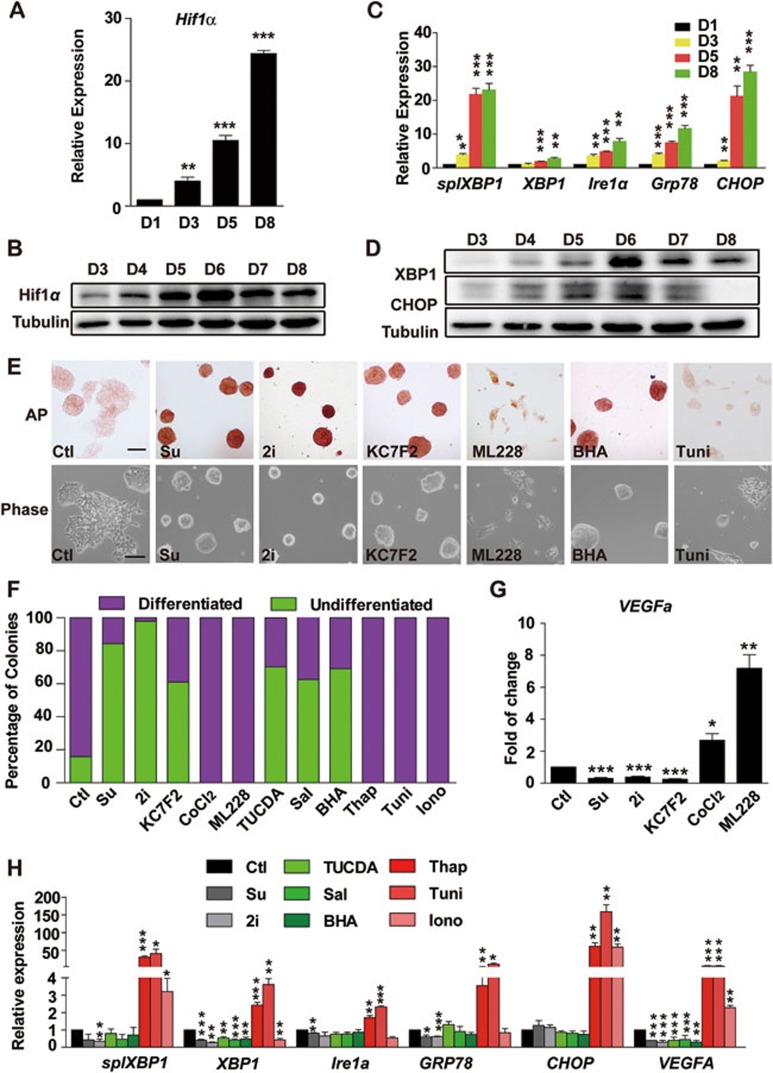
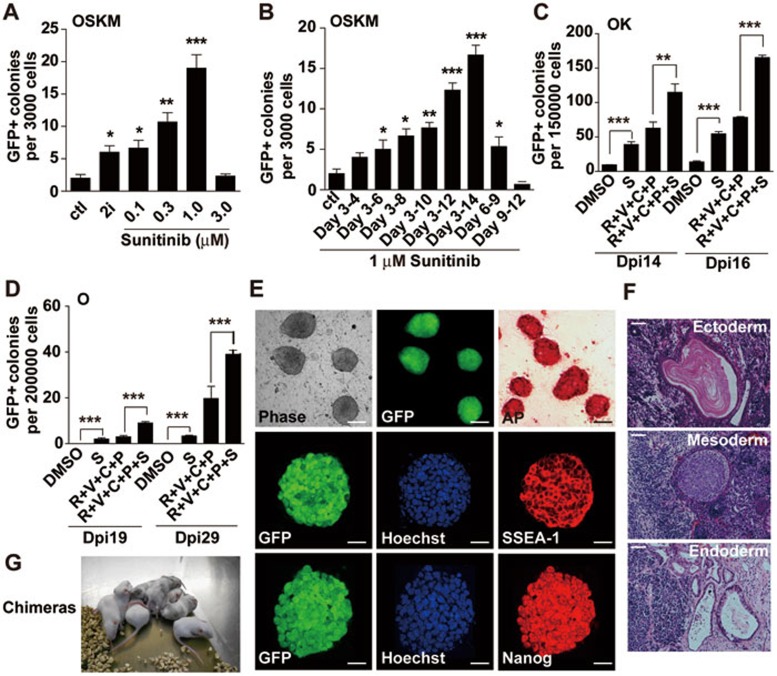
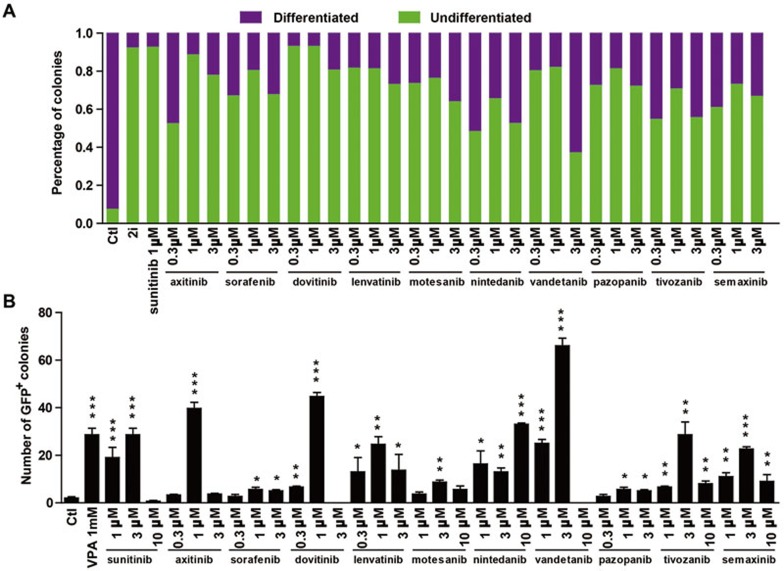
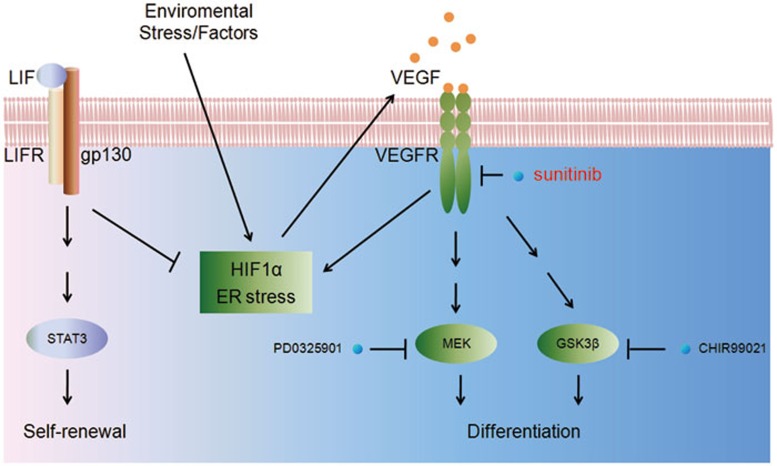
Maintaining the self-renewal of embryonic stem cells (ESCs) could be achieved by activating the extrinsic signaling, i.e., the use of leukemia inhibitory factor (LIF), or blocking the intrinsic differentiation pathways, i.e., the use of GSK3 and MEK inhibitors (2i). Here we found that even in medium supplemented with LIF, mESCs still tend to differentiate toward meso-endoderm lineages after long-term culture and the culture spontaneously secretes vascular endothelial growth factors (VEGFs). Blocking VEGF signaling with sunitinib, an anti-cancer drug and a receptor tyrosine kinase (RTK) inhibitor mainly targeting VEGF receptors (VEGFRs), is capable of maintaining the mESCs in the undifferentiated state without the need for feeder cells or LIF. Sunitinib facilitates the derivation of mESCs from blastocysts, and the mESCs maintained in sunitinib-containing medium remain pluripotent and are able to contribute to chimeric mice. Sunitinib also promotes iPSC generation from MEFs with only Oct4. Knocking down VEGFR2 or blocking it with neutralizing antibody mimicks the effect of sunitinib, indicating that blocking VEGF/VEGFR signaling is indeed beneficial to the self-renewal of mESCs. We also found that hypoxia-inducible factor alpha (HIF1α) and endoplasmic reticulum (ER) stress are involved in the production of VEGF in mESCs. Blocking both pathways inhibits the expression of VEGF and prevents spontaneous differentiation of mESCs. Interestingly, LIF may also exert its effect by downregulating HIF1α and ER stress pathways and subsequent VEGF expression. These results indicate the existence of an intrinsic differentiation pathway in mESCs by activating the autocrine VEGF signaling. Blocking VEGF signaling with sunitinib or other small molecules help to maintain the mESCs in the ground state of pluripotency.
Figures
References
-
- Ulloa-Montoya F, Verfaillie CM, Hu WS. Culture systems for pluripotent stem cells. J Biosci Bioeng. 2005;100:12–27. - PubMed
-
- Williams RL, Hilton DJ, Pease S, et al. Myeloid leukaemia inhibitory factor maintains the developmental potential of embryonic stem cells. Nature. 1988;336:684–687. - PubMed
-
- Ying QL, Nichols J, Chambers I, Smith A. BMP induction of Id proteins suppresses differentiation and sustains embryonic stem cell self-renewal in collaboration with STAT3. Cell. 2003;115:281–292. - PubMed
-
- Kunath T, Saba-El-Leil MK, Almousailleakh M, Wray J, Meloche S, Smith A. FGF stimulation of the Erk1/2 signalling cascade triggers transition of pluripotent embryonic stem cells from self-renewal to lineage commitment. Development. 2007;134:2895–2902. - PubMed
Publication types
MeSH terms
Substances
LinkOut - more resources
Full Text Sources
Other Literature Sources
