


Adherence to a Mediterranean diet and risk of diabetes: a systematic review and meta-analysis
- PMID: 25145972
- PMCID: PMC10273006
- DOI: 10.1017/S1368980014001542
Adherence to a Mediterranean diet and risk of diabetes: a systematic review and meta-analysis
Abstract
Objective: Adherence to a Mediterranean diet is associated with significant improvements in health status. However, to date no systematic review and meta-analysis has summarized the effects of Mediterranean diet adherence on the risk of type 2 diabetes mellitus.
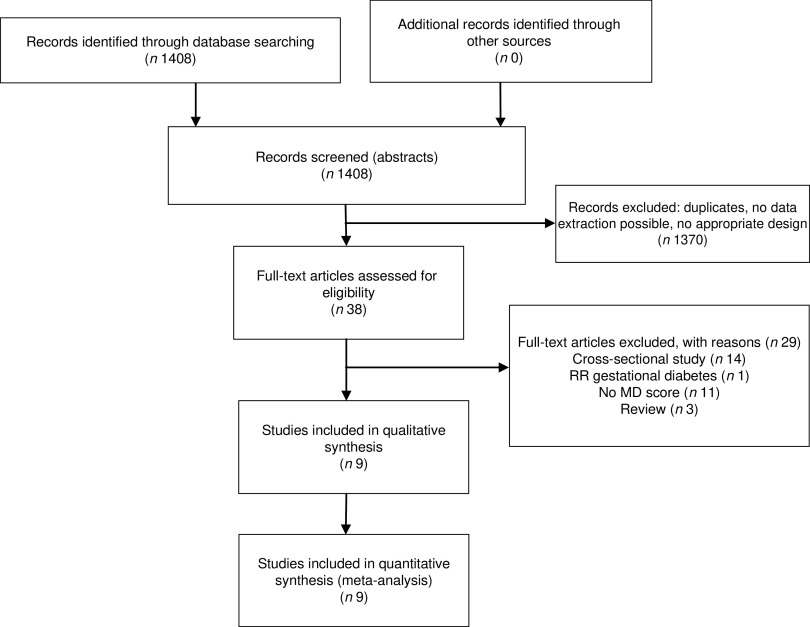
Design: Electronic searches for randomized controlled trials and cohort studies were performed in MEDLINE, SCOPUS, EMBASE and the Cochrane Trial Register until 2 April 2014. Pooled effects were calculated by an inverse-variance random-effect meta-analysis using the statistical software Review Manager 5.2 by the Cochrane Collaboration.
Setting: Meta-analysis of randomized controlled trials and cohort studies.
Eligibility criteria: 19+years of age.
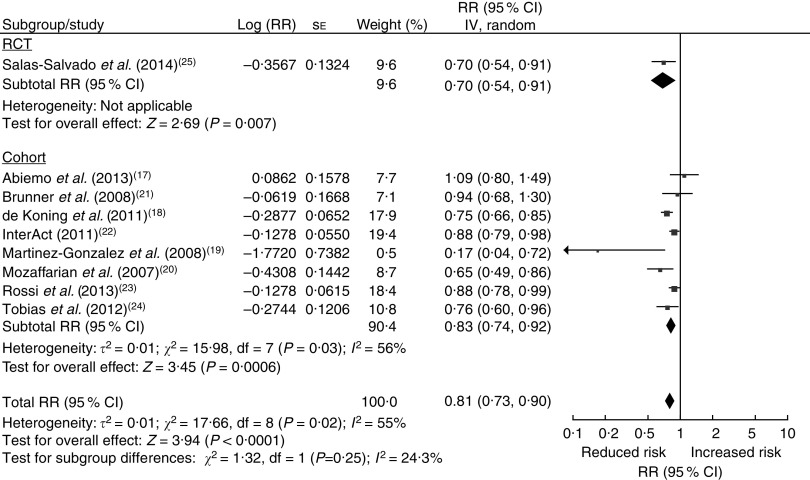
Results: One randomized controlled trial and eight prospective cohort studies (122 810 subjects) published between 2007 and 2014 were included for meta-analysis. For highest v. lowest adherence to the Mediterranean diet score, the pooled risk ratio was 0.81 (95 % CI 0.73, 0.90, P<0.0001, I 2=55 %). Sensitivity analysis including only long-term studies confirmed the results of the primary analysis (pooled risk ratio=0.75; 95 % CI 0.68, 0.83, P<0.00001, I 2=0 %). The Egger regression test provided no evidence of substantial publication bias (P=0.254).
Conclusions: Greater adherence to a Mediterranean diet is associated with a significant reduction in the risk of diabetes (19 %; moderate quality evidence). These results seem to be clinically relevant for public health, in particular for encouraging a Mediterranean-like dietary pattern for primary prevention of type 2 diabetes mellitus.
Keywords: Systematic review.
Figures
References
-
- Hossain P, Kawar B & El Nahas M (2007) Obesity and diabetes in the developing world – a growing challenge. N Engl J Med 356, 213–215. - PubMed
-
- Keys A, Menotti A, Karvonen MJ et al.. (1986) The diet and 15-year death rate in the seven countries study. Am J Epidemiol 124, 903–915. - PubMed
-
- Willett WC, Sacks F, Trichopoulou A et al.. (1995) Mediterranean diet pyramid: a cultural model for healthy eating. Am J Clin Nutr 61, 6 Suppl., 1402S–1406S. - PubMed
-
- Group TDS (1999) Glucose tolerance and mortality: comparison of WHO and American Diabetes Association diagnostic criteria. The DECODE study group. European Diabetes Epidemiology Group. Diabetes Epidemiology: Collaborative analysis Of Diagnostic criteria in Europe. Lancet 354, 617–621. - PubMed
Publication types
MeSH terms
LinkOut - more resources
Full Text Sources
Other Literature Sources
Medical
Miscellaneous
